
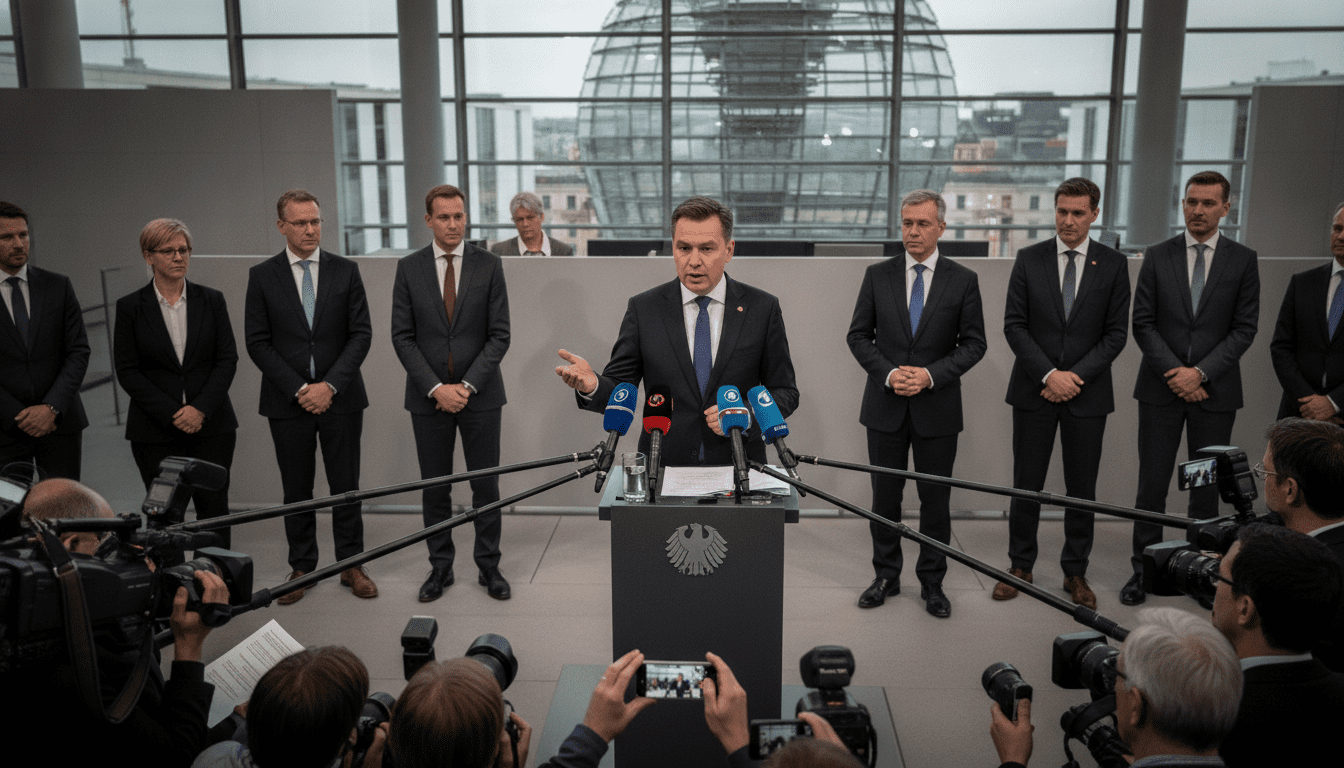
Germany’s Röwekamp Says No Immediate Bundestag Vote on Strait of Hormuz Mission
Germany’s defense committee chair says key conditions — including Iran’s consent and a robust international mandate — are not yet met for a Bundestag decision on the Strait of Hormuz.
Parliamentary signal of delay
Thomas Röwekamp, chair of the Bundestag’s Defense Committee, told AFP he does not expect an immediate parliamentary decision on a possible Bundeswehr deployment to the Strait of Hormuz. He said several preconditions remain unmet and that a premature vote would be ill-advised given the current diplomatic picture.
Röwekamp emphasized that the durability of any agreed ceasefire is central to progressing the plan. He also pointed to the role assigned to regional states in recent Washington-Tehran understandings, indicating that implementation choices rest with those parties.
Consent from Iran and regional responsibilities
A central obstacle identified by Röwekamp is the need for Iran’s consent for operations in the strait, alongside cooperation from Oman and other littoral states. He argued the U.S.-Iran text places primary responsibility for security and mine clearance with regional authorities, meaning international planners cannot proceed unilaterally.
The defense committee chair framed the issue as political as much as operational: without clear buy-in from Iran and tangible steps from Oman, any German or international naval presence would face both legal and practical constraints.
Legal basis and calls for an international mandate
Röwekamp said he would prefer an unambiguous mandate from either the European Union or the United Nations to underpin a Bundestag decision. He described a clear legal cover as important for parliamentary backing and for legitimizing a multinational operation.
Officials from the Foreign Office, addressing the committee, argued that a UN resolution adopted in March together with the United Nations Convention on the Law of the Sea could provide a sufficient legal foundation for an internationally led mission. The debate over what constitutes an adequate legal basis remains a focal point in consultations ahead of any vote.
Germany’s naval posture and operational readiness
Berlin has signaled willingness to contribute to an international maritime mission and has already moved two German naval vessels toward the region via Djibouti. Röwekamp said the ships have been pre-positioned and, if a mandate is approved, could be sent into active service within roughly 14 days.
German officials describe the operation as principally peaceful and focused on restoring freedom of navigation and clearing mines reportedly laid during the conflict. Mine countermeasures are expected to be a core activity, requiring specialized assets and close coordination with partner navies.
International initiative led by France and Britain
France and the United Kingdom initiated the plan for a multinational maritime effort intended to secure continued commercial access through the Strait of Hormuz. Their initiative aims to ensure a durable reopening of the waterway and to provide mine-clearance capabilities that many merchant fleets now require.
Germany’s participation has been framed as supportive rather than leading, reflecting Berlin’s emphasis on legal and diplomatic prerequisites and on ensuring any deployment aligns with parliamentary approval and international law.
Chancellor’s timeline and government caution
Chancellor Friedrich Merz had indicated at the G7 summit that the Bundestag would consider a mandate before the parliamentary summer recess in July. That timetable, however, was tempered by subsequent government comments urging caution.
Government spokesman Stefan Kornelius later stressed that several conditions for a mandate remain unfulfilled and called for patience. Röwekamp echoed this cautious stance, saying current assessments of the U.S.-Iran talks in Switzerland make an immediate vote unlikely.
The competing signals reflect the tightrope Berlin faces between political pressure to act, operational readiness, and the legal-diplomatic assurances that many lawmakers insist upon before authorizing the deployment of German forces abroad.
Germany’s role will likely hinge on developments in the diplomatic talks and on whether regional actors agree to concrete steps for mine clearance and maritime security. If those conditions materialize, prepositioned German ships could move quickly to join a multinational effort, but for now the decision rests on diplomatic and legal milestones that have not yet been achieved.
The situation in the Strait of Hormuz therefore remains in a holding pattern: Germany remains prepared to contribute but awaits clearer consent from regional parties and a definitive international mandate before the Bundestag is likely to give the green light for deployment.
