
Timotar AI Avatar Recasts University Teaching at HHL Leipzig
Timotar AI avatar at HHL Leipzig, launched 2025, offers multilingual, persona-driven tutoring that handles routine queries and reshapes professor-student ties.
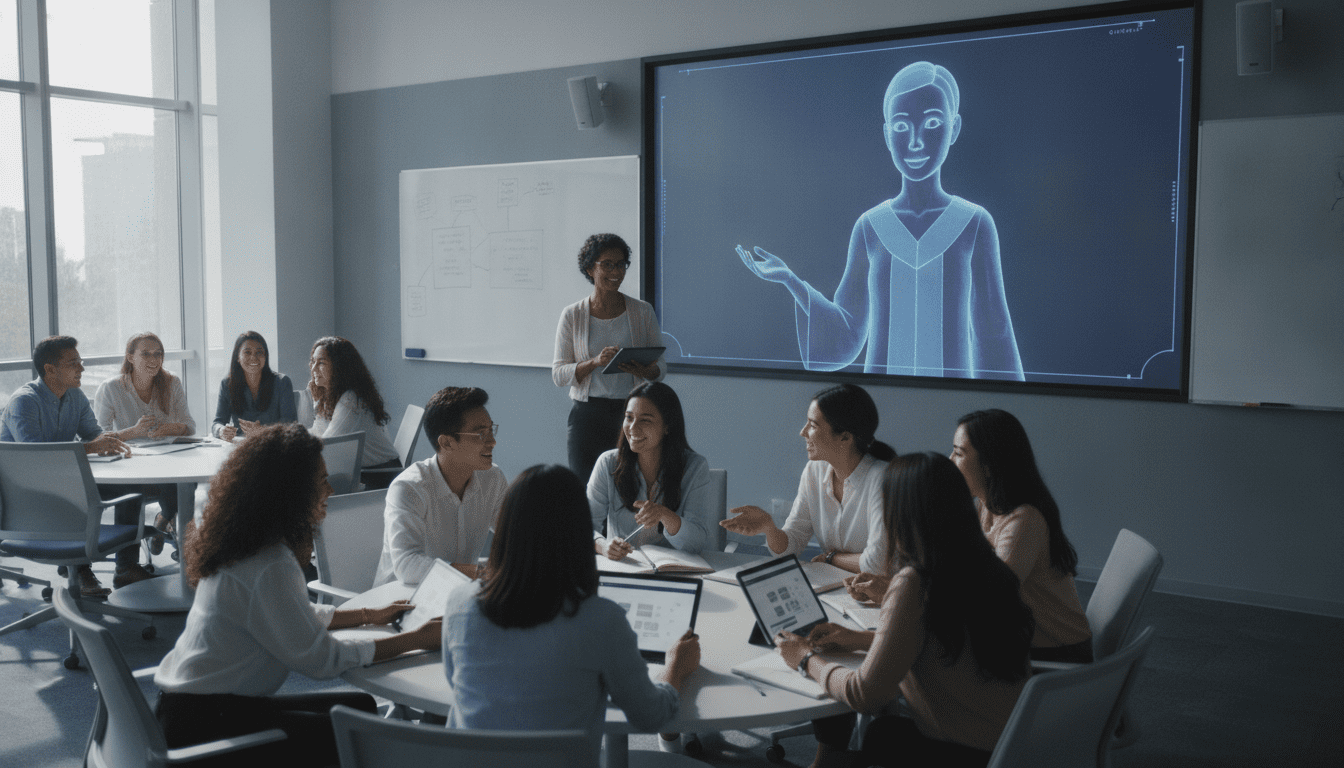
The Timotar AI avatar, introduced at HHL Leipzig Graduate School of Management in early 2025, is being presented as a new interface between students and faculty that absorbs repetitive instruction while preserving human-led education. Built by professor Timo Meynhardt and his daughter Charlotte Meynhardt, the avatar draws on nearly 200 academic publications and a curated persona to deliver tailored answers in multiple languages. Advocates say Timotar frees faculty time for higher-order teaching; critics caution that technical capability alone cannot justify creating persistent digital stand-ins for people.
Timotar AI avatar adopted at HHL in 2025
Timotar was rolled out as part of regular coursework and made accessible through a dedicated website where students can interact with the avatar around the clock. The project originated in informal conversations between its creators and was developed to reflect the voice, style and substantive work of the professor while remaining an independent, learning system. Its deployment at HHL positions the avatar as both a pedagogical supplement and an experiment in how AI-driven personas alter academic relationships.
Technical design and persona sourcing
Under the hood, Timotar is built on a large language model paired with curated source texts and persona parameters that guide tone and content selection. Its knowledge base explicitly draws on the professor’s published work in business psychology, leadership and public value, while ongoing updates allow the avatar to incorporate new materials and correctives. The design emphasizes a recognizable voice and consistent reasoning style so that interactions feel coherent with the scholarly perspective students encounter in lectures.
Multilingual tutoring and student access
The avatar responds in roughly thirty languages, enabling students to ask follow-up questions in their native tongue or to check English-language material against a different linguistic frame. Users can query definitions, revisit lecture models or upload documents for discussion, which makes Timotar especially useful for clarifying factual or procedural content. Instructors report that introverted students are sometimes more likely to raise queries with the avatar first, which can surface points of confusion before in-person sessions.
Early student feedback and usage statistics
Initial evaluations after classroom integration show broadly positive impressions: a large majority of surveyed students rated the avatar’s substantive knowledge highly and many indicated they would rely on it for routine academic support. In one internal snapshot, approximately 80 percent of respondents judged its answers to reflect solid subject expertise, while roughly two thirds expressed trust in its capabilities and perceived principled behavior. Those figures suggest the avatar performs well as an information resource, though they do not measure effects on deeper learning or long-term judgement.
Pedagogical boundaries and institutional responsibility
Faculty and administrators must draw clear lines about where an avatar should operate, the developers argue, because the technology excels at the finite, repeatable elements of teaching but cannot substitute for human judgment. Timotar can take over the time-consuming task of repeating definitions, explaining models and answering standard exam-preparation questions, thereby freeing instructors to concentrate on interpretive dialogue, mentorship and complex feedback. That division of labor positions the avatar as a serviceable “knowledge desk” rather than a replacement for relational education.
Risks of overreliance and the need for judgement
Where the avatar becomes problematic is when institutions or instructors treat it as a substitute for human encounters that are essential for learning to occur at the limits of understanding. Avatars can shift expectations and create dependencies if they occupy interactional spaces that students need to fill with real conversations about values, context and personal consequence. The creators emphasize that deploying a digital double is not merely a technical choice but a moral and institutional one: designers extend their reach and must accept responsibility for how the tool reshapes students’ access to teachers and the contours of academic exchange.
The Timotar AI avatar demonstrates a practical trade-off in contemporary higher education: machines can reliably handle repeatable instruction, but they also force a reappraisal of what teaching requires beyond answers. As universities consider similar tools, the central decision will be less about what AI can do and more about which human spaces should remain intentionally occupied.
