
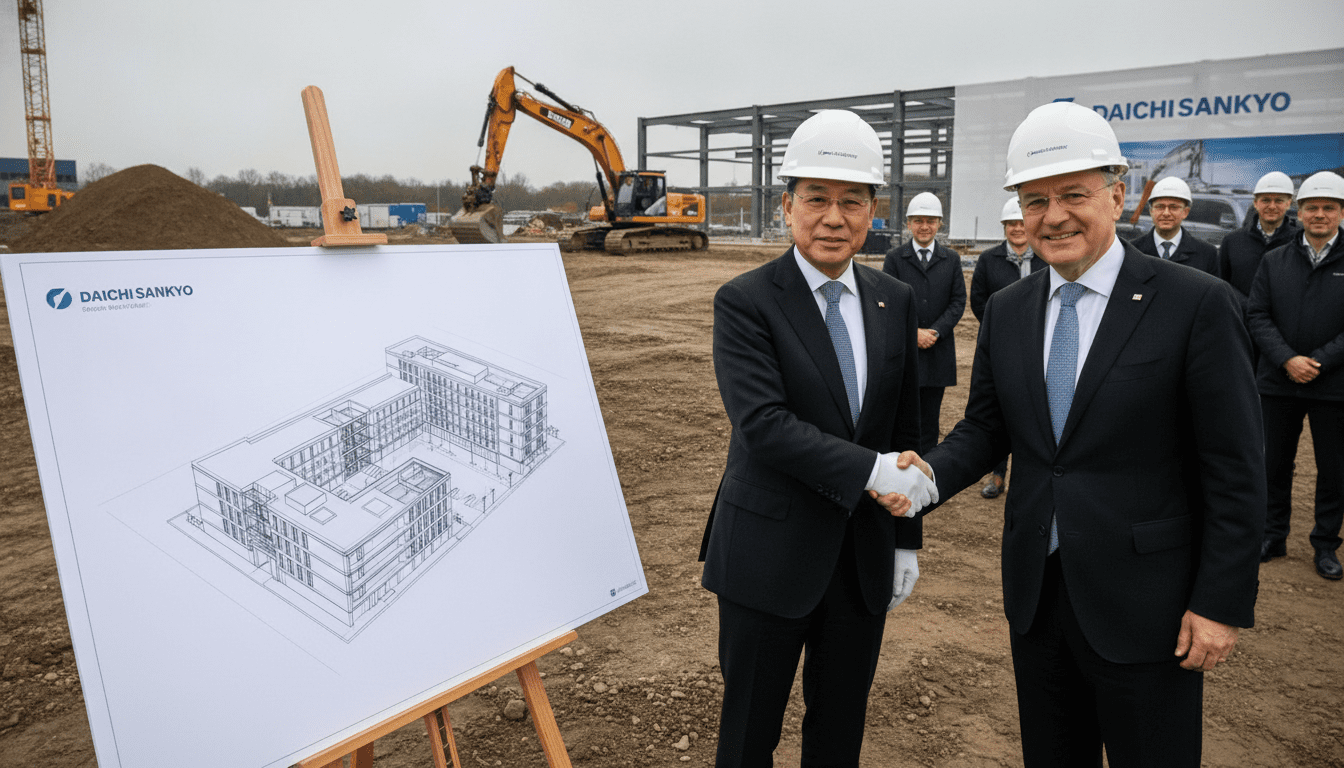
Daiichi Sankyo Pfaffenhofen investment: Japanese pharma confirms €1 billion expansion in Bavaria
Daiichi Sankyo confirms €1 billion investment to expand its Pfaffenhofen cancer drug site in Bavaria, keeping plans despite Germany’s contested health reform.
Daiichi Sankyo has reaffirmed plans to invest roughly €1 billion in expanding its cancer drug development and production complex in Pfaffenhofen, Bavaria, saying a halt to the project is not under consideration. The confirmation of the Daiichi Sankyo Pfaffenhofen investment comes as other international and German drugmakers have scaled back or relocated planned investment in the country. Company executives framed the move as one of the largest single capital commitments in the firm’s history and said the Bavarian site is the group’s largest facility outside Japan.
Company statement and leadership comments
Benoit Creveau, the head of Daiichi Sankyo’s German operations, told industry observers the expansion will proceed and that stopping the project “is not on the table.” He described the investment as strategically important for the company’s oncology pipeline and for maintaining the Pfaffenhofen campus as a center for both development and manufacturing. Executives emphasized that the scale of the project reflects long-term commitment to the site despite a challenging regulatory backdrop in Germany.
Contrast with recent industry retreat
The announcement comes amid a wave of retrenchment by other pharmaceutical firms in Germany, most notably Eli Lilly and Boehringer Ingelheim, which recently scaled back or shifted parts of their planned investments. Eli Lilly trimmed its initially announced $2.3 billion plan for a new manufacturing facility in Alzey to roughly half that amount, while Boehringer Ingelheim said it would place about €900 million of planned spending on laboratory buildings outside Germany. Those moves have drawn attention to the sensitivity of investment decisions to policy signals and commercial incentives.
Policy debate and industry unease
Industry leaders have pointed to proposed changes in Germany’s health insurance and drug reimbursement law as a source of uncertainty affecting investment appetite, and Daiichi Sankyo’s management described the draft legislation as disappointing. Executives and trade representatives warn that shifts in pricing and reimbursement can erode predictability for long-term capital projects, particularly in high-cost, innovation-driven areas such as oncology. At the same time, company officials stopped short of saying the law would derail their Pfaffenhofen plans, indicating a distinction between regulatory concerns and the firm’s broader strategic calculus.
Local strengths and strategic rationale for Pfaffenhofen
Beyond the policy environment, Daiichi Sankyo cited several location advantages for the Pfaffenhofen site that helped underpin the investment decision, including established links with research institutions, a skilled local workforce, and reliable supplier networks. The firm has invested in the site for years and views the campus as an anchor for both clinical-stage development and commercial manufacturing of cancer medicines. Those operational synergies and the concentration of technical personnel were presented as decisive factors that reduce the risk of relocating the program elsewhere.
Economic and regional implications
A project of this size is poised to have significant economic implications for Pfaffenhofen and the surrounding region in Bavaria, boosting construction activity, long-term employment in skilled manufacturing and research roles, and demand for local supply chains. Local authorities and regional business groups will likely press for clarity from federal policymakers to ensure the growth translates into sustainable jobs and further R&D investment. Analysts say that while headline figures signal commitment, the concrete benefits will depend on the project’s timetable, hiring plans and integration with regional training programs.
Signals for future investment and what to watch
The Daiichi Sankyo Pfaffenhofen investment will be watched as a litmus test for how multinational drugmakers reconcile policy risk with operational needs in Europe’s largest pharmaceutical market. Observers will look for follow-through in the form of building permits, recruitment drives, and formal timelines from the company, as well as any government responses to industry concerns about reimbursement reform. The outcome could influence whether other firms reconsider investments already diverted abroad or maintain their newly reduced plans.
Daiichi Sankyo’s decision to press ahead with a major expansion in Pfaffenhofen underscores the complex mix of strategic commitments, regional strengths and policy uncertainties that shape pharmaceutical investment in Germany, and the development will be closely monitored by industry, government and regional stakeholders as it moves from announcement to implementation.
