
SZ Launches Searchable NSDAP Membership Registry, Prompting Family Reappraisals
SZ launches a searchable NSDAP membership registry so users can find ancestors’ records; historians urge careful context, legal caution and archival follow-up.
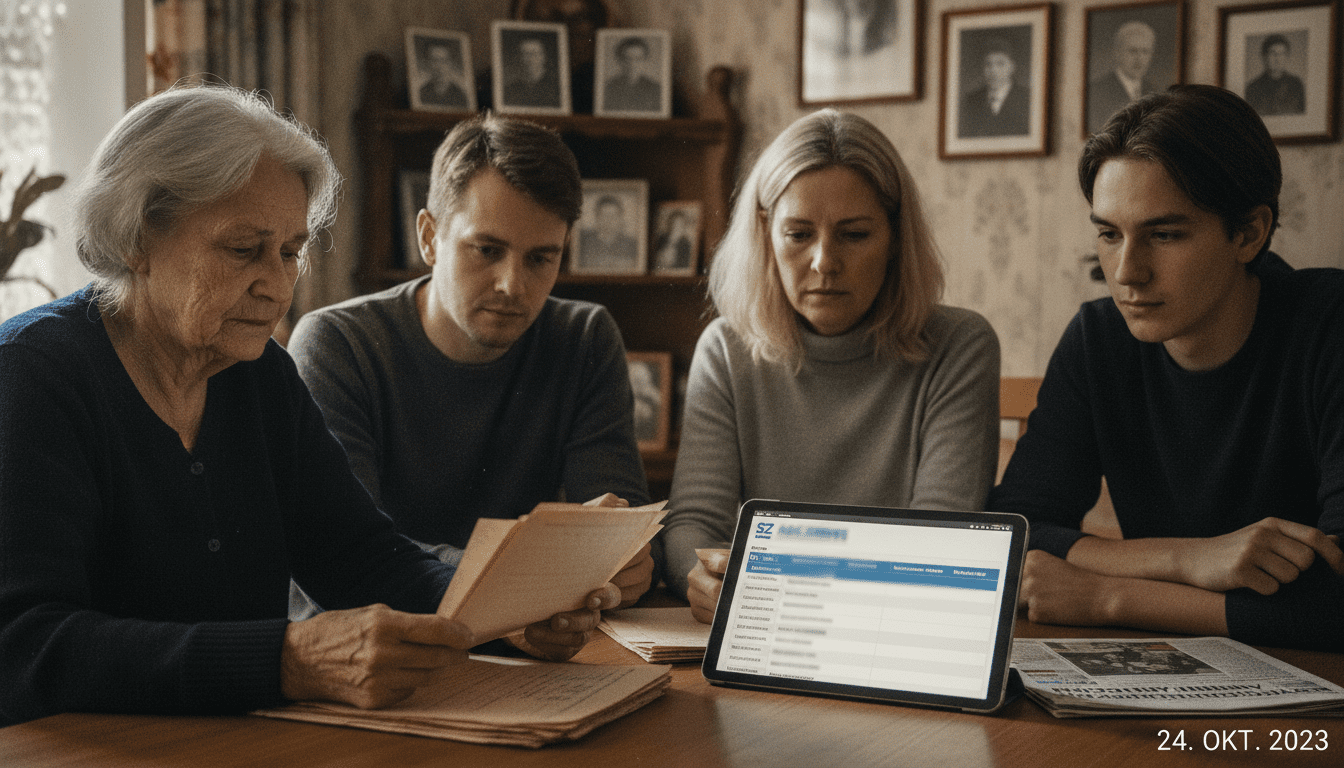
The Süddeutsche Zeitung has added a searchable NSDAP membership registry to its website, allowing users to look up whether grandparents or great‑grandparents appear in Nazi party records. The new tool, described by the publisher as a public historical resource, has already led readers to confront difficult family histories and the question of what a registry entry does — and does not — prove about individual action. Public discussion of the database intensified after the newsroom set an editorial deadline on Friday, June 26, 2026, at 15:00, confirming the launch timeframe and related reporting.
Süddeutsche Zeitung unveils searchable NSDAP membership registry
The SZ tool centralizes entries from the historical party rolls and makes them simple to query by name and locality. The publisher says the database aims to make archival information more accessible to the public and to encourage responsible historical inquiry. Early reactions have ranged from gratitude for transparency to surprise and distress among those who discovered family names linked to the NSDAP.
Families confront archival evidence and complex legacies
For many users, locating an ancestor in the NSDAP membership registry is an unsettling experience that raises immediate personal and moral questions. A registry listing can indicate membership but does not, by itself, explain motives, the level of involvement, or whether a person acted under duress or opportunism. Historians caution that interpreting a name in an administrative roll requires corroborating documents such as service records, correspondence, and local archives to build a fuller picture.
Scholars note historical context and limits of membership lists
Experts emphasize that mass membership in the Nazi party took varied forms across regions and time periods, shaped by local conditions, employment, and political pressure. Membership alone cannot substitute for careful historical analysis, and misreading the lists risks oversimplifying complex lives and structural coercion. Public access to records does, however, open new avenues for research into how Nazi institutions grew and how communities were implicated.
Ines Geipel highlights fractures in memory around Buchenwald
Public intellectual Ines Geipel, who has worked extensively on memory culture and the contested heritage of the Buchenwald concentration camp, discussed the emotional and civic dimensions of confronting archival evidence. Geipel has examined the ruptures in postwar remembrance and was nominated for the Leipzig Book Fair’s Sachbuchpreis for her contributions to the debate. Her perspective underscores that family discoveries are woven into broader conversations about national memory, responsibility and commemoration.
Practical steps for researchers and families
Professionals advise those who find relatives in the NSDAP membership registry to document what they discover, seek corroborating sources and consult relevant archives or local historians. Genealogical societies, municipal archives and specialized Holocaust and war archives can often provide context, such as membership dates, occupations and related documents. Families should proceed carefully, preserving evidence and avoiding hasty public accusations while pursuing a clearer understanding of historical circumstances.
Legal, ethical and privacy implications for descendants
The publication and searchability of historical records raise questions about privacy and reputational harm, particularly when names coincide with common surnames or incomplete identifying information. German law and archival practice balance historical transparency with privacy protections, and publishers must navigate that terrain when presenting sensitive material. Ethically, scholars and editors stress the importance of framing single database hits within rigorous research and resisting narratives that reduce complex histories to simple labels.
How the newsroom and podcast are engaging the public
The registry launch is accompanied by editorial coverage and a discussion featuring reporters and commentators that explores both the technical aspects of the database and its human impact. The Süddeutsche Zeitung’s daily news podcast, “Auf den Punkt,” has addressed the subject and the newsroom encourages listeners to subscribe through common podcast apps. The editorial team also provides resources for those wishing to pursue further research and invites feedback via the newsroom contact channels.
The availability of the NSDAP membership registry on the SZ platform has made archival material more immediately visible to a wide public, forcing private reckonings and public debate alike. As families and researchers engage with the records, historians urge a measured approach that situates names within verified documentary context and scholarly analysis, and that treats archival disclosure as a starting point for responsible inquiry rather than a definitive judgment.
