
Xi’s Pyongyang Visit Signals Shift in China-North Korea Relations as Russia Deepens Ties
Xi Jinping’s June Pyongyang visit signals shifting China-North Korea relations as Moscow deepens military and economic ties, complicating denuclearization.
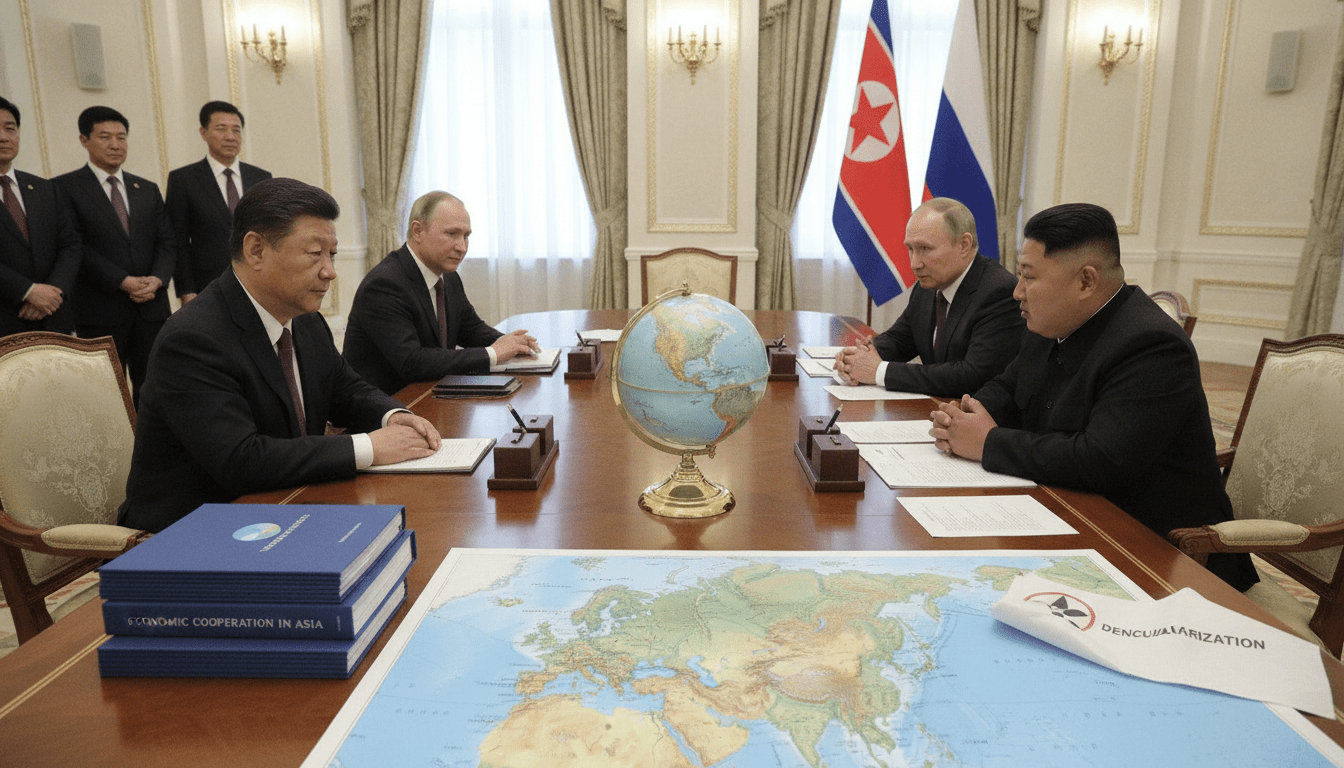
China’s top leader visited Pyongyang in early June and left without public demands for North Korean denuclearization, a conspicuous omission that has analysts recalibrating Beijing’s leverage. The visit underlines how North Korea has broadened its external partnerships, and highlights growing coordination with Russia that alters regional dynamics. Observers say the evolving triangle of China, North Korea and Russia raises new questions about sanctions enforcement, regional security and the future of diplomatic pressure on Pyongyang.
Xi’s Pyongyang trip and the missing denuclearization pledge
Xi Jinping’s decision not to press public calls for denuclearization during his Pyongyang meetings marked a notable shift from past practice and has been read widely as a departure in tone. In 2019, China had explicitly raised non-proliferation concerns with North Korea, but early-June statements from Beijing this year omitted those references. That absence has fueled concern among U.S. and regional officials that China may be recalibrating priorities to secure broader cooperation on trade, transport, and security.
The optics of Xi’s stop in Pyongyang were also striking because it was his first foreign trip of the year and came soon after high-profile summits involving other major powers. Beijing’s public messaging emphasized expanded ties in commerce, science and security rather than explicit nuclear commitments, signaling a pragmatic approach to stabilizing bilateral relations.
Russia’s expanding role and the military exchange
North Korea’s relationship with Russia has strengthened significantly, with Moscow providing military know-how and supplies while receiving manpower and dual-use goods in return. Reports indicate that the military and logistical support flows have grown since 2024, with Moscow tolerating or facilitating channels that skirt international sanctions. For Pyongyang, Russian assistance offers access to technology and products that are otherwise constrained by sanctions and limited global trade.
The exchange is not merely material but political: Russian backing gives Kim Jong Un greater diplomatic latitude and status, reinforcing his regime’s negotiating position. Analysts note that while Russia’s shipments may not be large in monetary terms, the strategic value to North Korea — and the symbolic boost of Moscow’s support — is significant.
Pressure on China’s influence over Pyongyang
Beijing’s dominant role as North Korea’s chief economic lifeline is now being contested as Pyongyang diversifies its patrons, complicating long-standing leverage Beijing once held. China historically used trade and aid to dissuade nuclear escalation while keeping the regime afloat. As Russia becomes a second major backer, China faces renewed competition for influence and must reconcile security concerns with the desire to preserve stable bilateral ties.
Xi’s agenda included proposals to deepen cooperation across transport, law enforcement, and military ties, suggesting Beijing is attempting to reassert clout through expanded integration rather than public chastisement. Yet Pyongyang’s selective public acknowledgements of Chinese offers indicate it feels less constrained by Beijing’s preferences than in the past.
Regional security and proliferation risks
The shifting alignments carry direct consequences for regional security, especially regarding proliferation pressures on Japan and South Korea. North Korea’s continued nuclear development, if tolerated or indirectly enabled by major powers, could prompt neighboring states to reassess their own deterrence postures. Seoul and Tokyo have both signaled concern that an emboldened Pyongyang may push other regional actors toward new military options.
Diplomats warn that any erosion of the UN sanctions regime or of international unity behind non-proliferation norms would complicate multilateral efforts to curb arms transfers. If major powers prioritize bilateral influence over collective security rules, the prospect of wider destabilization in Northeast Asia grows.
Human costs and the regime’s domestic calculus
While the regime secures strategic benefits, ordinary North Koreans appear to shoulder much of the burden of the new alignments. Soldiers deployed in support of Russian operations reportedly include conscripts from ordinary families, and casualties have been concealed or misreported, according to multiple accounts. In some instances the state has offered limited compensations or honors to bereaved families, but these measures contrast with privileges enjoyed by the political elite who gain from improved supply lines.
Economic goods flowing from Russia also seem to be channeled disproportionately to regime elites, suggesting that external partnerships reinforce internal hierarchies rather than broadly easing civilian hardship. The domestic cost-benefit calculation thus tilts toward regime survival and reward for loyalty while popular needs remain largely unmet.
Strategic limits and dependence on the Ukraine war
Pyongyang’s strengthened position depends significantly on the course of Russia’s war in Ukraine and Moscow’s continued willingness to expend political capital and material resources abroad. If Russia’s need for North Korean support diminishes or Western pressure compels Moscow to alter its approach, North Korea could find its recent gains eroding. Observers caution that the durable realignment of influence is not guaranteed and could unravel with shifts in the broader strategic environment.
For Beijing, the longer-term concern is whether China can reconcile its interest in regional stability with the reality of a more autonomous and internationally emboldened Pyongyang. Xi’s outreach in June appears aimed at managing that tension, but the balance of incentives among the three capitals will determine how durable this new configuration becomes.
The coming months will test whether diplomatic engagement, sanctions enforcement and regional deterrence can adapt to a triangle of influence that increasingly includes Moscow alongside Beijing, and whether Pyongyang will leverage that space to entrench obligations or to press for further concessions.
