
Federal judge blocks Trump voter registration order requiring proof of citizenship
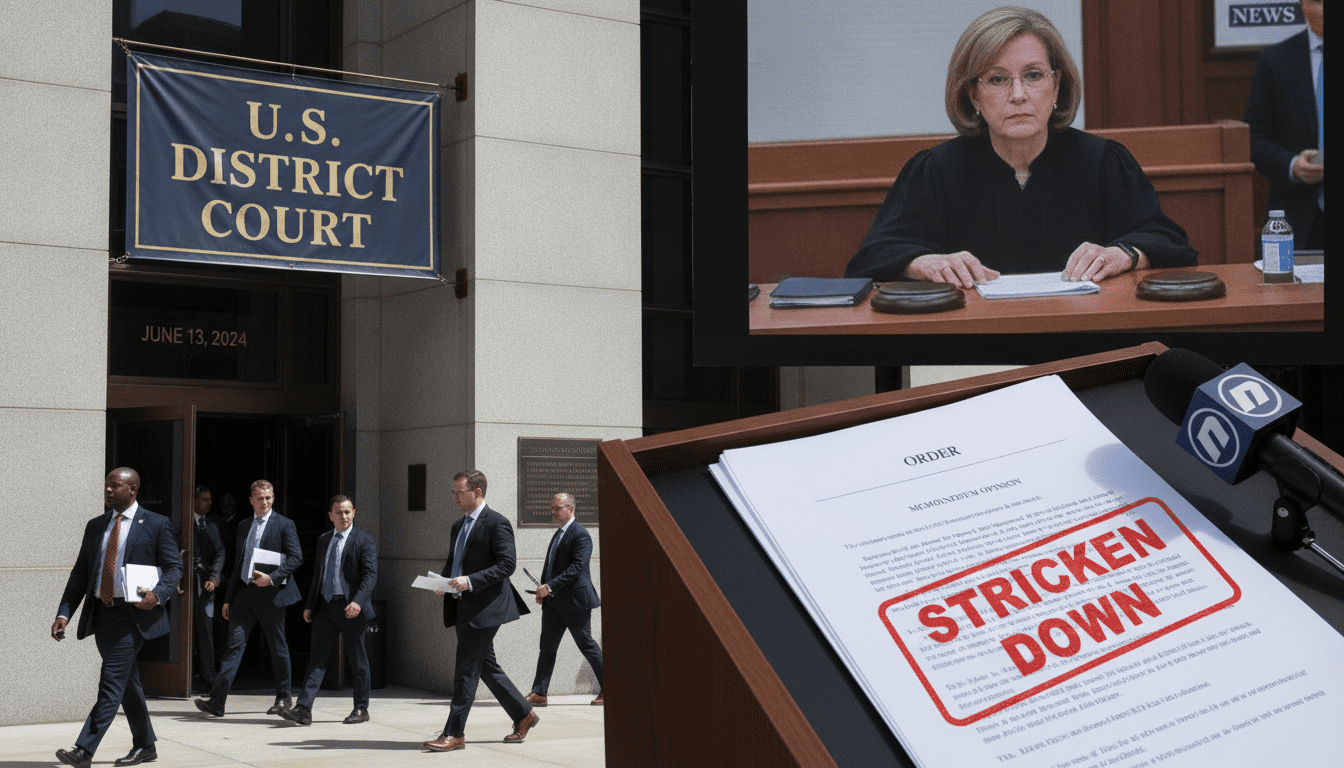
A federal judge in Massachusetts has permanently barred key elements of President Donald Trump’s voter registration order, ruling that the administration overstepped its authority by demanding documentary proof of citizenship for federal voter registration. The decision, which converts an earlier injunction into a lasting ban, stops the enforcement of rules critics say would have reshaped how Americans register for federal elections. (apnews.com)
Judge’s ruling cites separation of powers and permanent ban
District Judge Denise J. Casper wrote that the Constitution assigns election rules to Congress and the states, not to the executive branch, and that the administration’s directive therefore exceeded presidential authority. The ruling turns a prior preliminary injunction into a permanent prohibition on most of the March executive order’s provisions. (apnews.com)
Casper found that forcing documentary proof of citizenship on the federal registration form would impose substantial burdens on states and on eligible voters, many of whom may lack ready access to the documents named in the order. The judge emphasized that the federal government cannot unilaterally rewrite registration procedures for federal contests. (democracydocket.com)
Provisions struck down and how they would have worked
The executive order sought to require applicants using the federal voter registration form to present documents such as a passport or birth certificate to prove U.S. citizenship before their applications could be processed. The order also would have forbidden states from counting ballots that arrived after Election Day, even if postmarked before the deadline, and threatened to withhold certain federal funds from states that failed to comply. (washingtonpost.com)
Legal challenges argued that the changes would be administratively burdensome, risk disenfranchising eligible voters and encroach on state-run election systems. Courts have repeatedly questioned whether the federal executive branch can impose uniform national registration standards without congressional action. (washingtonpost.com)
Parallel rulings curb federal verification tools
The court’s decision follows other recent rulings that have limited federal efforts to centralize citizenship verification. A separate judge blocked government upgrades to the Systematic Alien Verification for Entitlements (SAVE) database after finding the tool could produce erroneous results and lead to wrongful purges of voter rolls. That ruling underlined judicial concern about reliance on federal databases to police state registration lists. (texastribune.org)
Plaintiffs in the Massachusetts case — a coalition of Democratic state attorneys general and civil rights groups — argued that the SAVE database and the registration directives formed a coordinated federal push that threatened voter privacy and access. Courts have thus far been skeptical that the federal government may aggregate sensitive records and impose new registration hurdles without statutory authorization. (votingrightslab.org)
Congressional fight over the SAVE America Act continues
While courts have blocked executive action, the White House has pressed Congress to enact the SAVE America Act, legislation that would require documentary proof of citizenship to register for federal elections and impose stricter voter ID requirements. The bill passed the Republican-controlled House but has stalled in the Senate, and the president has increasingly tied other legislative priorities to approval of the measure. (axios.com)
Lawmakers and legal analysts say the SAVE America Act would mark a fundamental expansion of federal control over federal election administration and that significant practical and constitutional questions remain about how it would be implemented. Senators in both parties have expressed concerns about feasibility and political backlash ahead of the November midterm contests. (abcnews.com)
Practical impact on voters and evidence on fraud
Analysts and nonpartisan groups have warned that documentary proof requirements would disenfranchise segments of the electorate who lack ready access to listed documents, including lower-income voters, older Americans, and some rural residents. Studies cited by voting-rights groups show that a nontrivial share of registered voters do not possess a passport or birth certificate readily available for use at registration. (factcheck.org)
Courts evaluating challenges have noted that allegations of widespread noncitizen voting have not been substantiated to the degree the administration claims, and judges have questioned whether proposed remedies are proportionate to the demonstrated problem. The rulings underscore a judicial insistence on concrete evidence before upending existing registration systems. (news.bloomberglaw.com)
Next steps and potential appeals
The administration is expected to consider appeals to higher courts, and legal observers say the dispute could ultimately reach the U.S. Court of Appeals and possibly the Supreme Court given the far-reaching constitutional questions involved. For now, the permanent injunction prevents the federal government from imposing the contested registration and ballot-counting rules ahead of the November midterms. (news.bloomberglaw.com)
The decision leaves the broader policy debate over national voting standards and voter ID requirements in Congress and state legislatures, where any lasting changes will likely need statutory backing and careful consideration of administrative burdens and access for eligible voters. The courts have, at least for now, reasserted the constitutional boundary between executive action and the separate roles of Congress and the states in overseeing elections.
