
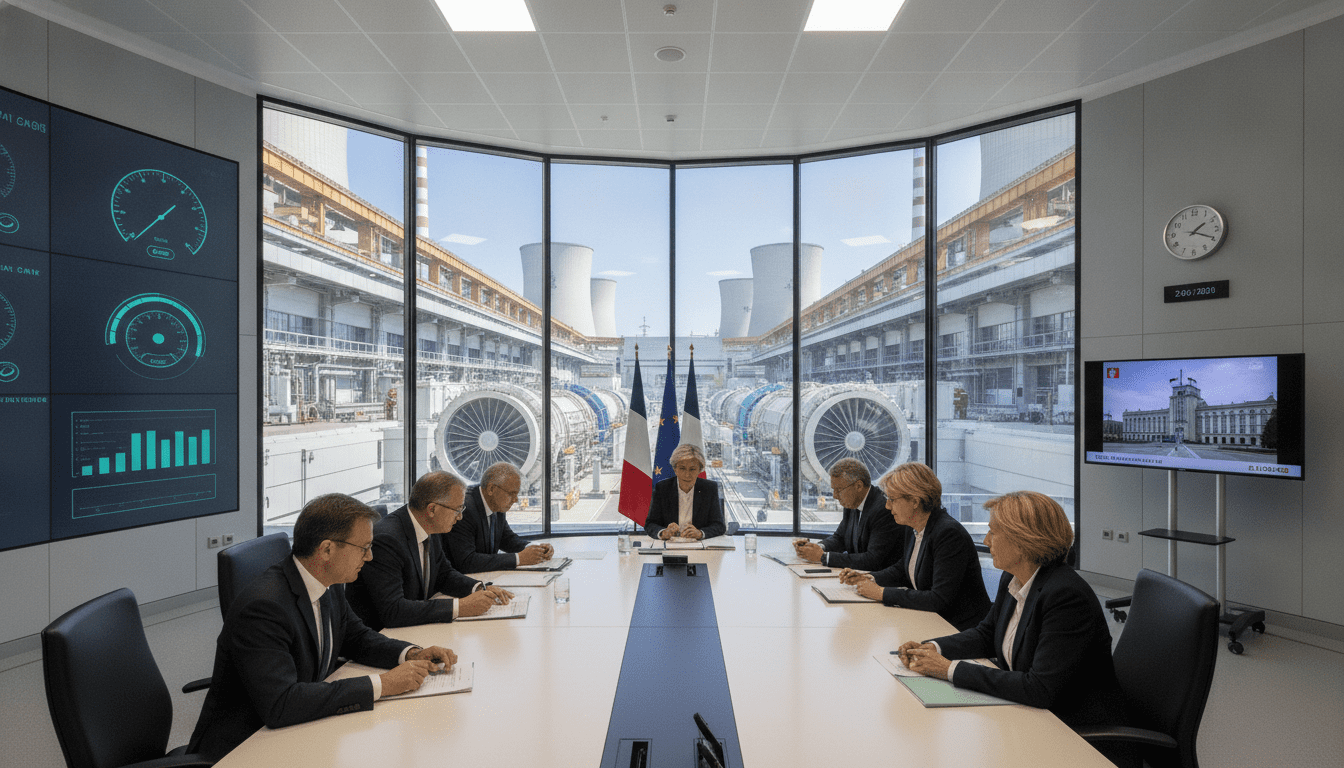
French Nuclear Power Keeps France Ahead in Decarbonization
French nuclear power has propelled France ahead in decarbonization and summer electricity supply; experts reject German claims of widespread reactor failures as myth.
France’s sustained reliance on nuclear power continues to shape its rapid progress in cutting carbon emissions, prompting a pointed exchange with German critics over summer reliability. French nuclear power is central to the debate after recent statements suggesting a large-scale summer outage risk, with officials and analysts urging more measured, evidence-based comparisons. The dispute centers on older reactors such as Cattenom and their contribution to grid stability at a time of rising heat and energy demand.
France’s nuclear fleet and emissions trajectory
France’s nuclear fleet remains a cornerstone of its low-carbon electricity system, supplying a high proportion of annual generation and enabling sharp reductions in emissions from power production. Operators have emphasized that, even with aging units in the mix, managed maintenance and life-extension programs have kept output largely stable. The net effect has been a national energy profile with lower direct CO2 emissions than many of its European peers, reinforcing the country’s lead on decarbonization.
Plant managers and energy analysts point to steady capacity factors and targeted upgrades as drivers of continued performance across older stations. While some reactors require periodic refits or temporary shutdowns for inspection, these interventions are typically scheduled and communicated to neighboring grid operators to avoid supply shocks. The result is an operational record that officials say undercuts blanket claims of imminent, systemwide summer failures.
Cattenom’s role in summer supply
The Cattenom plant near the German border has featured prominently in cross-border discussions because of its size and strategic location. As one of the larger French sites, it plays a practical role in balancing regional demand during hot months when air conditioning and industrial loads rise. Local operators maintain that Cattenom’s output, even from older units, helps stabilize regional supply and reduces the need for carbon-intensive backup generation.
Maintenance cycles at Cattenom and similar facilities are planned to minimize overlap between major outages, a practice meant to protect summer availability. Officials say contingency frameworks, including cross-border coordination and grid management, are designed to ensure that temporary reductions at individual sites do not cascade into broader shortages. Analysts caution that while any single plant can experience issues, the broader system’s redundancy is what prevents large-scale failures.
German claims and the spread of summer blackout narratives
Some German commentators have warned that reactors in France will “fail en masse” in summer, a narrative that French authorities and independent experts describe as misleading. Those warnings often rely on selective readings of maintenance needs or on worst-case scenarios rather than on the operational realities and contingency planning that underpin grid resilience. Energy professionals stress the importance of distinguishing between planned outages and systemic collapse.
The exchange highlights how cross-border politics and public perception can amplify technical uncertainties into broader fears about supply security. Experts on both sides urge public communication that accurately reflects operational data and risk management practices. Mischaracterizations, they warn, can erode trust and complicate cooperative planning between neighboring transmission operators.
Technical reliability, life extensions and public trust
Extending the operational life of older reactors requires careful engineering oversight and investment in safety upgrades, a process that strengthens reliability when executed properly. French authorities have pursued targeted modernization and inspection programs intended to ensure long-term performance while meeting regulatory standards. When these programs run on schedule, they reduce the likelihood that multiple units will be offline at the same time.
Yet the technical complexity of nuclear maintenance means surprises can occur, and transparency is key to maintaining public trust. Regulators and operators say timely disclosure of outages and planned works, along with clear cross-border coordination, helps markets and grid managers plan for any shortfalls. For critics and policymakers alike, the technical debate is inseparable from questions of democratic accountability and communication.
Implications for EU decarbonization strategies
The debate over French nuclear power and summer reliability speaks to a broader policy choice facing European countries: how to balance low-carbon baseload generation with renewables and grid flexibility. France’s experience shows that nuclear can underpin rapid emissions reductions in the power sector, but it also underscores the need for robust maintenance regimes and regional coordination. For neighboring countries, the lesson is that claims about other systems’ vulnerabilities should be checked against operational facts and planning protocols.
As the EU pursues its decarbonization targets, cross-border cooperation on grid management, capacity markets and emergency planning will remain essential. Policymakers are being urged to prioritize technical collaboration and shared transparency so that comparative narratives do not undermine collective progress. Ultimately, the energy transition will hinge on pragmatic, evidence-driven policy choices rather than on alarmist projections.
The current exchange serves as a reminder that French nuclear power remains a material factor in Europe’s path to lower emissions, and that accurate, calm assessments of operational risk are indispensable for effective regional planning.
