
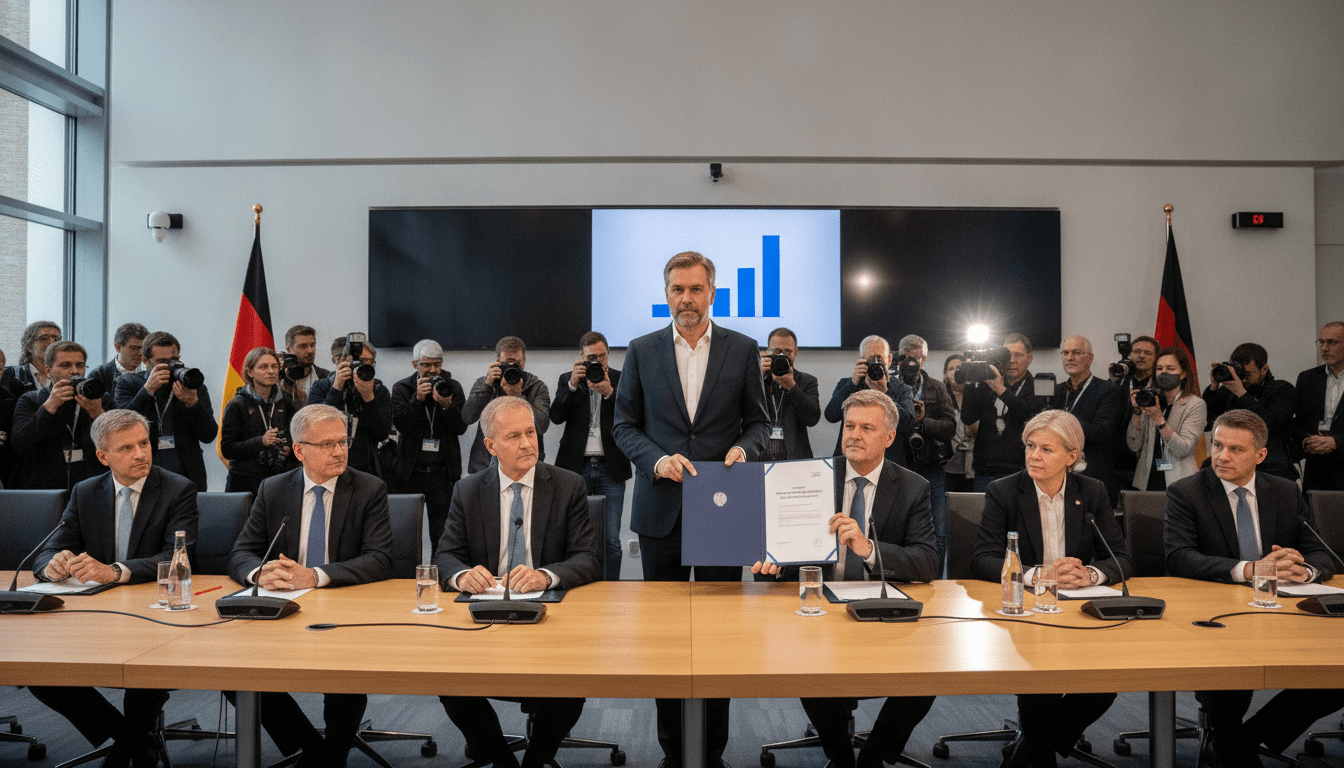
German pension reform faces its first political test after Rentenkommission presents 30 proposals
Germany’s pension reform is under intense scrutiny after the federal Rentenkommission finalized roughly 30 recommendations aimed at restructuring the statutory pension system and easing long‑term fiscal pressure. The commission’s proposals, due to be presented to Chancellor Friedrich Merz and Federal Minister for Labour and Social Affairs Bärbel Bas, set a timetable for debate that will determine whether the government can translate expert consensus into legislation. (focus.de)
Rentenkommission’s mandate and composition
The Rentenkommission was established by the federal government in early 2026 to produce a comprehensive set of recommendations for the statutory pension system. The body includes academics, former officials and parliamentarians tasked with reconciling fiscal sustainability with social protection objectives in a rapidly ageing society. (bundesregierung.de)
The commission’s remit focused on medium‑ and long‑term measures, including options to adjust contributions, benefits and the retirement age, and to explore mixed financing models. Its work was intended to provide a politically feasible roadmap that coalition partners could use as the basis for a legislative package. (bundesregierung.de)
Summary of the commission’s key recommendations
According to participants and reporting, the panel coalesced around roughly 30 concrete measures covering eligibility, financing and incentives for later retirement. Proposals reportedly include measured increases in the statutory retirement age, limits on early retirement pathways, and the introduction of funded elements alongside pay‑as‑you‑go benefits to diversify risk. (ksta.de)
The commission also examined options to broaden the contribution base, including targeted inclusion of groups currently outside the statutory system, and recommended mechanisms to shield low earners from disproportionate losses. Those recommendations aim to slow the projected rise in pension spending while preserving a solid foundation of basic income in old age. (ksta.de)
Political stakes for Chancellor Friedrich Merz
Chancellor Friedrich Merz has publicly framed the overhaul of pensions as central to his broader reform agenda, making the package a personal and political test for his administration. Success in passing a coherent, credible reform would bolster his position; failure could intensify existing strains within the governing coalition. (merkur.de)
Merz’s emphasis on a “big” pension reform raises the pressure on coalition partners to deliver swift legislative follow‑through, but also exposes the chancellor to heightened expectations from both supporters and critics. The political calculus will hinge on whether the measures can be presented as balanced and socially acceptable. (merkur.de)
Bärbel Bas and the SPD’s negotiating position
Federal Minister Bärbel Bas, who leads the Labour and Social Affairs portfolio, has signalled caution about immediate, wholesale adoption of the commission’s proposals. Bas has indicated that her ministry will only support measures that emerge from broad agreement and that any legislative draft will be subject to careful political vetting. (bmas.de)
The SPD’s internal balance complicates the picture: parts of the party favour stronger public financing and protection for low‑income pensioners, while other elements are receptive to structural changes aimed at long‑term affordability. That divergence means the SPD will play a pivotal role in shaping whether recommendations become policy. (ksta.de)
Responses from parties, unions and welfare groups
Political parties offered guarded reactions as details circulated, with supporters hailing the technical thoroughness of the commission and critics warning of social risks. Trade unions and welfare organisations have already voiced concerns about proposals that would reduce the pace of benefit growth or push more costs onto contributors. (ksta.de)
Opposition parties and social advocates say any reform must preserve dignity in old age and avoid transferring undue burdens to women, low‑paid workers and those with interrupted careers. Those actors are likely to mobilise if legislative drafts fail to include compensation measures for vulnerable groups. (ksta.de)
Path to legislation and timing
Government sources indicate the commission’s report will be handed to Chancellor Merz and Minister Bas in a scheduled presentation, after which party leaders must decide how to proceed with drafting a bill. The timeline for parliamentary action is expected to stretch into the coming months, with disputes over detail likely to shape the legislative calendar. (focus.de)
Any eventual bill will require complex trade‑offs inside the coalition, including agreement on financing instruments, transitional arrangements and safeguards for low‑income retirees. Lawmakers will face the challenge of reconciling expert recommendations with political feasibility ahead of what could be decisive votes in the Bundestag. (focus.de)
The Rentenkommission’s report crystallises long‑standing policy debates about how to preserve Germany’s social contract in retirement while addressing demographic and fiscal pressures. The coming weeks will test whether a technical consensus can survive the realities of coalition politics and emerge as durable reform.
