
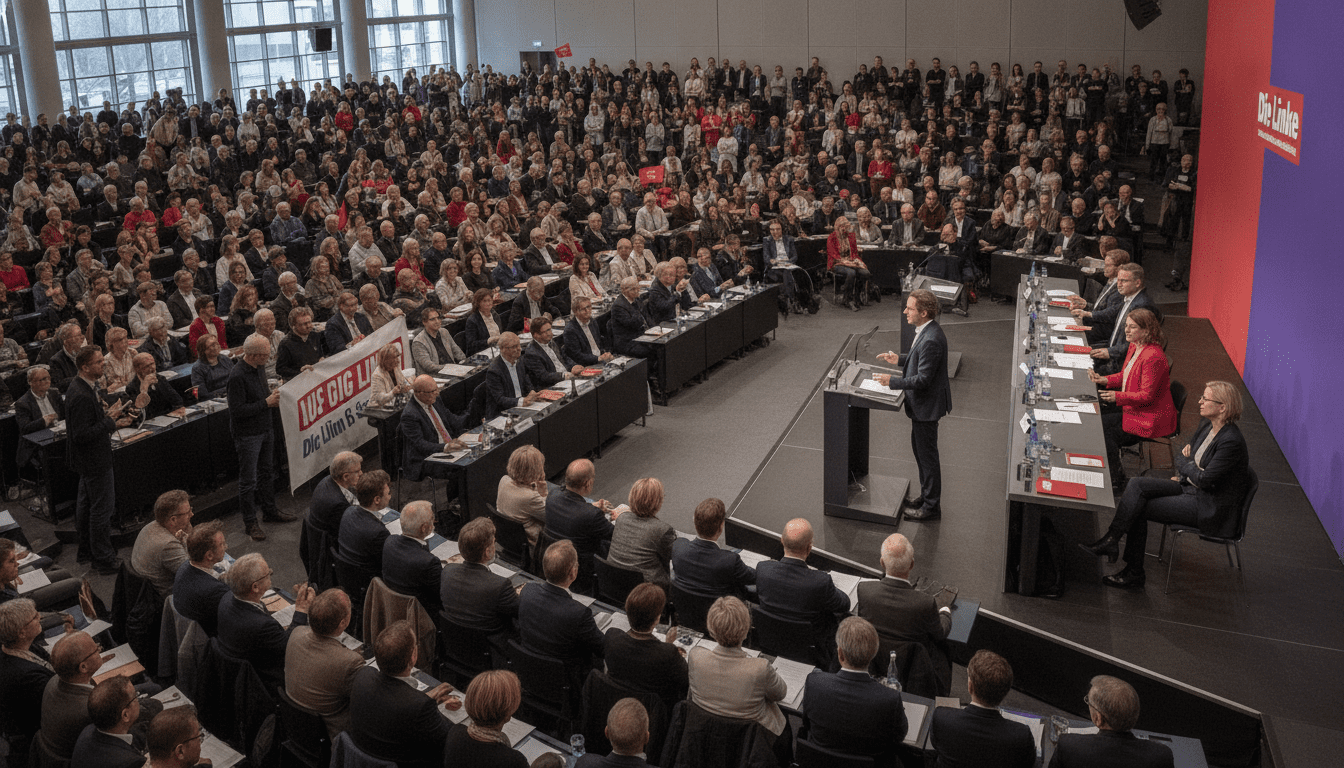
Die Linke Revives at Potsdam Conference, Tension After Pantisano’s ‘Fascist’ Remark
Die Linke’s resurgence at its federal conference in Potsdam was unmistakable, but the celebration was tempered by controversy after newly elected chair Luigi Pantisano described parts of the CDU’s policies as “partially fascist.” The party hailed renewed membership growth — notably among younger and many female members — while internal disputes over rhetoric and strategy signalled continuing strain. Die Linke now faces the challenge of converting momentum into coherent policy and electoral strategy ahead of looming regional contests.
Party Conference in Potsdam Signals Momentum
Die Linke delegates in Potsdam repeatedly highlighted the party’s recovery from previous setbacks and welcomed a stronger influx of younger members. Many speeches emphasized a return to unity and a more congenial internal tone, contrasting with the fractious years that preceded the gathering.
Delegates pointed to recruitment gains and energized local branches as evidence that the party has escaped what some feared was a political death. The upbeat atmosphere did not, however, resolve deeper disagreements over direction and messaging.
Luigi Pantisano’s Remarks Prompt Rapid Reaction
The election of Luigi Pantisano as federal chair drew attention when he suggested the CDU’s politics could be described, at least in part, as “fascist.” The phrase immediately provoked criticism from within Die Linke and from external observers, who called the comparison inflammatory and historically fraught.
Several regional party figures publicly rebuked Pantisano, urging restraint and precision in political language. The episode underscored how leadership statements can quickly reshape public perceptions and force internal clarifications.
Ideological Tensions Between Dogma and Pragmatism
A recurring theme at the conference was the persistence of a rigid, doctrinal worldview among segments of Die Linke that many delegates said hampers broader appeal. Critics within the party argued that sweeping labels and uncompromising rhetoric impede cooperation where tactical compromise might prevent greater political risks.
Pragmatists who prevailed on several votes argued for flexible tactics in dealing with rival parties, while left-wing purists cautioned against diluting core principles. This tug-of-war reflects a longer-term identity debate about whether electoral recovery should be pursued through ideological purity or practical coalition-building.
Strategic Dilemma: Opposing AfD While Isolating CDU
Delegates also grappled with the practical implications of confronting both the CDU and the AfD. Some warned that treating the CDU as a categorical enemy could complicate efforts to block AfD influence in state governments such as those in Magdeburg and Schwerin.
The conference rejected proposals that would erect a formal barrier to any cooperation with the CDU, a decision that pragmatists framed as necessary to preserve maneuvering room in regional politics. Still, the party faces the delicate task of maintaining a clear opposition to the AfD without alienating potential allies on the center-right where democratic responsibility demands collaboration.
Consensus on Social Policy and Anti-Privatization Agenda
Despite disputes over rhetoric, delegates displayed broad agreement on core programmatic priorities, chiefly resistance to what they described as social retrenchment and an emphasis on public goods over private profit. Speakers repeatedly called for robust social investment, protections for workers, and stronger regulation of markets.
This shared platform gives Die Linke a clear substantive identity to present to voters, even as tactical disagreements linger. Party documents emerging from the conference reaffirmed commitments to social welfare and an assertive critique of neoliberal economic policies.
Implications for Upcoming Regional Elections
Political strategists within and outside Die Linke said the party’s short-term prospects will hinge on translating conference energy into disciplined campaign messages and coherent local strategies. Success in state-level contests depends on mobilizing the newly recruited members while reassuring centrist voters alarmed by extreme rhetoric.
Observers note that how Die Linke manages its leader’s public statements and internal debates in the coming weeks will be critical to its credibility. The party must demonstrate it can be both principled and responsible in coalition-sensitive environments.
Die Linke has clearly regained momentum, but the Potsdam conference made plain that revival alone will not erase longstanding fissures. The next phase will test whether the party can balance a renewed grassroots base and a unified social-policy agenda with prudent strategic choices and disciplined public messaging.
