
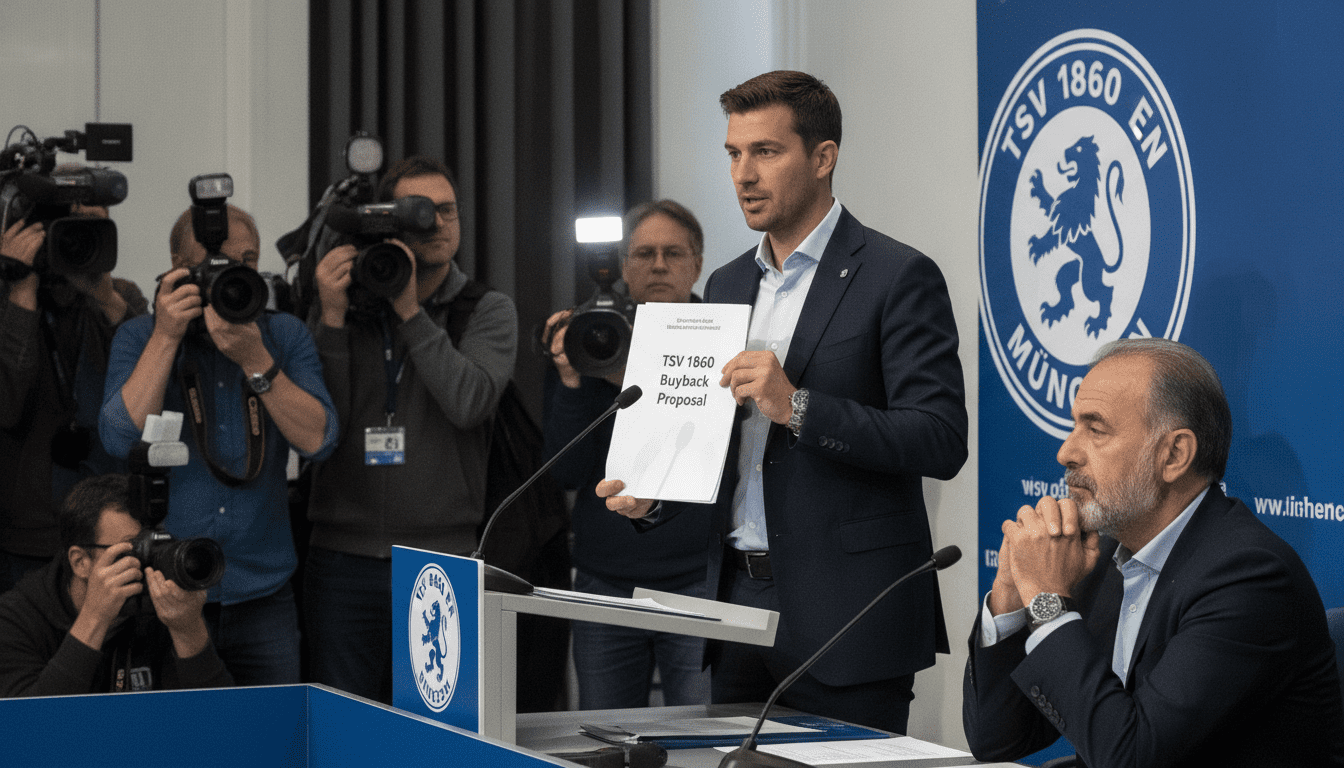
Return of TSV 1860 Munich? Supervisory board member proposes buyback of investor Hasan Ismaik
TSV 1860 Munich supervisory board member proposes buyout of investor Hasan Ismaik so the club can be returned to members, but major financial and legal challenges remain.
The supervisory board of TSV 1860 Munich has been presented with a proposal to bring the club back into the hands of its members by buying out long-standing investor Hasan Ismaik. Nicolai Walch, a member of the supervisory board, outlined a vision in which Ismaik would be paid an agreed sum and welcomed back into the club community as a part of the “Löwen” family. The announcement immediately reopened debates over governance, finances and the practical possibility of reversing more than a decade of investor-led control at TSV 1860 Munich.
Investor takeover and years of tension
The club’s relationship with Hasan Ismaik began after he acquired a controlling stake and invested heavily in TSV 1860 Munich to stabilize its finances. That ownership brought resources but also controversy, as some board decisions and public disputes deepened divisions between the investor and club members. Over time those tensions grew into a central issue in club governance, provoking calls from parts of the membership for greater control or an exit strategy.
Walch framed the proposal as a remedial step to heal fractures that have developed since the investor era. He argued that a return of the club to its members could restore traditional structures and reconnect leadership with the fan base. Supporters of the idea say it would reinforce democratic control, while critics warn that reverting ownership could jeopardize short-term stability without a viable funding plan.
Outline of Walch’s buyback proposal
Walch proposed that Hasan Ismaik be offered a fair market compensation to sell his stake back to the club’s membership, with the expectation that he would remain welcome in a non-controlling capacity. The plan, as described by Walch, emphasizes reconciliation and continuity rather than punitive measures against the investor. It envisages a structured offer that values the investor’s past contributions while restoring member influence over key decisions.
Details on valuation, payment schedule and governance changes were not disclosed in full when the proposal surfaced. The proposal explicitly acknowledges the financial imbalance between a wealthy investor and a membership base that lacks comparable liquidity, and it calls for creative mechanisms to bridge that gap.
Members’ financial limitations and fundraising options
One of the central obstacles is the simple arithmetic of who would pay to reacquire the club. TSV 1860 Munich’s membership, while extensive and passionate, does not possess the capital required to match the valuation an investor might demand. Small-scale contributions and member bonds can supplement funds but are unlikely to close a large purchase price on their own.
Possible fundraising avenues discussed informally include staged payments, community bonds, third-party loans, or a consortium of local sponsors and former players. Any viable model would need to balance collective ownership goals with safeguards to prevent future instability, and it would likely require the supervisory board and executive leaders to negotiate credit terms and legal frameworks acceptable to both the investor and membership.
Legal and contractual barriers to a buyback
Reacquiring ownership is not solely a matter of money; it also involves navigating shareholders’ agreements, governance covenants and regulatory oversight. Contracts governing Ismaik’s stake may contain protective clauses, exit terms, or performance-related covenants that complicate an immediate buyout. Additionally, any transfer of control could trigger league or federation reviews under DFB and league ownership rules.
Legal advisers will need to examine the investor agreements for resale restrictions, change-of-control provisions and any potential liabilities tied to past decisions. The timeline for a clean transaction could therefore stretch months or longer, as legal clearance and financial due diligence are completed.
Fan reaction and political pressure within the club
Reaction among fans has been mixed but vocal. Many supporters welcomed the notion of returning TSV 1860 Munich to member control as an emotional and symbolic restoration of club identity. Fan groups and member associations emphasized that democratic governance and transparency are priorities if a buyout proceeds.
Conversely, some stakeholders cautioned against romanticizing a buyback without a credible financial model, warning that repeated governance disruptions have historically undermined sporting performance. Local politicians and business figures who view the club as a civic asset indicated interest in facilitating a constructive solution, but none committed to a specific role pending a formal proposal.
Potential timelines and next steps for the club
If the supervisory board decides to pursue Walch’s plan, the immediate next steps will involve appointing financial and legal advisors, conducting a valuation, and opening negotiations with Hasan Ismaik. Any formal offer would need shareholder approval and likely a vote by club bodies depending on corporate structure. Observers expect that a credible transaction would take several months and require phased financing to be acceptable to all parties.
Stakeholders also emphasized the importance of a parallel governance reform plan that would define member rights, oversight mechanisms and financial controls to prevent recurrence of past conflicts. Without such safeguards, a return to membership control could merely transplant existing vulnerabilities into a different structure.
Ultimately, the proposal to buy out Hasan Ismaik has reopened fundamental questions about identity, control and sustainability at TSV 1860 Munich, forcing the club to weigh emotional imperatives against financial reality. The coming weeks are likely to determine whether Walch’s plan moves from aspiration to actionable strategy, and whether the club can reconcile its history with a stable future under member stewardship.
