
Cologne and Düsseldorf Mayors Propose Pilot to Tolerate Micro-Dealing in Supervised Drug Consumption Rooms
Cologne and Düsseldorf mayors seek a pilot to tolerate micro-dealing inside supervised drug consumption rooms, citing Zurich’s model to reduce open drug scenes.
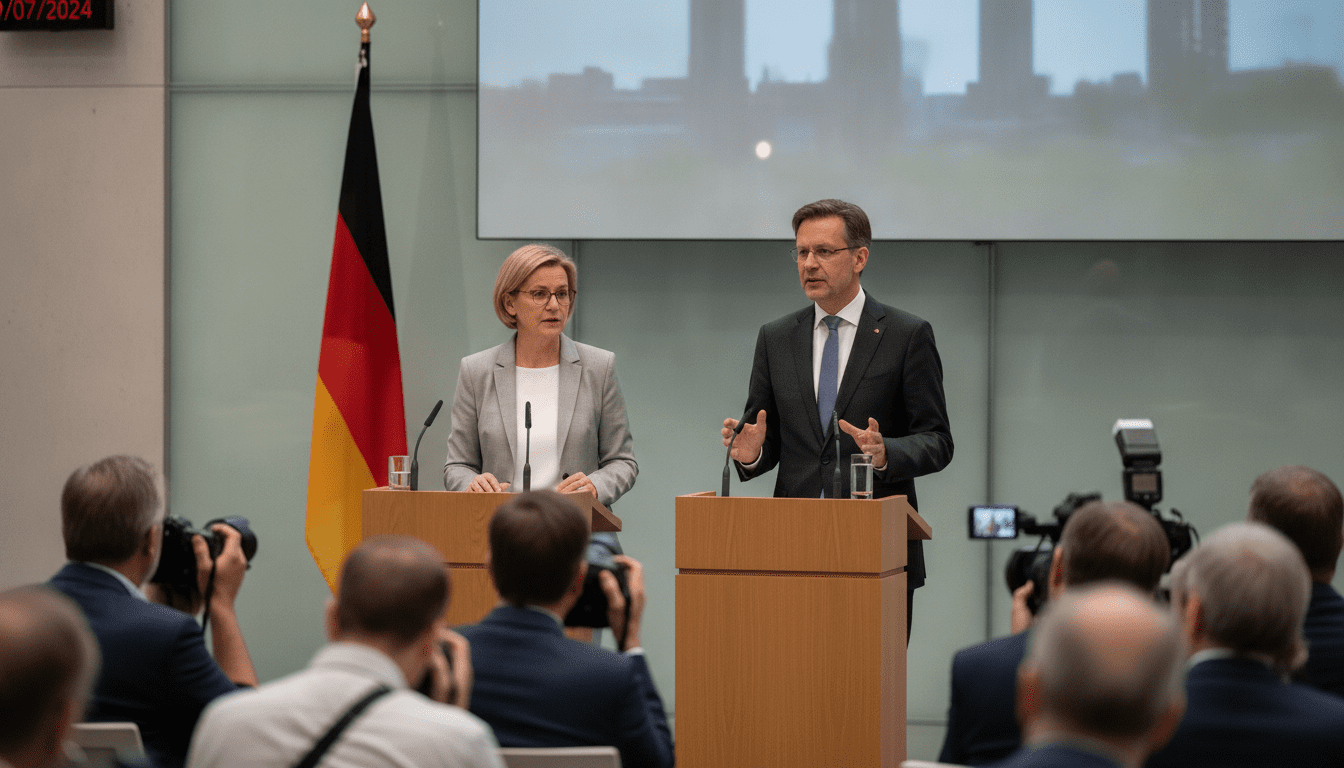
Torsten Burmester of Cologne and Stephan Keller of Düsseldorf have jointly proposed testing a policy that would tolerate micro-dealing in medically supervised drug consumption rooms as part of a pilot project. The mayors say the move is a pragmatic response to a growing and volatile open drug scene driven by crack and other stimulants, and they argue that controlled micro-dealing could restore public order and channel users into health services.
Mayors request legal clarity for a model project
Burmester and Keller sent a letter in May to the North Rhine-Westphalia ministers for justice, health and the interior asking whether a time-limited pilot could be permitted without breaching criminal law. They say operators and staff at low-threshold addiction services need clear, legally secure frameworks so that employees do not face prosecution while carrying out health-oriented work. A formal reply from the state government is still pending, the two officials said during a joint meeting at Cologne’s historic town hall.
Zurich model cited as blueprint
The proposal draws directly on the Zurich approach established in the 1990s, which combines prevention, treatment, harm reduction and repression. One element of that model is the so-called “ant trade” or micro-dealing: within designated, medically supervised spaces, exchanges of minute quantities of hard drugs between dependent users are tolerated. Proponents point to Zurich’s reported reductions in visible dealing, violent turf fights and street-based procurement crimes as evidence the model can work when embedded in a comprehensive health strategy.
Crack’s rapid spread changes the urban picture
Both mayors and local health officials say the current crisis differs from earlier heroin-dominated problems because crack produces intense, short-lived highs and no medically accepted substitution treatment exists. The drug’s effects and frequent re-use can lead to aggressive begging, theft and severe physical decline in weeks rather than years. Cologne’s Neumarkt and areas around Düsseldorf’s main railway station are cited as hotspots where residents and business owners have reported escalating public nuisance and distress.
Local measures have only shifted the problem
Cities have repeatedly tried to push open drug scenes out of visible public spaces, with mixed results. Düsseldorf’s clearance of the makeshift “Grand Central” encampment near the central station in late 2023 dispersed a community but did not resolve underlying need, officials say. After closures, the scene migrated to other public squares and to areas adjacent to libraries and shops, creating a “wandering” problem that hampers consistent outreach by social workers and medical teams.
Legal and political obstacles to implementation
A major hurdle is the legal duty of police to investigate criminal offenses under Germany’s principle of legality, which complicates any ad hoc toleration of illegal drug transactions. Burmester and Keller argue that a legislative amendment similar to the one that enabled sanctioned drug consumption rooms in the Narcotics Act would be required for a secure pilot. They point to a December agreement by federal and state leaders that envisages, by January 1, 2027, provisions allowing limited trial exemptions for municipalities — a window the mayors hope could accommodate scientifically evaluated experiments.
Mayors insist the plan is health-first and not legalization
Both leaders emphasize that the proposal is not a call for laissez-faire or a step toward broad legalisation. They explicitly reject legalisation of hard drugs and criticize the partial cannabis liberalisation enacted by the federal government as strengthening organised crime, in their view. Instead, they frame micro-dealing tolerance as a narrowly confined, health-driven instrument: trade would be permitted only between dependent users inside supervised centers, while public-space dealing and distribution outside designated areas would continue to be prosecuted.
A test case for restoring trust in urban governance
Burmester and Keller portray the initiative as an attempt to regain control over declining public spaces and to shore up citizens’ confidence in municipal problem-solving. They argue that visible failure to contain street-level suffering and disorder risks eroding trust in democratic institutions. Both say their cities are prepared to act as “pioneer municipalities” if the legal pathway is opened and the experiments are accompanied by rigorous scientific evaluation and tight operational rules.
The mayors also flag emerging threats such as synthetic opioids and the broader influx of cocaine via international trafficking networks as reasons to prepare and adapt policy tools. Their proposal anticipates continuous monitoring, clear criteria for participation, and strict limits on quantities and actors allowed inside the facilities. Whether the state government or federal lawmakers will approve a legal carve-out remains uncertain, but the joint appeal from two major city leaders has pushed micro-dealing into the heart of the national debate on urban drug policy and public safety.
