
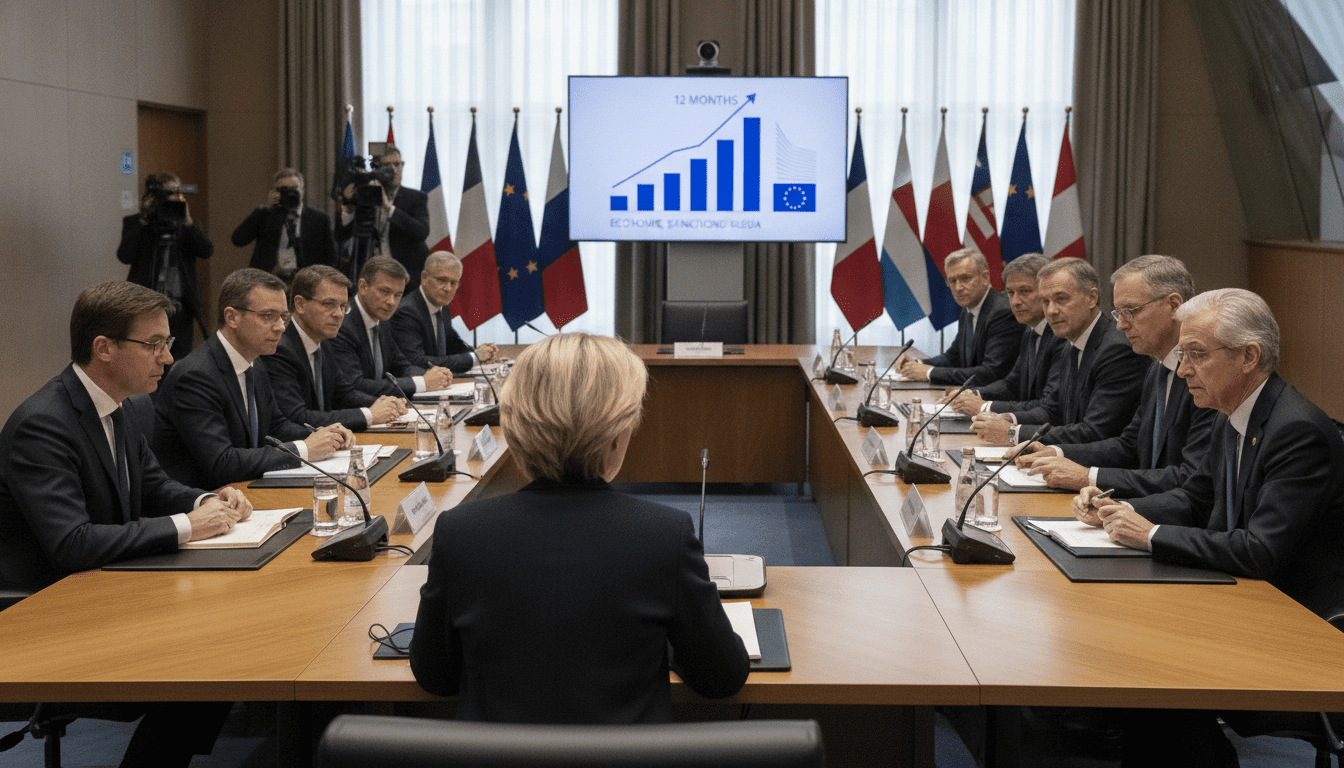
EU extends sanctions against Russia for 12 months after Brussels summit
EU extends sanctions against Russia for 12 months after Brussels summit; leaders align with G7, target shadow fleet and open limited diplomatic contacts.
The EU extends sanctions against Russia for twelve months following a decision by EU heads of state and government at a summit in Brussels, an EU Council spokesperson said after talks with Ukrainian President Volodymyr Zelensky. The move marks the first time the bloc has chosen a full year for renewal, shifting from previous six-month extensions and signaling a longer-term commitment to sustained pressure on Moscow. Leaders framed the measure as part of coordinated international efforts to compel an end to the war in Ukraine while keeping diplomatic channels open where necessary.
Leaders’ decision at the Brussels summit
The extension was agreed during a summit of EU member state leaders in Brussels and announced by the office of EU Council President António Costa after his discussions with President Zelensky. The leaders endorsed prolonging the economic measures for 12 months, a lengthier timeframe than recent practice, reflecting both strategic calculation and political consensus. Officials described the formal adoption of the legal text as likely to be completed by the Council of the European Union in the coming weeks.
Scope and instruments of the sanctions
The sanctions package covers measures across trade, finance, energy, industry, transport and luxury goods, officials confirmed, including a ban on seaborne imports of Russian crude oil. A number of Russian banks remain disconnected from the international financial messaging system Swift, and restrictions continue to target military-industrial supply chains. Together, these instruments aim to limit Moscow’s ability to finance and sustain military operations while constraining access to key export revenues.
Coordination with G7 and new targeted measures
EU leaders emphasized alignment with G7 partners, who in Évian-les-Bains announced a further set of restrictions designed to choke evasive practices. The G7 measures include sanctions against an expanded list of entities and plans to target roughly 20 additional tankers linked to the so-called shadow fleet used to disguise the origin of Russian oil shipments. Officials said the transatlantic coordination was intended to close loopholes and increase the effectiveness of export controls and maritime enforcement.
Political change in Hungary removes prior obstacle
For years, one-year renewals were blocked by then-Hungarian Prime Minister Viktor Orbán; the shift to a 12-month mandate reflects recent political change in Budapest. Hungary’s new prime minister, Péter Magyar, has signalled a more critical posture toward Russia than his predecessor, which helped unlock consensus among member states. Diplomats described the Council vote as largely procedural once national political barriers were removed, with the formal legal adoption expected to follow.
Diplomatic contacts with Moscow and EU’s stance
The office of António Costa confirmed that short diplomatic contacts with Russian counterparts had been established in recent weeks to keep channels open for communication, though substantive negotiations have not taken place. EU officials stressed that maintaining channels of communication does not make the bloc a mediator, and that the primary objective remains supporting Ukraine’s pursuit of a just and lasting peace. The Council’s public statements reiterated that any diplomatic outreach must be consistent with Ukraine’s interests and international law.
Impact on energy markets and enforcement challenges
Sanctions on seaborne oil and tighter maritime enforcement are designed to reduce revenues flowing to Moscow, but experts caution about potential economic and logistical side effects. Energy markets remain vulnerable to supply and price volatility, particularly if circumvention persists through transshipment or illicit reflagging of tankers. Enforcement across jurisdictions and effective tracking of the shadow fleet will be central to translating policy into tangible pressure on the Russian economy.
The decision to move to an annual renewal underscores a strategic shift in EU policy, aiming to provide predictability and to signal endurance in the face of continued hostilities in Ukraine. Member states characterized the longer duration as a tool to enhance planning for enforcement agencies and to maintain coherent alignment with G7 partners.
Observers say the success of the extended sanctions will hinge on coordinated monitoring, stricter maritime oversight, and continued political unity among EU capitals. The Council’s forthcoming legal adoption will set the framework for operational steps by customs, financial authorities and law enforcement across member states.
The EU’s renewed sanctions, coupled with parallel G7 measures, represent a multipronged attempt to increase economic and diplomatic pressure on Russia while preserving a framework for limited diplomatic engagement aimed at de-escalation.
