
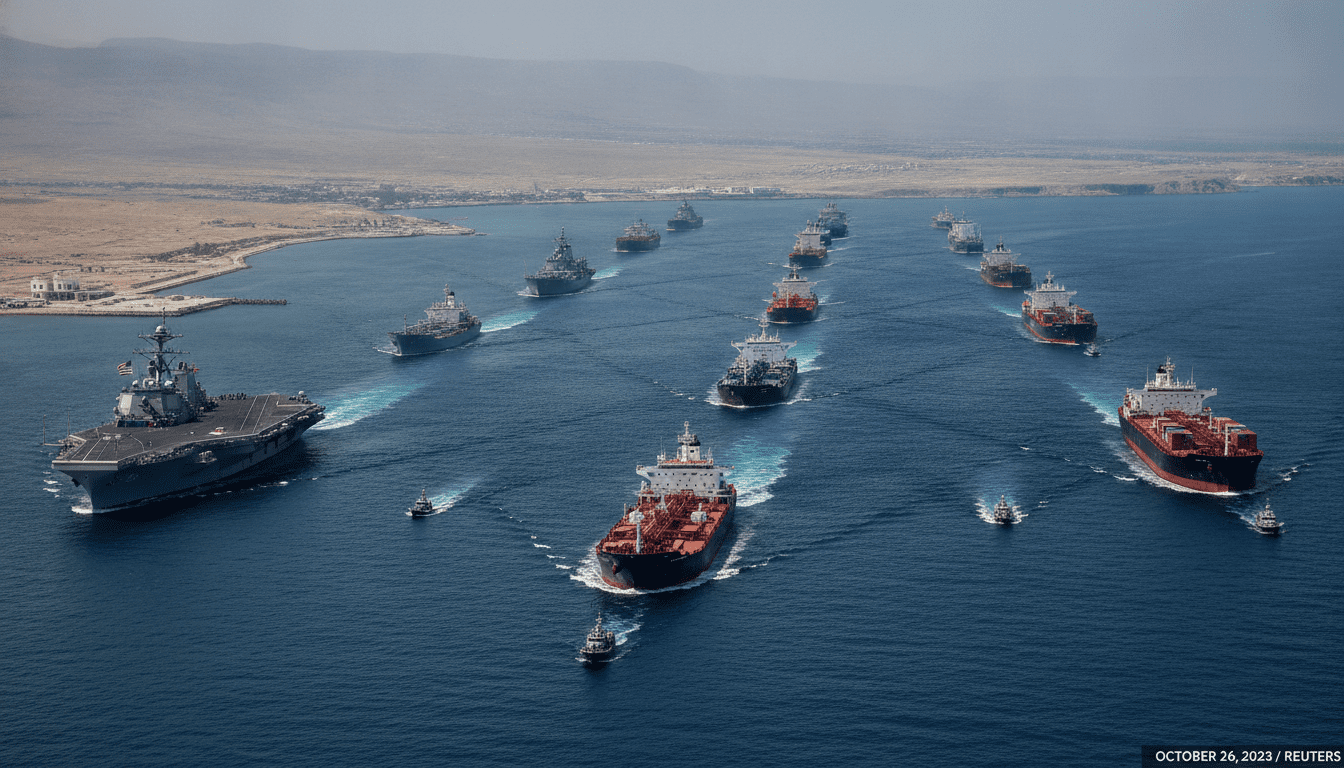
US allows more than a dozen vessels through US naval blockade of Iran after memorandum, VP says
Following a US–Iran memorandum, the US naval blockade of Iran allowed over a dozen ships to pass, Vice President JD Vance said, marking a tactical easing.
The White House announced that, after Washington and Tehran signed a memorandum of understanding, the US military permitted at least 12 commercial vessels to transit areas previously subject to the US naval blockade of Iran, Vice President JD Vance told reporters. Vance said the movement reflected the United States “honouring our end” of the initial phase of the agreement while CENTCOM retained operational oversight. The announcement signals a notable, if measured, shift in maritime operations in a sensitive region.
Vance confirms ship movements through blockade
Vance told journalists that the US military command responsible for the Middle East had allowed “north of a dozen” ships to pass through the blockade, signalling compliance with the early steps of the memorandum. He framed the decision as operationally limited and contingent on the terms agreed by both capitals. The vice president did not provide a comprehensive manifest of the vessels or specify cargoes, leaving details of the transits sparse.
CENTCOM’s operational role described
US Central Command, which oversees naval operations in the region, managed the permissions for the transits, according to the administration’s description relayed by Vance. CENTCOM’s involvement underscores that the move was executed within existing military command structures rather than as an ad hoc political directive. Officials described the permissions as tactical and reversible, tied to the memorandum’s initial provisions.
Memorandum of understanding framed as phased deal
The administration said the passage of ships followed the signing of a memorandum of understanding between Washington and Tehran, with both sides taking early, reciprocal steps. The memorandum was presented as a staged arrangement that seeks to reduce immediate maritime tensions while preserving leverage for later phases. Officials emphasised the limited scope of the initial actions, characterising them as confidence-building measures rather than a full normalization of relations.
Shipping and regional trade implications
Allowing commercial vessels to pass through the US naval blockade of Iran could ease short-term disruptions for regional trade, shipping insurers and energy markets that monitor Gulf transit routes closely. Analysts say even small operational changes can affect commercial decisions by vessel operators and charterers, who price risk into routing and insurance. Shipping firms will likely watch for further clarification on rules of engagement, inspection routines and insurance implications before altering long-term routing strategies.
Legal and sanctions questions persist
Legal experts noted that permitting ship transits under a naval blockade is distinct from lifting sanctions or changing long-term trade policy, and that the memorandum does not automatically alter the economic restrictions that apply to Tehran. Naval permissions address immediate maritime safety and movement, while sanctions and export controls remain matters for separate policy decisions and legislative processes. Observers warned that ambiguity between maritime operations and economic policy could create compliance challenges for carriers and businesses.
Unclear reactions from Tehran and global capitals
There was no immediate, detailed public reaction from Tehran in response to Vance’s statement, and other capitals were reported to be seeking clarification on the memorandum’s scope and durability. Diplomatic interlocutors in the region are expected to monitor whether the permission for ship movements persists, expands or is reversed as the agreement’s next steps are implemented. Many governments and industry stakeholders emphasised the need for transparent rules to prevent misunderstandings at sea.
The administration characterised the permitted transits as part of an “early part” of the arrangement, suggesting subsequent phases may involve reciprocal steps or additional safeguards. Observers said much will depend on verification mechanisms and whether both sides adhere to their commitments without unilateral changes.
The move to allow vessels through the US naval blockade of Iran marks a tactical shift in maritime posture tied to a diplomatic understanding, but officials stress it is a narrowly defined step within a phased process that leaves wider policy questions unresolved.
