
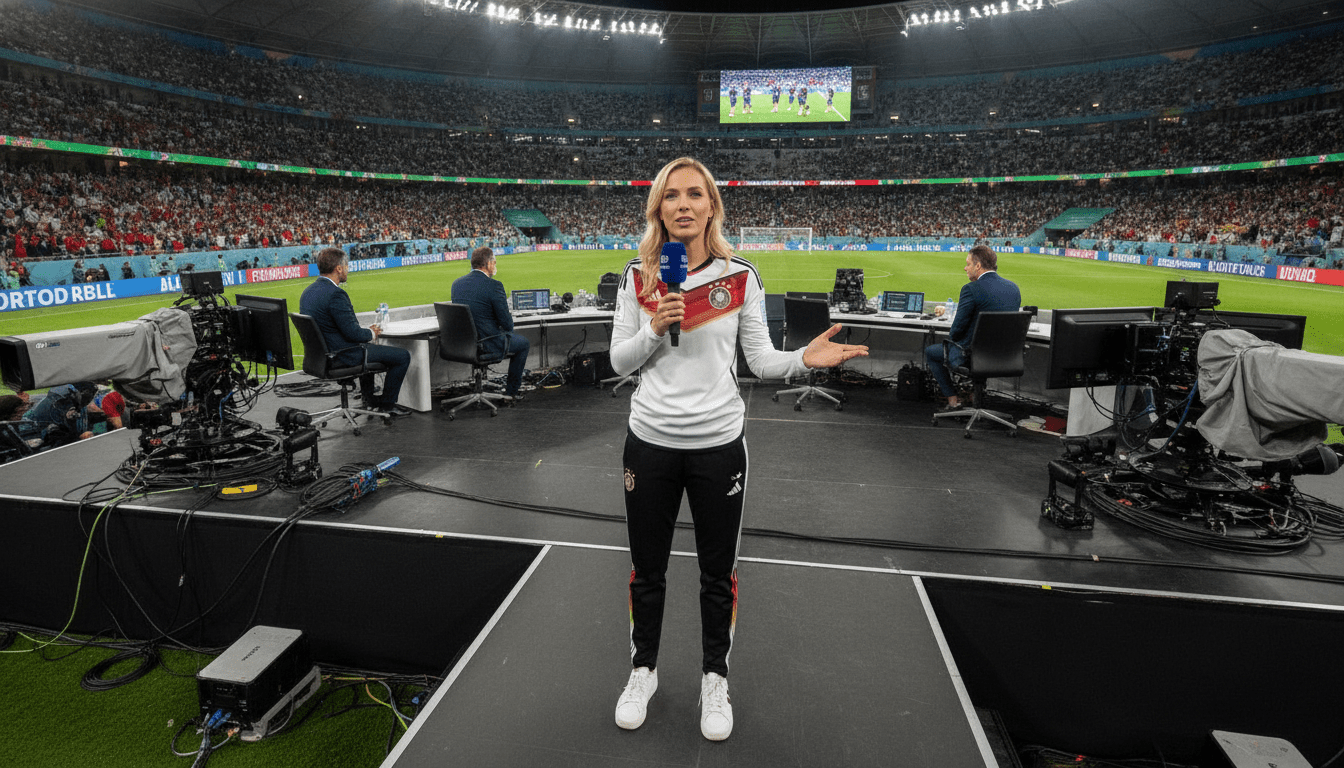
Esther Sedlaczek’s rise from RTL assistant to World Cup presenter and her private struggle
Esther Sedlaczek’s meteoric rise from an RTL production assistant to a World Cup presenter watched by millions has captured public attention, even as she quietly battled a deep personal crisis that almost derailed her career. The presenter’s on-screen chemistry with former player Bastian Schweinsteiger brought her to the forefront of live sports broadcasting, while her off-screen journey toward recovery became a defining part of her story. This article charts Sedlaczek’s professional ascent, the crisis she endured, and the turning points that led to her return to national visibility.
Early career and rapid ascent
Esther Sedlaczek began her television career in entry-level roles at RTL, where she worked her way through production and reporting assignments. Colleagues describe her as ambitious and meticulous, traits that helped her secure on-air opportunities at a fast pace. Within a few years she moved from behind-the-scenes work to studio presenting, a transition that positioned her for high-profile assignments.
Her promotion to prominent match-day and tournament coverage reflected both editorial trust and audience approval. Sedlaczek’s ability to explain tactics and manage live conversation made her a valuable partner in studio formats. That skill set soon led to regular appearances alongside well-known analysts and former players.
High-profile World Cup duties with Schweinsteiger
The World Cup elevated Sedlaczek’s profile when she was paired with Bastian Schweinsteiger for studio coverage, a pairing that drew millions of viewers. The duo’s exchanges combined technical analysis with accessible commentary, helping bridge expert insight and mainstream audience interest. Broadcast figures and social media response underscored the pairing’s reach and influence.
Sedlaczek’s role in these broadcasts required quick thinking and deep knowledge of the game, responsibilities she handled under intense national and international scrutiny. Her presence during tournament nights became a staple for viewers looking for both context and entertainment. The World Cup platform consolidated her status as one of the country’s prominent sports presenters.
The private crisis behind the scenes
Despite visible success, Sedlaczek confronted a deep personal crisis that she largely kept out of public view. Sources close to her and recent interviews indicate the period involved significant emotional strain that affected her ability to work comfortably. The contrast between a high-energy public persona and private vulnerability illustrated the hidden pressures experienced by media professionals.
The crisis prompted a withdrawal from certain assignments and a reevaluation of priorities, according to those familiar with her situation. Industry peers said the break allowed Sedlaczek to address mental and physical health needs away from the spotlight. The episode highlighted how intense schedules and constant public exposure can contribute to burnout.
A pivotal encounter and steps toward recovery
A defining moment in Sedlaczek’s recovery was an encounter with a woman who had herself navigated a path out of crisis, which Sedlaczek later described as liberating. That meeting served as a catalyst for concrete changes in how she approached work and self-care. She reportedly adopted new routines, professional support, and boundaries to sustain both performance and wellbeing.
Reintegration into broadcasting was gradual and deliberate, with Sedlaczek choosing assignments that aligned with her capacity and values. Colleagues say she communicated more openly about workload and sought collaborative support on demanding productions. The steps she took reflect broader trends in media workplaces toward mental-health awareness and structural support.
Industry reaction and public reception
The broadcasting industry reacted to Sedlaczek’s story with a mix of support and renewed attention to presenter welfare. Producers and talent managers acknowledged the pressures on on-air staff and discussed measures to prevent similar situations. Sedlaczek’s experience prompted conversations about scheduling, availability of counseling, and the stigmas that can accompany public figures seeking help.
Public reaction combined admiration for her professional talent with sympathy for her personal struggle, as reflected in viewer commentary and fan messages. Many praised her for returning to the screen with renewed perspective, while others used the moment to call for more open dialogue about mental health in competitive fields. The response underscored how personal narratives can shape industry norms.
Future projects and professional focus
Looking ahead, Sedlaczek is reportedly focusing on curated projects that allow flexibility and deeper engagement with content she values. Continued collaboration with high-profile analysts remains on the table, but sources indicate she is selective about commitments. This shift mirrors a growing preference among media professionals for roles that balance visibility with sustainability.
Broadcast executives say Sedlaczek’s combination of expertise and audience rapport keeps her in demand, even as she reshapes her career path. Observers expect her to remain a significant voice in sports broadcasting while also potentially exploring formats that emphasize long-form interviews or studio moderation. Her trajectory suggests a conscious effort to align professional ambitions with personal wellbeing.
Esther Sedlaczek’s journey from RTL assistant to World Cup presenter and her subsequent recovery highlights both the opportunities and the vulnerabilities that accompany rapid prominence. Her experience has opened a wider conversation about how media organizations support talent under pressure, and it offers a case study in resilience and reinvention within a high-stakes industry.
