
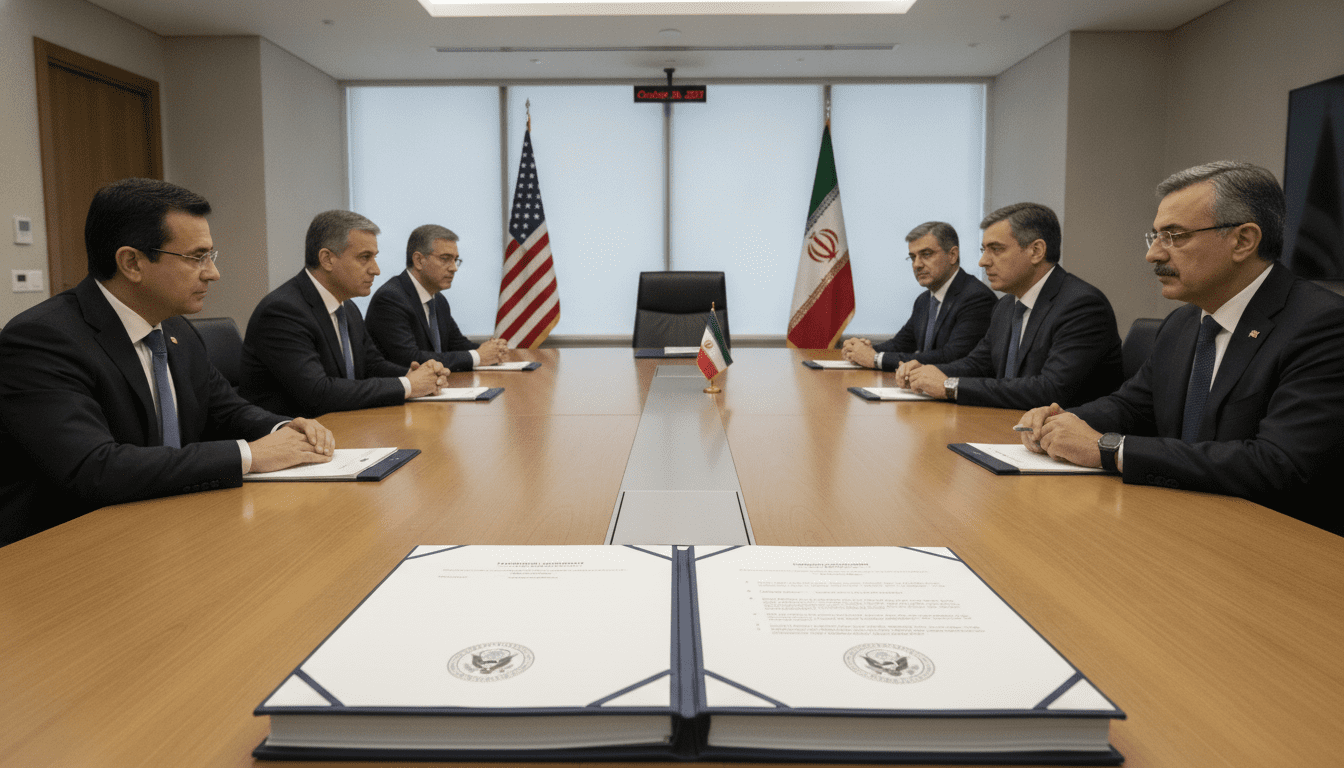
US-Iran framework agreement: Leaked 14-point text proposes ceasefire, $300bn rebuild and sanctions lift
Leaked US-Iran framework agreement reportedly sets a ceasefire, $300 billion reconstruction plan, sanctions relief and timelines ahead of a June 19, 2026 signing.
Leaked text surfaces ahead of Switzerland signing
The alleged US-Iran framework agreement, circulated by Al Arabiya and replicated by Bloomberg, lays out 14 points that both sides are said to have agreed in advance of a signature in Switzerland on June 19, 2026. The document, which has not been officially released by Washington or Tehran, was published late Tuesday evening before an expected formal signing on Friday.
According to the leaked text, the agreement begins with an immediate and permanent end to hostilities on all fronts, including Lebanon, and sets out detailed timelines for military and economic steps to follow. Officials from both capitals have not confirmed the precise wording, and Iranian state-affiliated media have disputed the completeness of the published version.
Ceasefire and military timelines in the draft
A central element of the draft framework is a pledge by both sides and their allies to “take no hostile action” against each other upon signature, effectively committing to a ceasefire across conflict zones. The text specifies that the U.S. would lift a naval blockade of Iranian ports and restore shipping capacity within 30 days of signature.
The draft also ties withdrawal and de-escalation steps to the negotiation of a definitive accord, stipulating a maximum 60-day window to conclude a final agreement, extendable only by mutual consent. It further states that 30 days after a final agreement the U.S. would withdraw forces from “surrounding areas,” and Iran would remove technical impediments and neutralize mines affecting transit through the Strait of Hormuz.
Economic measures and a $300 billion reconstruction pledge
One of the most consequential provisions in the leaked framework is a proposed international reconstruction and development plan for Iran, with the U.S. and partners to mobilize at least $300 billion for rebuilding and economic development. The draft calls for a mechanism to be designed within 60 days to channel those funds and to form part of the final agreement.
Immediately after signature, the text says the U.S. Treasury will grant exemptions enabling the export of Iranian crude, refined products and related services, including banking, insurance and transport. The framework also promises the release and full availability of frozen or restricted Iranian assets for use by the Central Bank of Iran while final negotiations proceed.
Sanctions relief and legal complexities
The leaked text asserts that the United States will lift “all forms of sanctions” currently imposed on Iran, explicitly including measures stemming from UN Security Council and International Atomic Energy Agency (IAEA) resolutions, as well as unilateral U.S. sanctions. The schedule and verification measures for sanction removal are to be incorporated into the final agreement.
The pledge to lift UN- and IAEA-linked measures raises questions about coordination with international partners and the legal steps required at the United Nations. The framework’s language suggests an ambitious rollback of restrictions, but leaves significant detail to the final agreement, where timelines and verification provisions would be negotiated.
Nuclear commitments and status quo assurances
The draft contains a reiterated Iranian statement that it “will never build nuclear weapons” and notes that issues such as highly enriched uranium and other mutually agreed nuclear topics will be addressed in the definitive accord. Until that final pact is concluded, both sides are to maintain the current status quo: Iran with its nuclear program and the U.S. refraining from additional sanctions or regional troop increases.
The text implies a period of freeze-and-negotiate aimed at preventing escalation while negotiators complete complex technical work on enrichment, safeguards and nuclear supply needs. It also sets out that the final agreement must “appropriately” resolve outstanding nuclear questions to the satisfaction of both parties.
Political reactions and risks from the leak
Iran’s Tasnim news agency disputed the Bloomberg-published version, saying the text was incomplete and that a full version would follow after signatures, according to unnamed sources. The agency warned that premature disclosure could complicate internal Iranian political consensus, where multiple factions must agree to the negotiating process.
In Washington, President Donald Trump said on June 16, 2026, at the G7 summit in France that he intended to publish the “very important” document in the coming days, a comment that underscored U.S. confidence even as formal releases were pending. Observers caution that leaks and conflicting accounts heighten the risk that domestic opponents in either capital could seek to derail or reshape the terms before ratification.
Timetable and next steps toward a final deal
If the framework is signed on June 19, negotiators will have up to 60 days to hammer out a definitive agreement, with specific clauses on sanctions, nuclear verification and reconstruction funding to be finalized. Immediate operational tasks spelled out in the draft—restoring shipping traffic through the Persian Gulf and issuing sanctions exemptions—would begin within days, with 30-day benchmarks emphasized for normalization.
Analysts say the success of the process will depend on rapid diplomatic coordination among U.S. allies, multilateral institutions such as the IAEA and the UN, and buy-in from key Iranian domestic constituencies. The draft’s broad commitments set a path, but the final accord will need detailed, verifiable mechanisms to translate the 14 points into durable peace and economic reopening.
Signatures and the promised publication of the full text will be pivotal to moving from outline to implementation, and stakeholders in the region will watch closely for concrete steps on shipping, sanctions relief and financial flows in the weeks following the expected June 19 ceremony.
