
US Releases Iran War Framework Agreement, Outlines Ceasefire and 60-Day Talks
US officials disclosed a framework agreement aimed at ending the Iran war, calling for an immediate ceasefire and a 60-day window for a final peace deal.
Agreement Text Unveiled in Washington
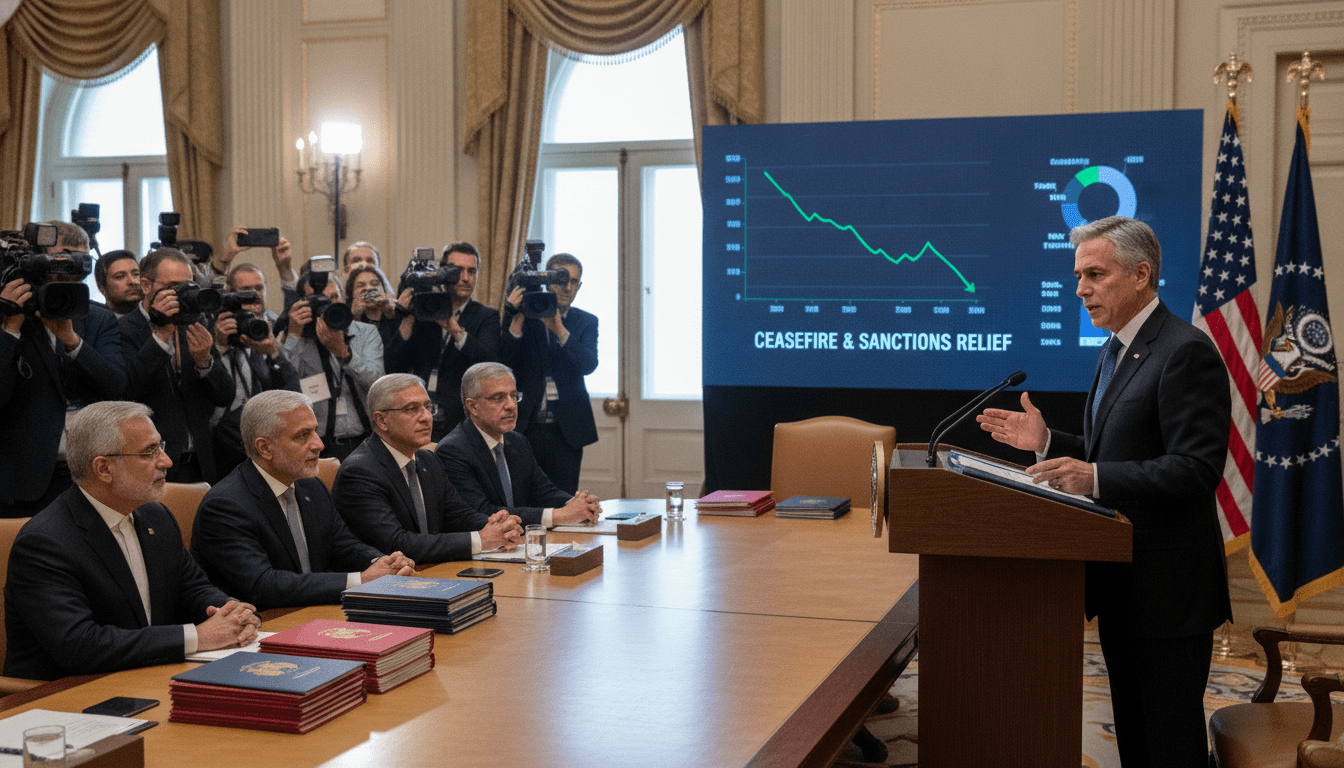
US representatives read the full text of the Iran war framework agreement aloud for journalists in Washington, confirming details that had circulated through mediators. The document is presented as an initial pact to halt fighting and set the terms for subsequent negotiations. Officials said the framework establishes obligations for both sides while leaving a final settlement to a structured 60-day process.
Immediate Military Pause and Territorial Promises
The agreement calls for an immediate and permanent end to military operations on all fronts, explicitly including Lebanon, according to the text made public by US officials. Both parties pledge to respect the sovereignty and territorial integrity of the other and to refrain from interference in internal affairs. The declaration makes clear that, once signed, neither side will conduct further offensive operations against the other.
Maritime Measures and Strait of Hormuz Access
A central provision requires the United States to lift its naval blockade of Iran entirely within 30 days of signing the framework. Merchant vessels would be guaranteed safe, toll-free passage through the Strait of Hormuz for at least 60 days, with a longer-term arrangement envisioned in coordination with regional states. US officials indicated the expectation that Iran, the Omanis and other Gulf partners would work toward a binding, long-term agreement governing transit.
Nuclear Commitments under IAEA Oversight
The framework includes a formal minimum standard for diluting Iran’s stockpile of highly enriched uranium to limit any latent weapons capability. Those steps are to be performed under the supervision of the International Atomic Energy Agency in Iran, the agreement states. In exchange, the United States would suspend a range of sanctions after signature, while preserving authority to keep some measures in place pending a final accord.
Economic Relief Linked to Final Deal
The text promises that Iran would be permitted to resume oil exports after the initial signing, reversing long-standing restrictions if follow-through conditions are met. The framework also contemplates the establishment of a reconstruction and development fund for Iran with a stated target of at least $300 billion, though US representatives emphasized that Washington would not finance that fund directly. Further sanctions relief is conditional: additional measures would be lifted only if Tehran and Washington reach a definitive peace accord within the negotiation period.
Signing Timeline and Political Uncertainties
Under current plans the framework could be formally signed later this week at a summit venue near Lucerne, with leaders and envoys present for either in-person or preliminary electronic endorsement. US political figures have offered mixed signals about who will sign on behalf of the United States; reports linked the potential role to senior advisors and legislators. The agreement stipulates a 60-day limit for concluding a final treaty, a period that may be extended by mutual consent.
Security Guarantees and Troop Reductions
If a final agreement is reached, US officials say Washington will reduce its military presence in the region to pre-conflict levels within 30 days of ratification. The framework seeks to lock in reciprocal commitments to non-interference and territorial respect as part of a broader security reset. Observers note that the document binds both sides in principle but leaves significant verification and implementation details to the follow-on talks.
Reactions and Enforcement Risks
Comments from political leaders at international gatherings have underscored the fragile politics surrounding the pact. At a recent summit, the US president warned that violations would be met with a swift and forceful response, underlining the stakes should either side renege on commitments. Analysts warn that such rhetoric could complicate trust-building during the 60-day negotiation window and raise the risk of renewed escalation if enforcement mechanisms are not robust.
The framework agreement marks a diplomatic opening with high ambitions: an immediate cessation of hostilities, nuclear constraints under IAEA oversight, maritime guarantees for global commerce, and a pathway to economic recovery tied to a major reconstruction fund. Its success will depend on political will, credible verification, and the ability of regional partners to translate pledges into durable arrangements.
