
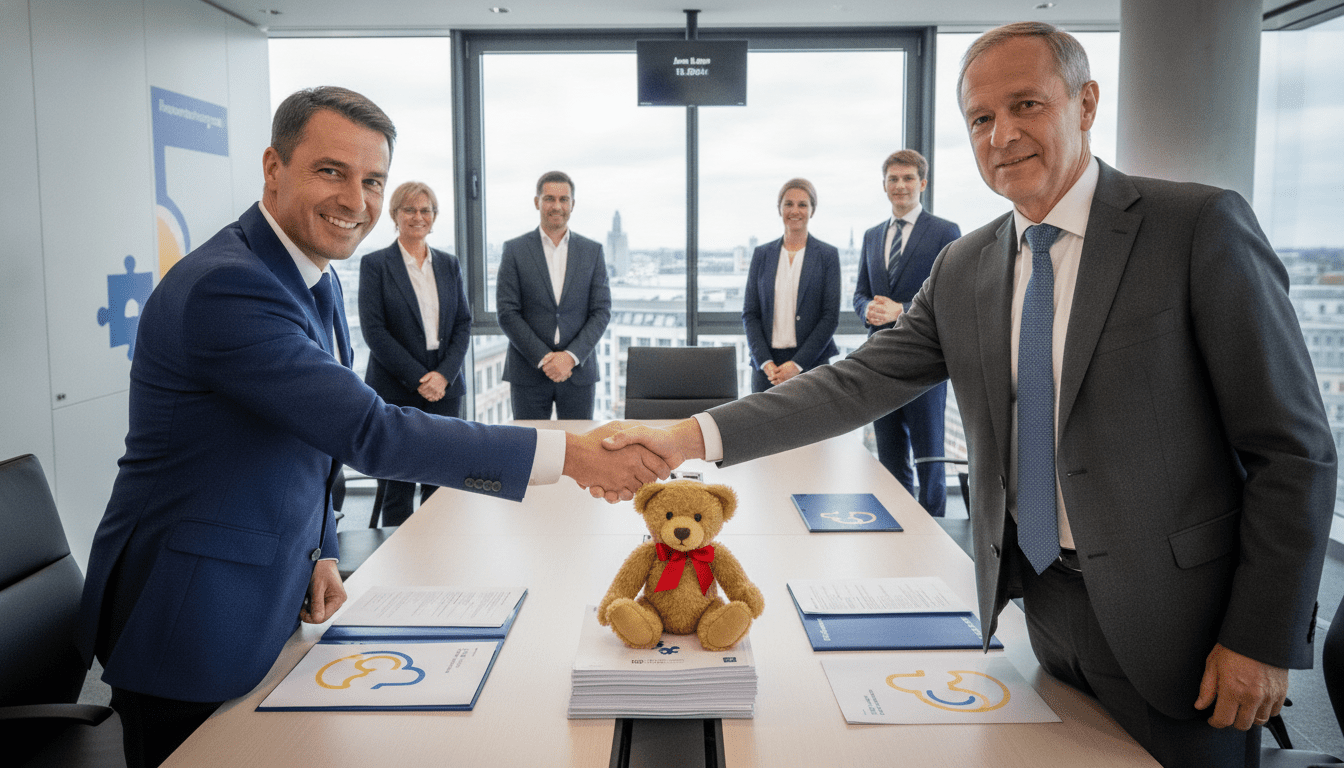
Ravensburger acquires majority stake in Steiff to link two German toy icons
Ravensburger acquires majority stake in Steiff, uniting two historic Baden-Württemberg manufacturers. Heirs retain stake; Steiff remains independent pending antitrust approval.
Ravensburger has agreed to acquire a majority stake in plush-toy maker Steiff, bringing two of Germany’s best-known toy brands into a closer corporate relationship. The deal, announced jointly by both Baden-Württemberg headquartered companies, leaves the descendants of Steiff founder Margarete Steiff significantly invested and stipulates that Steiff will continue to be run independently. Financial details and the precise shareholding percentage were not disclosed, and the transaction remains subject to approval by competition authorities.
Deal announced by Baden-Württemberg firms
Both Ravensburger and Steiff confirmed the agreement in a joint statement that emphasized the regional roots of each company and the family legacy at Steiff. Company spokespeople declined to disclose the purchase price or the exact size of Ravensburger’s holding. Regulatory clearance is required before the transaction can be completed, the firms said.
The announcement frames the move as a partnership rather than an outright takeover, with Steiff’s management and owner family retaining a central role. That configuration is intended to reassure stakeholders that the century-old brand identity and leadership will remain intact while benefiting from closer ties to Ravensburger.
Executives cite emotional and strategic motives
Ravensburger’s CEO Clemens Maier described the acquisition as driven by the emotional strength of the Steiff brand, saying the plush company represents the “heart” of play alongside Ravensburger’s focus on the mind and hand. Steiff’s leadership echoed that rationale, arguing the partnership creates a framework to develop the brand over the long term and to use international opportunities more deliberately.
Frederik Reimann, CEO of the Steiff holding company, said the family sought a responsible entrepreneurial partner that understands and respects Steiff’s values and history. Steiff’s chief executive, Frank Rheinboldt, framed the agreement as a route to combine tradition with new impulses for the brand’s future development.
Financial positions and recent performance
Ravensburger reported a record turnover of €790 million in 2024, according to the companies’ announcement, before revenue slipped to €742 million in the subsequent year as it contended with rising cost pressure. The group employs around 2,500 people across its Ravensburg headquarters and a manufacturing site in the Czech Republic, and already owns a portfolio that includes the Swiss NordSüd children’s publisher, wooden-train maker Brio, and the F.X. Schmidt playing-card imprint.
Steiff’s most recent publicly available figures show about €94 million in revenue for 2023 and roughly 1,300 employees. Company filings indicate more than two-thirds of Steiff’s sales stem from its toy business, and earlier data show the firm generated over €112 million in 2019, underlining the brand’s historical scale and the revenue pressure it has faced in recent years.
Governance and operational independence preserved
Both companies emphasized that Steiff will remain an independent operating unit with its own management, production and brand stewardship. The family shareholders will continue to hold a material stake and to play an active role in governance, a condition the sellers described as central to their decision to accept Ravensburger’s offer.
That arrangement aims to combine Steiff’s heritage and emotional value with Ravensburger’s distribution networks, product know-how and publishing capabilities without disrupting day-to-day operations. Company statements framed the move as safeguarding Steiff’s traditions while enabling strategic investment and international expansion.
Regulatory review, next steps and market implications
The transaction is conditional on cartel approval, and both firms said they will cooperate with the relevant competition authorities as the review proceeds. Because key financial terms were withheld, analysts and market observers will likely focus on how the two brands plan to coordinate product strategies, licensing and global sales once the deal closes.
For Ravensburger, the stake in Steiff expands its exposure to the plush-toy sector and reinforces a multi-brand strategy that has seen the group acquire publishing and toy-related businesses in recent years. For Steiff, the partnership offers access to broader retail channels and potential investment to support international growth while keeping family influence and brand control.
The timing and final structure of the transaction remain subject to regulatory timelines and further disclosure from the companies. Observers will be watching whether the arrangement leads to joint product initiatives, shared supply-chain efficiencies, or cross-brand marketing that leverages both Ravensburger’s puzzle-and-game expertise and Steiff’s heritage in plush toys.
