
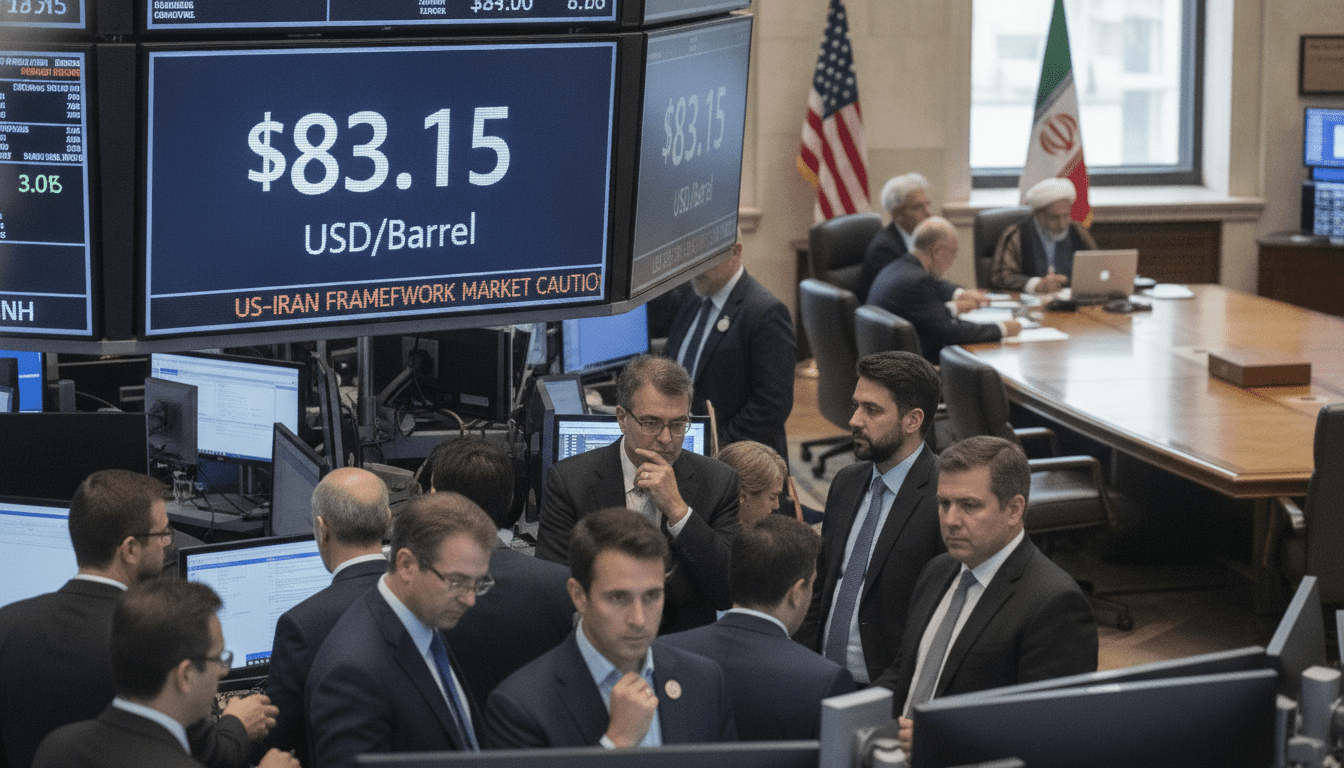
Oil prices hold near $83 after sharp drop following US‑Iran framework agreement
Oil prices steady near $83 as Brent slips to $82.76 after a weekend sell‑off; markets cautious while shipping and logistics questions linger over the Strait of Hormuz.
Market snapshot
The price of Brent crude for August delivery was trading at $82.76 per barrel in early sessions, about 0.5% lower than the previous day and hovering around the $83 mark. Oil prices fell sharply over the prior weekend and into Monday after news of a framework agreement between the United States and Iran to address the regional conflict. Traders said the immediate shock to risk sentiment has eased, but trading volumes remained subdued as participants awaited greater clarity.
Oil futures reacted quickly to the diplomatic development, removing some of the wartime risk premium that had supported higher prices. However, market participants noted that the pace and scale of any supply restoration remained uncertain, leaving prices sensitive to incremental news and logistical updates.
Diplomatic breakthrough and market reaction
Reports of a US‑Iran framework accord prompted the initial sell‑off as markets priced in a potential return of Iranian crude and a reduction in geopolitical risk. The agreement has not been published in full detail, which left traders to speculate on timing and the scope of any sanctions relief or security arrangements. That uncertainty has limited the depth of the rally back to pre‑crisis levels.
Analysts say that while headlines can rapidly shift sentiment, the physical oil market requires concrete operational changes — such as cleared shipping routes, insurance availability and resumed exports — before supply fundamentals visibly change. Until those steps are confirmed, prices are likely to oscillate near current levels.
Strait of Hormuz questions ripple through markets
Energy officials in the Persian Gulf reported a surge of enquiries about whether crude shipments could again transit the Strait of Hormuz, according to Bloomberg. The strategic waterway has been a focal point of the conflict, and any move to restore normal tanker traffic is a prerequisite for wider resumption of exports. Shipping companies and charterers said they needed clear guidance before routing tankers back through the passage.
Reinsurers, port operators and trade houses also face operational decisions that hinge on official confirmations and security guarantees. Market sources emphasised that the removal of a political risk premium would be gradual and contingent on demonstrable improvements in maritime safety and port operations.
Logistics and supply normalization timeline
Raymond James analyst Pavel Molchanov cautioned that the earliest realistic moment for oil supply to return to pre‑conflict levels is the end of July. He noted that logistical obstacles must be resolved before crude volumes can normalize, pointing to port readiness, tanker repositioning and contractual arrangements as necessary steps. Molchanov’s forecast suggests a phased recovery rather than an immediate surge in available barrels.
Industry insiders echoed that timeline, saying that even with a political agreement in place, operational lags and insurance coverage negotiations could delay physical shipments by weeks. The interplay between political signals and on‑the‑ground capabilities will determine how quickly markets adjust.
Responses from shippers and traders
Shipowners and trading houses said they would not commit to voyages through contested waters until they received clearer instructions from relevant authorities and insurers. Many charterers indicated they would await written assurances and updated routing advice, rather than rely on press reports alone. That hesitancy has kept a degree of upward pressure on freight and insurance costs despite lower headline risk.
Traders stressed that a return to normal shipping patterns also depends on demand trends and refinery needs in consuming regions. Even if Iranian barrels come back to market, timing and contractual terms will influence how those volumes displace or supplement existing supplies.
Near‑term outlook for oil prices
With Brent trading in the low $80s, the near‑term outlook hinges on the release of further details from negotiators and operational confirmations from Gulf authorities. A steady stream of positive, verifiable logistics updates could push prices lower as the risk premium fades. Conversely, setbacks in implementation or new tensions could reverse the recent losses quickly.
Market watchers expect volatility to remain elevated while participants parse formal statements, shipping notices and insurer bulletins. For now, oil prices reflect a cautious market that is re‑pricing geopolitical risk incrementally rather than assuming an immediate return to the market status quo.
The coming weeks should clarify whether the framework agreement translates into tangible export flows and safer shipping through the Strait of Hormuz, and that will be the decisive factor for whether oil prices move meaningfully away from the current range.
