
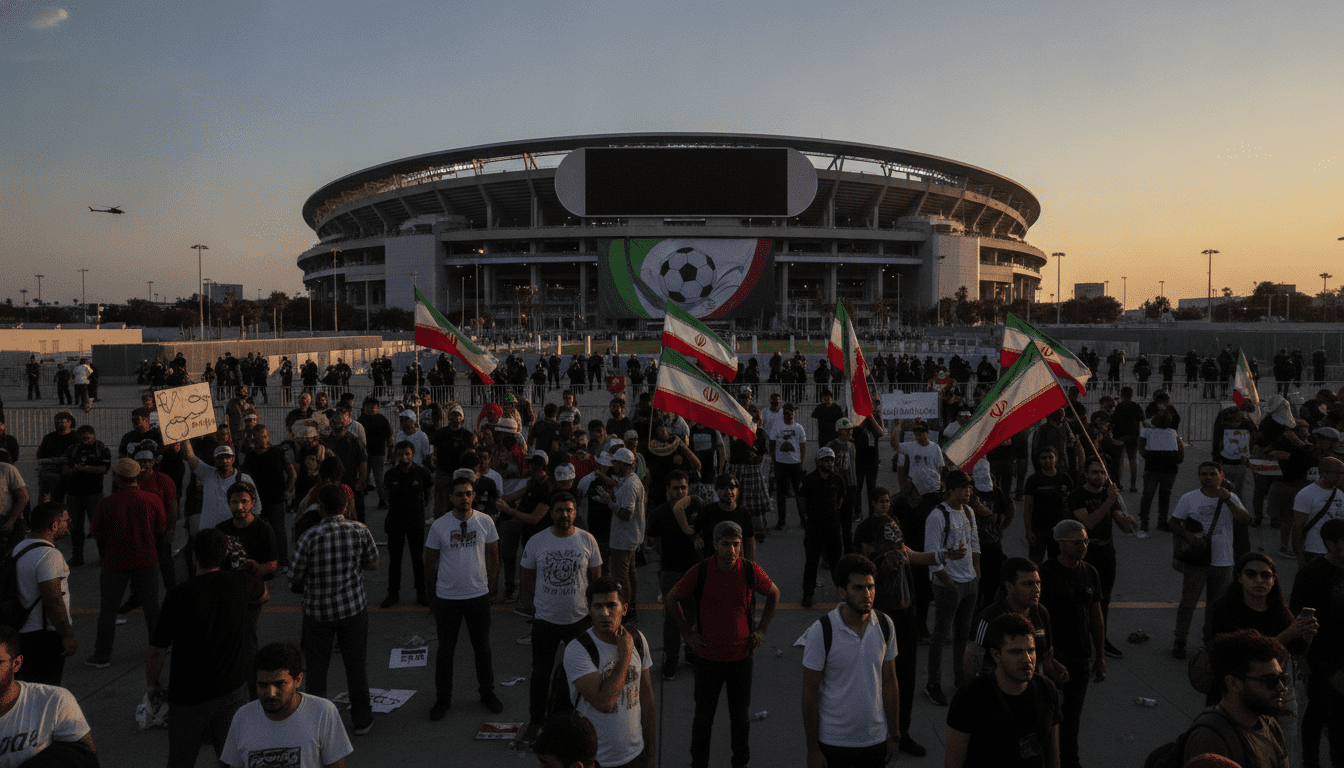
Iran World Cup 2026: Los Angeles Opener Overshadowed by Reported US‑Iran Deal and Visa Row
Iran World Cup 2026: Team Melli faces political and logistical strain as its Los Angeles opener follows a reported US‑Iran deal amid visa disputes globally.
Team Melli’s opening match against New Zealand in Los Angeles for the Iran World Cup 2026 campaign has been thrust into geopolitical headlines after US President Donald Trump said a deal with Tehran could signal an end to a three‑and‑a‑half‑month conflict. The match falls a day after that announcement, intensifying scrutiny on a squad already navigating fraught domestic politics and a vocal Iranian diaspora in California. Preparations have been complicated by visa denials, a relocated training base and questions about how fans on both sides of the Atlantic will receive the team.
Diplomatic timing complicates matchday in Los Angeles
Los Angeles — long home to a large Iranian community often called “Tehrangeles” — will host Iran’s first stadium appearance in the United States during a period of heightened political attention. The proximity of the opener to an announced US‑Iran diplomatic development has made what would normally be a sporting occasion into a potential focal point for protest and celebration alike. Local organisers and US authorities say they are preparing for a charged atmosphere that could include both anti‑government demonstrations and supporters of the national side.
Players report pressure from both home and abroad
Coaching figures and former players say the current squad is navigating pressure from multiple directions as Iran World Cup 2026 begins. Jahanyar Mohebbi, a former Iranian club coach, told reporters the players are sensing demands from politicians, expatriate fans in the US and relatives back home, a dynamic he described as an extension of a long history of politics mixing with Iranian football. Team leaders have privately voiced concern about the emotional toll of the situation and the difficulty of focusing on football while monitoring events affecting family and communities.
Historical parallels inform current tensions
Iran’s World Cup history has intersected with political upheaval before, from the Shah’s era in 1978 through to the Islamic Republic’s appearances in the 1990s and beyond. The 1998 match against the United States in Lyon is still recalled for its symbolic gestures and diplomatic messaging, while players and officials then emphasised the political significance felt months in advance. More recently, the 2022 tournament was marked by protests following Mahsa Amini’s death and visible acts of dissent by some players, underscoring how international fixtures can become platforms for broader societal grievances.
Visa denials and training disruptions affect logistics
Uncertainty over entry to the United States prompted Iran to move its training camp from Arizona to Tijuana on the Mexican border, a shift that officials say disrupted routine preparations ahead of the tournament. Reports of delegation members being denied visas further complicated the lead‑up, prompting public comments from captain Mehdi Taremi about a tense atmosphere that has not felt like the usual World Cup welcome. Team management has said logistical questions — from stadium training access to travel permissions — have added an extra layer of difficulty to on‑field readiness.
Domestic unrest feeds divisions over team support
Back in Iran, attitudes toward the national team are complex and sometimes divided, officials and analysts say, particularly after months of intense domestic unrest. Human rights groups and activists have reported heavy crackdowns and significant casualties during protests earlier this year, a reality that has left many Iranians ambivalent about openly celebrating government‑linked institutions. Some fans view the national side as representing the state rather than the people, a sentiment that adds a fraught dimension to public displays of support both inside Iran and among expatriate communities.
Sporting form and route to qualification
Despite the turbulence off the pitch, Iran remain one of Asia’s leading sides, finishing behind Japan in regional rankings and securing one of the earliest qualification spots for the 2026 tournament. The squad’s warm‑up schedule has included matches against Russia, Tanzania, Costa Rica, Nigeria and Gambia, giving the coaching staff opportunities to assess form and integrate players amid interrupted domestic competition. Domestic league cancellations this year have reduced match rhythm for many players, but coaches point to extended training blocks as a compensating factor in fitness and tactics preparation.
Team officials are publicly urging that the focus return to football once the tournament begins, stressing the players’ desire to represent their country and deliver results on the field. Several squad members have framed their participation as an attempt to bring joy to compatriots while navigating the broader political context that now accompanies their matches.
As kick‑off approaches, the Iran World Cup 2026 campaign will be judged not only on results but on how the team and hosts manage an event where sport, diplomacy and protest converge. The Los Angeles opener is likely to serve as an early barometer of whether international football can be kept primarily athletic in a season defined by geopolitical developments and domestic divisions.
