
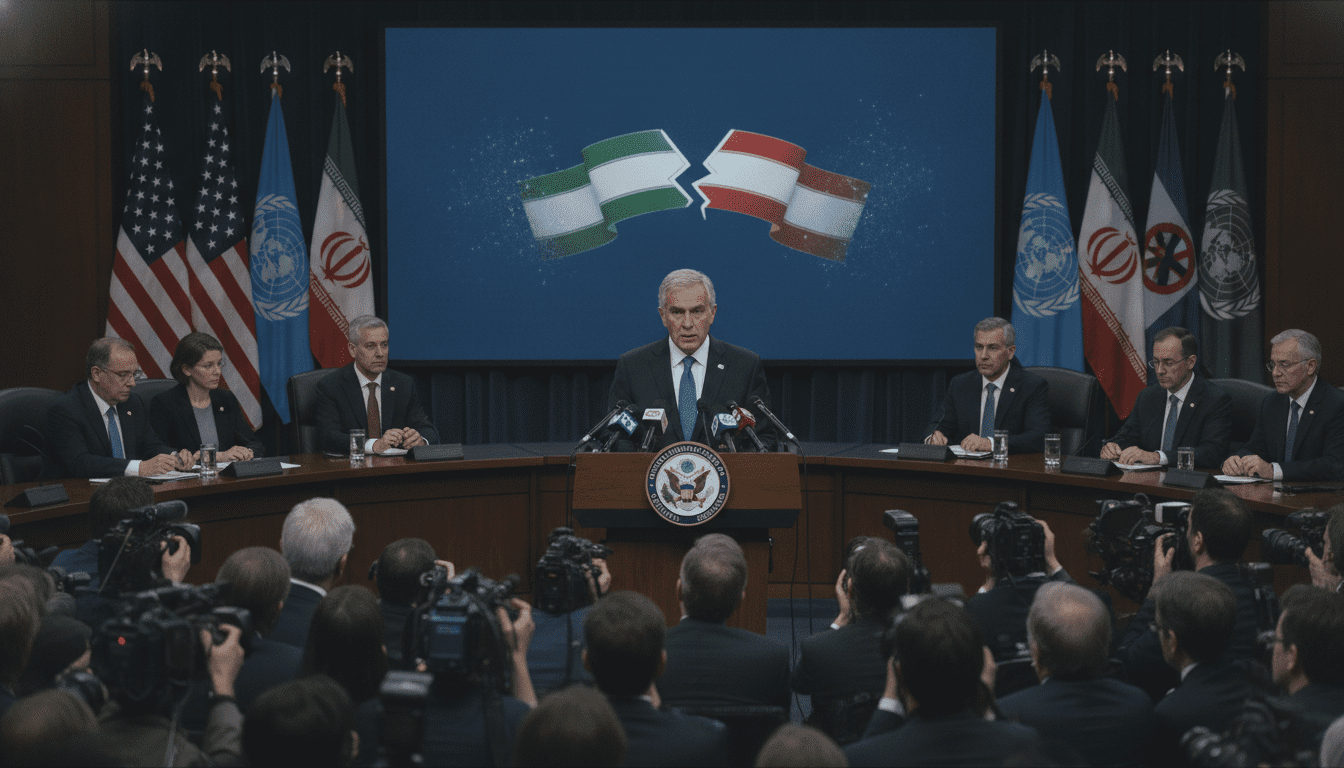
US–Iran agreement is “start of a process,” former US ambassador says
Henry Ensher warns the US–Iran agreement of June 13, 2026 is not a settlement but the start of a fragile process, exposed to verification and political risks.
Former ambassador frames deal as a process, not a settlement
Henry Ensher, a former United States ambassador, told reporters that the US–Iran agreement reached on June 13, 2026 should be treated as the opening stage of a complex diplomatic process rather than a final settlement. He cautioned that while the text of the agreement may establish a framework, myriad technical and political steps remain before durable compliance can be confirmed. Ensher’s remarks reflect a broader concern among diplomats that agreements of this type are vulnerable during implementation.
Ensher emphasized that negotiators have secured a conditional path forward but that those conditions will be tested by scrutiny, time and shifting political winds. He said that both capitals and international monitors must rigorously verify commitments to prevent misunderstandings or deliberate breaches.
Multiple technical and political failure points identified
The former ambassador outlined several ways the agreement could falter, including disputes over inspection access, delays in implementing agreed timelines, and unilateral actions by regional actors. Ensher highlighted that technical clauses can be interpreted differently by parties and that such ambiguities often become focal points for contention. He warned that even minor disagreements over monitoring protocols or sequencing could escalate into larger political impasses.
Beyond technicalities, Ensher noted the risk posed by domestic politics in both Washington and Tehran, where hardline factions may seek to undermine the deal for strategic advantage. He argued that successful implementation will require sustained political will across administrations and legislative bodies.
Verification regime will determine credibility
A central theme in Ensher’s comments was the importance of a robust verification regime to ensure the agreement’s provisions are met in practice. He urged that independent inspectors be granted clear and enforceable access to sites and data, and that reporting mechanisms be transparent to avoid credibility gaps. According to Ensher, the credibility of the verification architecture will shape international confidence and influence whether third countries cooperate with or challenge the arrangement.
He also said the timeline for inspections and the mechanisms for resolving disputes must be explicit, pointing out that vague or ad hoc procedures are often exploited as pretexts for non-compliance. Ensher stressed that strong verification does not guarantee success but makes failure more costly politically and diplomatically.
Domestic political dynamics in Washington and Tehran
Ensher warned that both the United States and Iran face internal political dynamics that could imperil the agreement. In Washington, congressional opposition and public skepticism could pressure the administration to reinterpret or slow-roll commitments. In Tehran, rival power centers may resist concessions or seek leverage in regional policy as a condition for compliance.
He noted that changes in leadership or abrupt policy shifts could reopen negotiations or lead to unilateral measures that erode trust. Ensher advised that political leaders on both sides develop contingency plans to manage domestic backlash while maintaining the terms of the agreement.
Regional reactions and broader geopolitical stakes
Regional governments and non-state actors will play a decisive role in how the US–Iran agreement unfolds, Ensher observed. Countries in the region may adjust their security postures, seek assurances from guarantors, or press for separate arrangements to address local concerns. The former ambassador cautioned that sidelined actors could resort to destabilizing tactics if they perceive the deal as threatening their interests.
He further warned that the agreement’s success or failure will have ripple effects on global diplomacy, including arms control discussions and energy markets. Ensher said that the international community must remain engaged to manage unintended consequences and to shore up diplomatic channels as implementation proceeds.
Practical next steps for stakeholders
Looking ahead, Ensher recommended a sequence of concrete measures to reduce risks: finalize and publish verification protocols, establish rapid dispute-resolution mechanisms, and set clear benchmarks for reciprocal steps. He called for regular public reporting to build confidence and for back-channel diplomacy to address sensitive issues away from media and legislative pressure. Ensher also urged allied states to coordinate closely to present a unified approach to enforcement and assistance.
He emphasized that timelines for implementation should be realistic and accompanied by technical assistance to ensure compliance can be demonstrated, not merely promised.
The former ambassador’s assessment frames the US–Iran agreement as a fragile diplomatic achievement that requires attentive follow-through. Ensher’s warnings underscore that reaching a written accord is only the beginning; sustaining it will depend on disciplined verification, political management, and active engagement from regional and global partners.
