
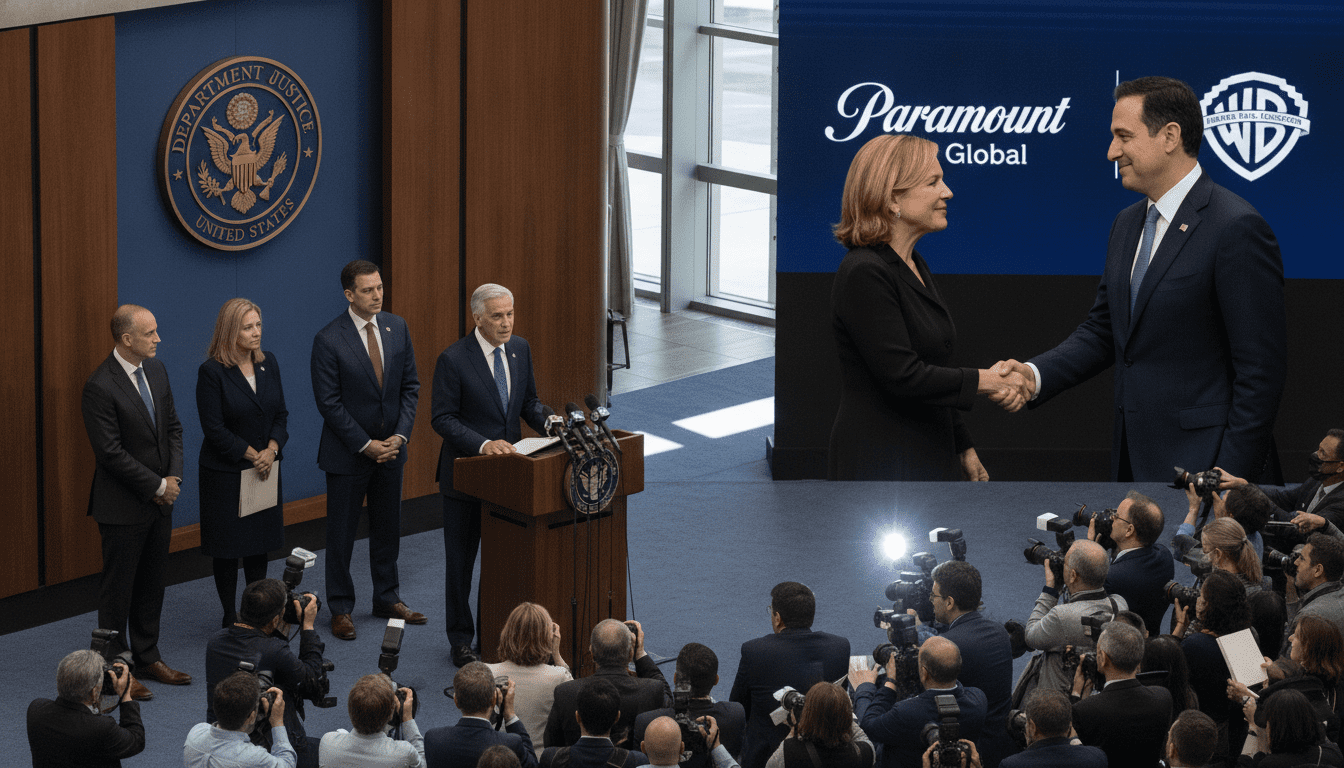
Paramount Acquires Warner Bros After DOJ Clears $111 Billion Deal
DOJ cleared Paramount’s $111 billion acquisition of Warner Bros without conditions, sparking international probes and renewed debate over media independence and competition.
The United States Justice Department has approved the transaction by which Paramount acquires Warner Bros, concluding the deal does not harm competition in film, television or streaming. The decision allows the $111 billion takeover to advance without conditions from the federal antitrust authority, even as reviews continue elsewhere. The ruling intensifies scrutiny of the broader consequences for audiences, advertisers and newsroom independence across major U.S. news outlets.
DOJ Approves Deal Without Conditions
The Department of Justice determined the merger would not substantially lessen competition or injure consumers across the principal markets in which both companies operate. Officials said their analysis found no likely anticompetitive effects in theatrical film distribution, pay television or streaming services. That assessment clears a major hurdle for Paramount’s purchase of Warner Bros Discovery, effectively greenlighting the combination at the federal level.
The DOJ’s finding is limited to its own jurisdiction, however, and reflects its evaluation of market overlaps and potential consumer harm. The department’s memo cites market shares, entry barriers and competitive dynamics in which other large studios and streamers remain active. Federal clearance does not preclude remedies or conditions from other authorities examining the transaction.
Deal Terms and Ownership
Paramount’s winning bid for Warner Bros Discovery totals about $111 billion and covers the studio’s film slate, streaming assets like HBO Max, and television networks, including the prominent cable news channel CNN. The acquisition places Paramount under the ownership and influence of the Ellison family, whose backing was decisive in outbidding earlier offers. David Ellison, son of software magnate Larry Ellison, now leads the expanded Paramount entity and has outlined ambitions to increase the company’s footprint in Hollywood.
The purchase follows a period of intense bidding and negotiation. Last year, streaming giant Netflix reportedly reached terms with Warner to buy parts of its streaming and studio business, but Paramount offered a higher, comprehensive bid for the entire company. That full-scope acquisition was attractive to sellers and ultimately prevailed in the contest for control of one of America’s oldest and most influential media companies.
Ongoing State and International Reviews
Despite federal approval, several U.S. states have launched independent antitrust reviews that could impose conditions or legal challenges. State attorneys general routinely examine large mergers for harms that federal regulators might not prioritize, including regional market effects and consumer protections. These parallel inquiries mean the deal’s final legal and operational contours could still change in the weeks ahead.
Foreign competition authorities have also signaled interest. European regulators and other national agencies typically assess media transactions for potential impacts on local markets and pluralism. Investigations abroad can lead to remedies, divestitures or delays that affect how the combined company structures its global operations and content distribution agreements.
Concerns Over CNN and Newsroom Independence
Civil society groups, journalists and some lawmakers have warned that consolidation under billionaire ownership could threaten editorial independence at major news outlets, particularly CNN. Critics point to past instances where the Ellison family’s ownership stake in U.S. media appeared to coincide with friendlier coverage of certain political figures. Those developments have raised alarms that editorial lines might shift under new corporate directives or owner influence.
Specific incidents since the Ellison family began taking stakes in media have been cited as precedents, including personnel changes and programming adjustments at networks owned by related entities. Journalists and press freedom organizations say structural safeguards are needed to protect newsroom autonomy, while the new owners assert they will respect editorial independence and professional standards.
Paramount’s Strategic Ambitions in Hollywood
Paramount’s management has framed the acquisition as a strategic push to scale up production, expand global distribution and compete more effectively with streaming giants. The combined company will control valuable IP franchises, including major film properties and a deep library that can feed multiple streaming services and theatrical releases. Executives say the deal creates opportunities for investment in new content and technology to reach international audiences.
Industry analysts note the transaction consolidates more content under a single corporate roof, which could alter licensing negotiations and platform strategies across the entertainment ecosystem. Advertisers, cable operators and rival streamers will watch closely for shifts in content bundling, windowing and pricing that follow integration of the two companies’ assets.
The acquisition of Warner Bros by Paramount marks one of the largest media transactions in recent years and will reshape ownership in Hollywood, while regulatory reviews and public debate continue about the implications for competition and independent journalism.
