
Belfast knife attack: viral video sparks wave of racist violence against migrant communities
A viral video of a knife assault in Belfast has ignited targeted hostility toward migrants, fueling street attacks and arson after the footage spread widely on social media. The Belfast knife attack has become the focal point for a surge in racially charged incidents in predominantly migrant neighborhoods, authorities say, after the alleged attacker — reported to be from Sudan — was arrested and charged.
Viral footage and immediate public reaction
Footage of the stabbing circulated rapidly on multiple platforms, drawing intense public attention and outrage within hours of being posted. The clip’s wide reach appears to have framed the incident along ethnic lines, with many viewers reacting before official details were released.
Local officials and community leaders expressed alarm that the video’s distribution transformed a criminal incident into a flashpoint for broader social tensions. The speed of dissemination complicated early police communication and fueled competing narratives on the streets.
Arrest, charges and scant verified details
Police confirmed that a suspect has been taken into custody and formally charged in connection with the knife attack, which left a person seriously injured. Investigators emphasized that legal proceedings are ongoing and urged the public to avoid speculation about motive until evidence is presented in court.
Authorities have released limited information about the suspect’s background while the case moves through the criminal justice system. Law enforcement sources have cautioned that the provenance of the footage and how it was edited or captioned may have influenced public perception before facts were established.
Racist violence erupts in migrant neighborhoods
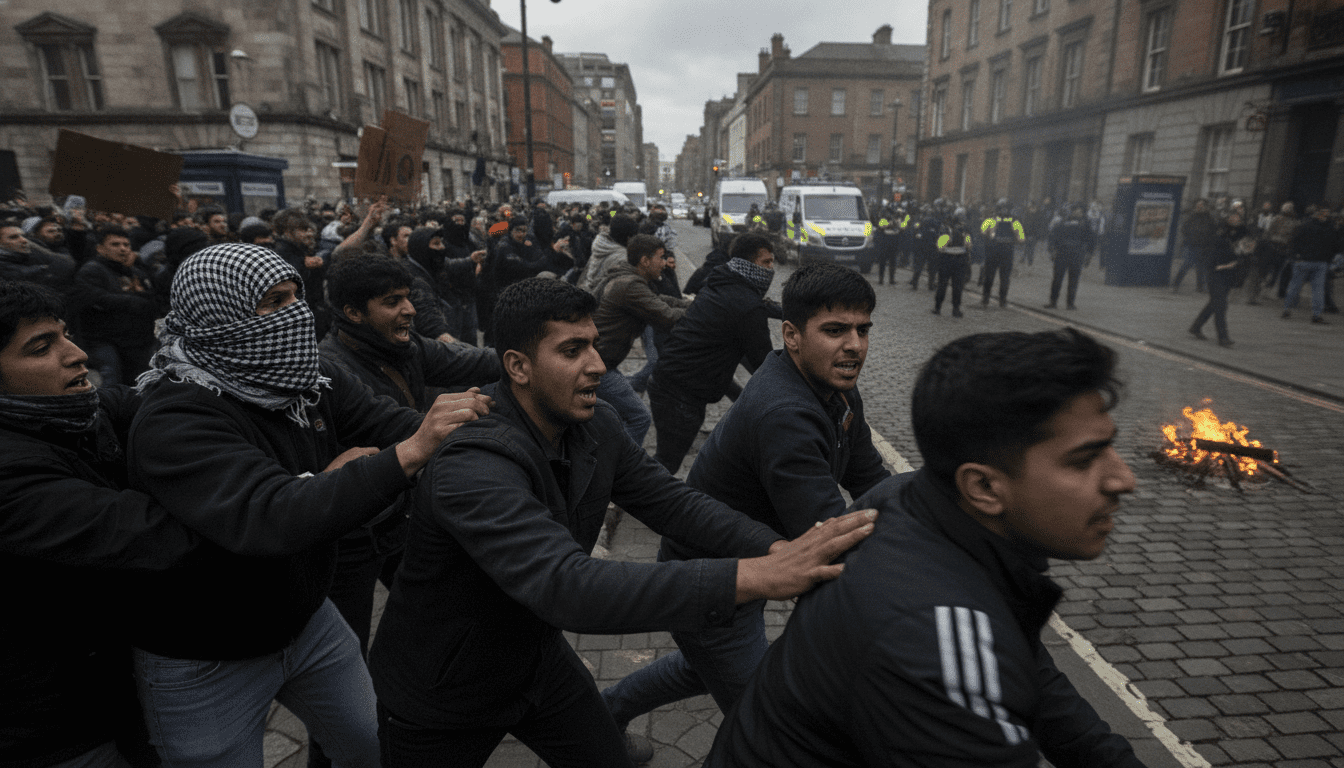
In the days following the attack, groups of masked individuals marched through areas with high migrant populations, shouting racist slogans and setting fire to vehicles and buildings. Residents reported a climate of fear as windows were smashed and homes were targeted amid the night-time disturbances.
Emergency services responded to multiple blazes and scenes of disorder, while councils arranged temporary shelter and support for affected families. Community organisations warned that the violence risked deepening social divisions and displacing vulnerable residents already coping with housing and economic pressures.
Online amplification and far-right involvement
Right-wing agitators and extremist accounts were observed sharing the stabbing footage and commentary that framed the incident as evidence of a wider migrant threat, according to social monitoring by civic groups. Analysts say this kind of targeted amplification is designed to stoke outrage and mobilise supporters for on-the-ground mobilisation.
The pattern mirrors previous episodes in which incendiary online content preceded real-world attacks, highlighting how digital platforms can act as accelerants. Platform takedown policies and the speed of reshare chains have come under renewed scrutiny from advocates calling for faster intervention.
Political repercussions and national security concerns
The unrest has created political pressure for the government to demonstrate effective control of public order and to address questions about immigration policy and community integration. Opposition figures have seized on the events to criticise the administration’s handling of social cohesion, while ministers face calls to strengthen policing and intelligence responses.
Security officials are reportedly reviewing whether organised agitators coordinated the street actions and whether additional resources are needed for policing in sensitive areas. Experts warn that unresolved economic grievances and media-fuelled narratives could prolong instability unless addressed with clear, credible measures.
Local responses and support measures under way
Council authorities, charities and faith groups have mobilised to provide shelter, counselling and legal assistance to victims of the violence and those displaced from their homes. Community leaders have organised peace walks and joint statements condemning the attacks, emphasising the need to protect residents regardless of origin.
Police have increased patrols in affected neighborhoods and promised targeted investigations into those responsible for arson and incitement. Civil society organisations are calling for improved language-accessible information, faster reporting mechanisms and independent oversight of how incidents are handled.
The Belfast knife attack and the violent aftermath underline how a single criminal episode, amplified online, can escalate into a wider community crisis if actors with political agendas exploit it. Preventing further attacks will require coordinated policing, rapid and transparent communication from authorities, and sustained community outreach to rebuild trust and calm tensions.
