
Belfast anti-immigrant protests erupt after knife attack, prompting arson and roadblocks
Belfast anti-immigrant protests followed a knife attack that left a man seriously injured, sparking arson, roadblocks and large demonstrations as politicians and rights groups clash over asylum policy. Rights groups warn.
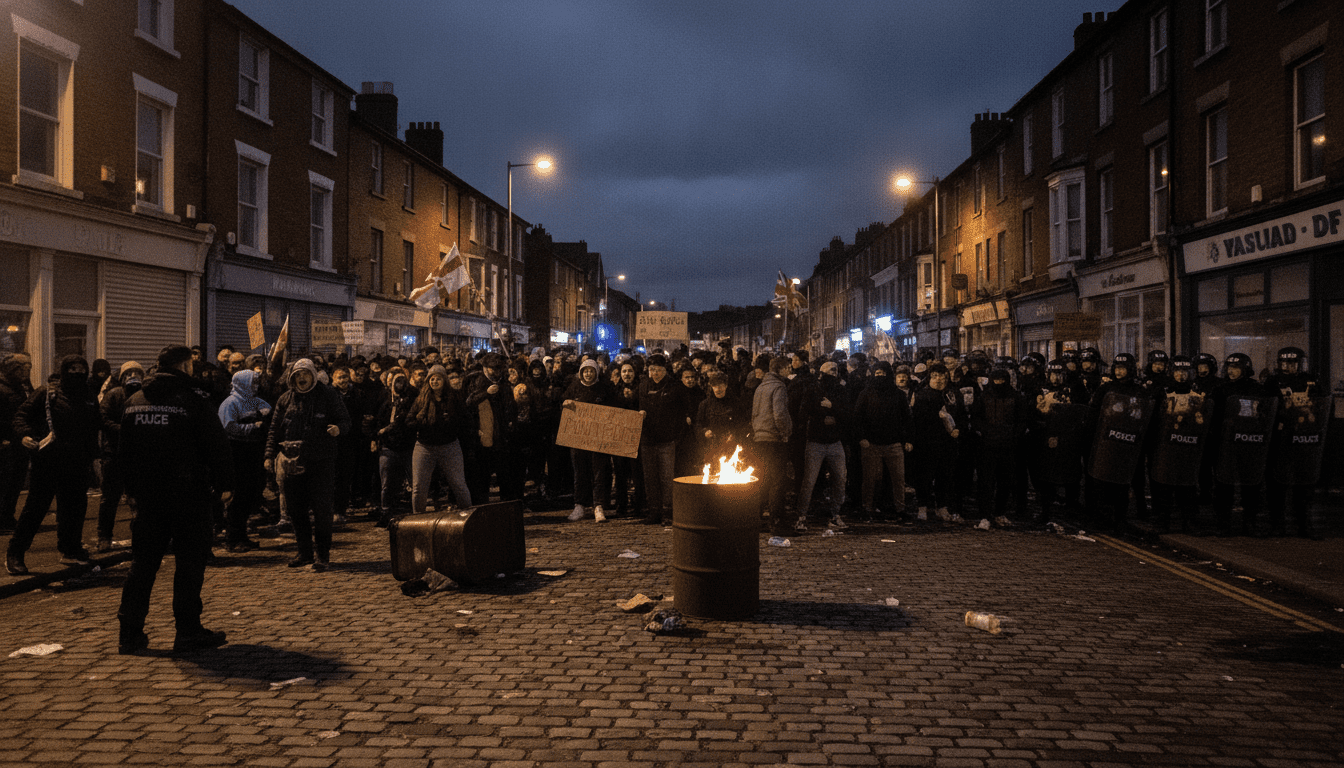
The streets of east Belfast descended into violence after a stabbing on Monday as hundreds of masked protesters blocked roads, set fire to vehicles and damaged buildings, prompting evacuations and a heavy police response. The eruption of unrest, described by Northern Ireland’s first minister as “disgusting cowardice,” has focused attention on immigration policy and a wider spike in race-related incidents across the region.
Roadblocks, arson and evacuations in east Belfast
Emergency services were deployed across neighbourhoods after groups gathered on Tuesday evening, setting vehicles and parts of buildings alight and obstructing main thoroughfares. Local residents were moved from homes while officers worked to secure streets and clear incendiary debris left by rioters.
Witnesses described scenes of intimidation as small, organised groups moved through residential areas, and police declared a critical incident as they sought to prevent the disorder from spreading to other parts of the city. The violence followed the circulation of graphic footage online that authorities had urged the public not to share.
Suspect charged and immigration status confirmed
A 30-year-old man was arrested and later charged with attempted murder, possession of a bladed weapon in a public place and making threats to kill after an assault that left a man in his 40s with severe head and neck injuries. Police have not released the suspect’s name and say he was not previously known to local forces.
The UK Home Office confirmed the defendant arrived in the United Kingdom in 2023 and holds a residence permit valid until 2028, identifying him as a Sudanese national. Police chief Jon Boutcher has outlined the timeline of the suspect’s travel into the UK via Paris and Dublin, stressing that the individual had no prior major criminal record locally.
Police warnings and the role of online footage
Authorities repeatedly urged residents not to circulate footage of the attack, warning that sharing graphic material can inflame tensions and aid those seeking to mobilise protests. Nonetheless, copies of the video were amplified across social platforms and by accounts linked to nationalist and “patriot” networks, contributing to a rapid escalation in street activity.
Northern Ireland Justice Minister Naomi Long warned that bad-faith actors from outside the region had encouraged people to take to the streets and that online amplification had “weaponised” genuine local concerns. Police said they were tracking accounts that promoted the disturbances and appealed for calm while investigations continue.
Political reactions and far-right mobilisation
Senior political figures condemned the violence but also used the episode to press competing narratives on immigration. Michelle O’Neill, Northern Ireland’s first minister, denounced the riots as cowardly and racist, while unionist leaders called for tighter controls on migration and more transparency about the attacker’s status.
Prominent anti-immigration voices in the UK and abroad seized on the incident. Figures associated with populist parties pressed for changes to asylum policy, and social media posts from high-profile activists were shared widely, further stoking public anger. Internationally visible interventions, including inflammatory commentary from overseas commentators, have stirred controversy and prompted government officials to accuse external actors of trying to inflame divisions.
Human rights groups cite surge in race-related incidents
Advocacy organisations have warned that the Belfast unrest occurs against a backdrop of rising race-related incidents across Northern Ireland. Amnesty International and local campaigners have documented a sharp increase in racist abuse and hate crimes in recent reporting periods, saying political rhetoric and misinformation have contributed to a climate of fear for minority communities.
Campaigners urged elected leaders to avoid scapegoating and to focus on protecting vulnerable residents, pointing to data that shows some of the highest monthly levels of race hate incidents in recent years. Rights groups called for urgent measures to safeguard asylum seekers and migrants who have become targets of intimidation.
Historical divisions and the risk of wider unrest
Scholars and analysts say the disturbances also tap into long-standing fault lines from Northern Ireland’s past, where sectarian tensions and economic marginalisation have periodically fuelled street disorder. Academics note that areas with persistent deprivation and youth unemployment can be especially vulnerable to mobilisation by small, determined groups.
Experts cautioned that while the number of active rioters may be limited, their actions can produce outsized fear in small migrant communities and create policing challenges that could spill beyond Belfast. Observers warned that without coordinated political leadership and community protection, the unrest risks becoming a prolonged security and social cohesion problem.
The attack and subsequent protests have reignited debate over asylum policy, social media moderation and the responsibility of political figures to avoid inflaming communal tensions. Investigations into the stabbing continue, and police have appealed for anyone with information to come forward as officers work to restore order and support affected communities.
