
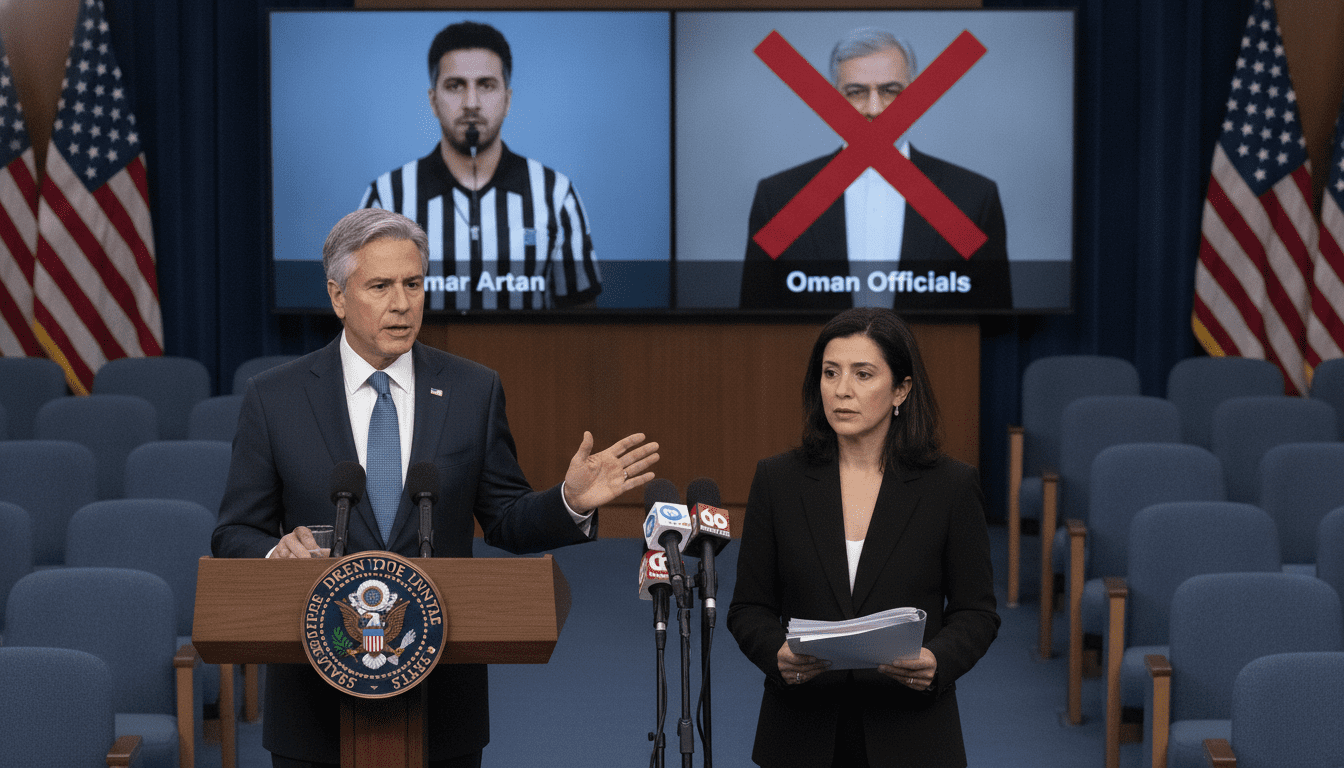
U.S. Defends Omar Artan Visa Denial as Iran Relocates World Cup Base to Mexico
U.S. defends Omar Artan visa denial, citing security concerns that barred certain officials; Iran moves World Cup base to Mexico and revises travel plans.
The U.S. government has defended its decision to deny entry to Somali referee Omar Artan, saying the move was part of a broader effort to block individuals it deems security risks from entering the country. The Omar Artan visa denial became public after Artan said he was turned back at Miami airport despite holding what he described as proper paperwork. U.S. officials and Iranian football authorities have since offered contrasting accounts as the Iranian national team shifts its World Cup operations to Mexico.
U.S. spokesman frames denials as targeted security measures
A White House official overseeing World Cup arrangements, Andrew Giuliani, said the U.S. government did not refuse entry to players or primary coaching staff but rather to certain officials. Giuliani told reporters the denials were directed at “some officials — and that for very good reason,” framing the actions as targeted rather than broad-based. The administration emphasized its objective was to prevent people with malicious intent from exploiting the tournament to enter the United States.
State Department cites alleged links to militant networks
A U.S. State Department representative, speaking to AFP, specifically named referee Omar Artan as someone “connected to alleged members of terrorist organizations,” and said that connection rendered him inadmissible. Officials declined to disclose detailed evidence, citing security and privacy considerations, and would not provide further specifics about the basis for the visa decisions. The lack of public detail has left questions about the criteria used and prompted calls for clearer explanations from affected parties.
Artan describes lengthy questioning and abrupt removal at Miami airport
Omar Artan told the New York Times that he possessed what he believed was the correct visa and travel documents when he arrived in Miami, but was held for roughly eleven hours, questioned extensively and placed in solitary detention before being sent onward to Istanbul. Artan said he received no clear explanation from U.S. officials about why he was denied entry and expressed the view that his nationality may have played a role. His account underscores the personal and logistical disruptions that visa refusals can create for match officials on the World Cup circuit.
Iranian federation announces relocation and modified travel schedule
In response to the U.S. entry restrictions and concerns about travel logistics, the Iranian Football Federation moved the national team’s World Cup base to Mexico. Amir Mehdi Alavi, a federation spokesperson, told the state-affiliated news agency ISNA that the team will adhere to FIFA’s match-day travel program, arriving in the United States one day before the match against New Zealand and staying two days in advance for subsequent fixtures. The federation rejected conditions that would require arrivals and departures on match day, saying the new arrangement better suits their needs and mitigates disruption.
FIFA logistics and delegation movement under scrutiny
FIFA has set protocols for team movement and delegation accommodation during the tournament, but the sudden visa decisions and relocations have complicated planning for match officials and delegations. Tournament organizers must balance security screenings with the tight timelines that govern team arrivals, training sessions and match preparation. Officials familiar with World Cup operations say compressed travel schedules and late changes can strain staff and create unintended competitive disadvantages.
Political and sporting reactions expected to follow
The U.S. stance is likely to trigger diplomatic pushback and raise questions among international football bodies about consistency and transparency in vetting processes. Iran’s decision to station its team in Mexico reflects a pragmatic response to the immediate problem but also signals broader tensions between sporting administrations and government security priorities. Observers say clarifying the reasons for individual denials, while protecting sensitive intelligence, will be important to preserve the integrity of tournament operations and the safety of participants.
The controversy around the Omar Artan visa denial highlights the intersection of global sport and national security priorities, and it may prompt further discussion among federations, governments and FIFA about how to handle sensitive background checks without disrupting major international events.
