
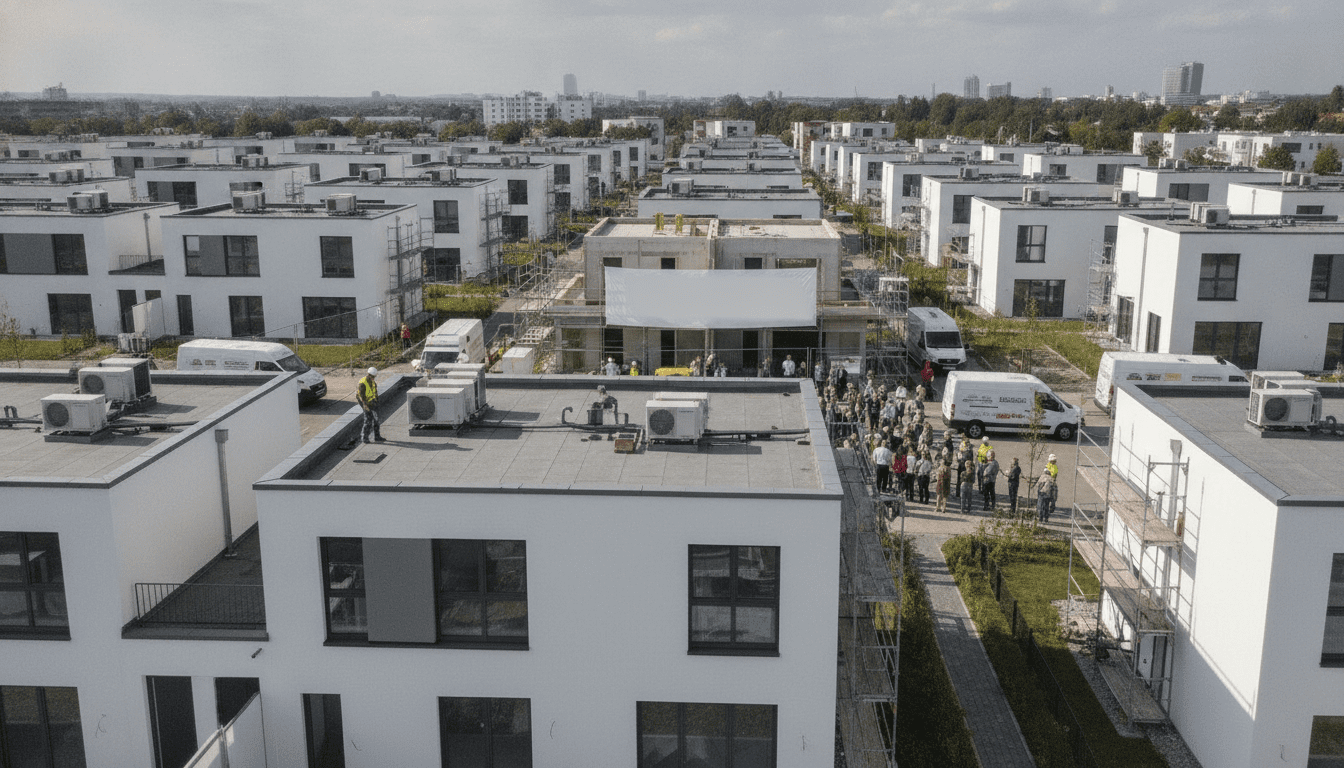
Heat pumps installed in 73.6% of new German homes in 2025, Destatis shows
Germany sees surge in heat pumps for new homes: 73.6% of roughly 58,900 new residential buildings used heat pumps in 2025, signaling rapid shift in heating choices.
Germany’s building sector recorded a sharp rise in heat pump installations for newly completed homes in 2025, according to data from the Federal Statistical Office (Destatis). Heat pumps were fitted in 73.6 percent of about 58,900 new residential buildings, a jump of nearly five percentage points from the previous year and almost 30 points compared with five years earlier. The figure marks a decisive move in new construction toward electric-driven, renewable heating technologies.
Heat Pumps Installed in 73.6% of New Homes in 2025
Destatis reports that in 2025 heat pumps were the predominant heating choice in newly completed residential construction, accounting for 73.6 percent of installations. This represents a continuation of a multi-year trend away from conventional fossil-fuel systems in new builds. The pace of change is notable: in 2015 fewer than one in three new homes used heat pumps, highlighting rapid market transformation over the past decade.
Single- and Two-Family Houses Drive Adoption
Adoption of heat pumps is concentrated in single-family and two-family houses, where nearly 80 percent of new buildings in 2025 were equipped with the technology. Developers and homeowners in detached and semi-detached dwellings appear to favor heat pumps more readily, reflecting ease of integration and available space for ground or air-source systems. By contrast, new buildings with three or more apartments saw lower uptake, with heat pumps installed in roughly 53 percent of those projects.
Renewable Heating Dominates New Construction
Overall, nearly four out of five newly built homes in 2025—78.2 percent—were heated primarily by renewable energy sources. Beyond heat pumps, about five percent of new buildings used other renewable heating options such as solid biomass (wood), solar thermal systems, biogas or biomethane. Conventional gas boilers fell to roughly one in ten new homes, a steep decline from almost 40 percent five years earlier and a significant drop from 51.5 percent in 2015.
Gas and Oil Still Dominate the Existing Stock
Despite rapid change in new construction, Germany’s existing building stock remains largely dependent on fossil fuels. Gas accounts for roughly 54 percent of heating in existing residential buildings, while heating oil remains in use in about a quarter of homes. Renewable heating solutions make up just over ten percent of the installed base, underscoring the challenge of retrofitting an ageing and diverse building stock to meet climate targets.
Policy Shift Eases Rules for Replacement Heatings
The rise of heat pumps in new builds coincided with political debate over Germany’s heating regulations and climate requirements. Recent revisions to the national heating law have relaxed minimum renewable-energy mandates and shifted the regulatory focus toward replacement of heating systems in existing buildings. Critics and proponents agree the changes will primarily affect retrofit decisions and may slow the pace of conversions among current homeowners.
Germany’s construction market and manufacturers are adjusting to new demand patterns, with installers and suppliers scaling capacity for heat pumps and related technologies. The near-universal acceptance of heat pumps in new single- and two-family homes is already influencing product availability, installation workflows and training programs across the sector.
Market and policy observers caution that while new construction shows strong alignment with decarbonization goals, achieving national targets such as climate neutrality by 2045 will depend heavily on the pace of energy-efficient renovations and heat-pump conversions in the existing housing stock. Progress in new builds reduces future retrofit needs, but the current dominance of gas and oil in older buildings means substantial policy measures and incentives will still be required to meet broader emissions targets.
The 2025 figures from Destatis underline a pivotal moment for residential heating in Germany: new houses are rapidly shifting toward heat pumps and renewables, yet the overall energy transition will hinge on policy choices and retrofit momentum in the years ahead.
