
Drone boat rescue recovers US helicopter crew off Oman after suspected Iranian strike
US Navy drone boat rescues two Army aviators off Oman after an Apache went down on June 8, 2026; CENTCOM says both are in stable condition as probe continues.
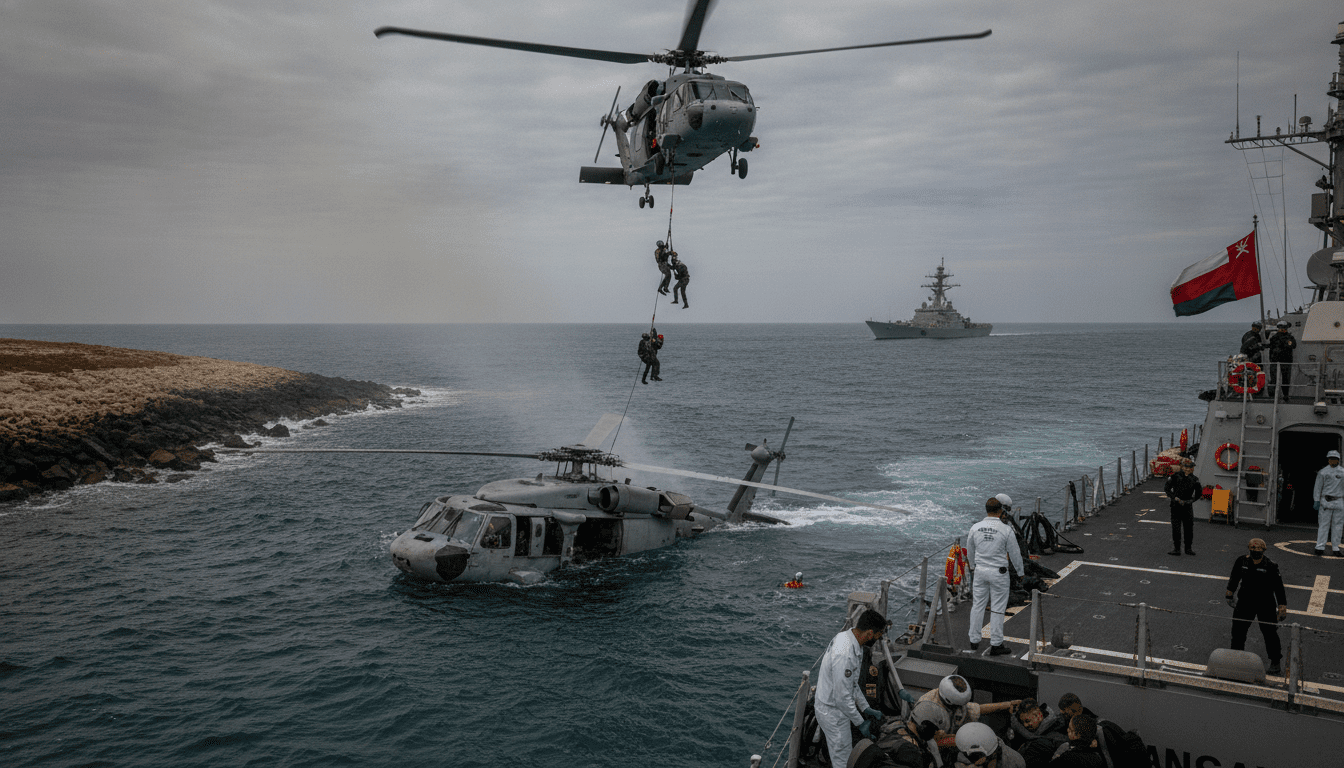
Two U.S. Army aviators were rescued after their AH-64 Apache attack helicopter went down off the coast of Oman on June 8, 2026, in an operation that saw a U.S. Navy unmanned surface vessel recover the crew from the water in what officials called a drone boat rescue. The pilots spent roughly two hours in the sea before being located and brought to safety, and U.S. Central Command said both service members are in stable condition as the cause of the crash is investigated. The incident has been linked by U.S. officials and the president to Iranian action, a claim that Tehran has disputed while tensions in the region have spiked. (apnews.com)
Drone boat locates and retrieves crew
U.S. military spokesmen said a 24-foot unmanned surface vessel operating with Task Force 59 detected the two aviators in the water and transported them to a nearby point where they could be recovered by manned assets. Capt. Tim Hawkins of CENTCOM described the mission as the unmanned boat locating the crew, bringing them aboard or alongside, and moving them to a safer recovery location. Officials described the sequence as an operational milestone in which unmanned systems performed a direct personnel recovery role. (apnews.com)
Broadcast reports and Pentagon briefings said the drone boat was later met by a manned helicopter that hoisted the aviators to a medical facility or other secure location for evaluation. That transfer arrangement matched accounts from multiple U.S. outlets noting the unmanned vessel’s role in bridging a dangerous gap at sea while rescue helicopters completed the final recovery. Military officials emphasized that both aviators were conscious and stable when handed off to medical personnel. (abcnews.com)
Collision with an Iranian drone under investigation
U.S. officials told reporters the Apache went down after colliding with an Iranian unmanned aircraft, though the circumstances of the contact remain under review and investigators have not publicly released a final finding. President Donald Trump publicly attributed the loss to Iranian action and said the United States “must, of necessity, respond,” while the Pentagon has opened a formal investigation to determine whether the collision was deliberate or accidental. CENTCOM and other agencies are gathering sensor data, communications logs and witness statements to reconstruct the flight path and sequence of events on June 8. (apnews.com)
Iranian officials and state media have offered conflicting accounts, with some outlets denying direct responsibility and others issuing sharp warnings that any retaliatory U.S. action would be met in kind. The diplomatic back-and-forth has further heightened already elevated tensions around the Strait of Hormuz, a strategic chokepoint through which a significant share of global oil shipping transits. International shipping and regional partners are now monitoring developments closely as military and diplomatic channels react to the incident. (apnews.com)
Statements from U.S. military and White House
CENTCOM released a statement confirming the rescue and noting that the cause of the helicopter’s loss is under investigation, while stressing that the rescued crew members were in stable condition following the recovery. The White House echoed those remarks and the president publicly blamed Iran for downing the aircraft, asserting that the U.S. would take proportionate action if warranted. U.S. defense officials said any operational response would be coordinated across services and intended to deter further hostile activities. (apnews.com)
Military officials also highlighted the role of carrier and surface assets in the region, and said Task Force 59’s unmanned systems had been pre-deployed to support surveillance and maritime operations in the area. Lawmakers and regional allies were briefed in the hours after the incident, and some members of Congress signaled support for robust measures while urging restraint and careful assessment of the intelligence. The administration has said it will make decisions based on verified findings from the ongoing probe. (apnews.com)
Implications for operations in the Strait of Hormuz
Analysts say the recovery marks both a tactical and symbolic moment in the wider confrontation that has involved air, sea and unmanned platforms in recent months. The Strait of Hormuz has been the site of repeated incidents and near-misses as U.S. forces, Iran and Iran-aligned groups have exchanged strikes, interdictions and warnings that threaten commercial and naval traffic. Military planners will likely review patrol patterns, force protection measures and the integration of unmanned systems into search-and-rescue protocols in light of this episode. (apnews.com)
The use of an unmanned surface vessel in a life-saving role underlines how the U.S. is experimenting with new concepts to mitigate risk to personnel in contested maritime zones. Observers note that the tactic offers a way to retrieve survivors without immediately exposing manned rescue craft to shore- or sea-based threats, though it also raises questions about the limits of remote systems in complex, dynamic rescue scenarios. The strategic calculus in the region will now factor both the immediate operational lessons and the political fallout. (arstechnica.com)
The two aviators remain in stable condition as military and civilian investigators continue to assemble a detailed timeline of the incident and the exact role, if any, played by Iranian forces. U.S. officials have made clear that any follow-up action will depend on the findings of the probe and broader strategic considerations in an already fragile regional security environment. (apnews.com)
