
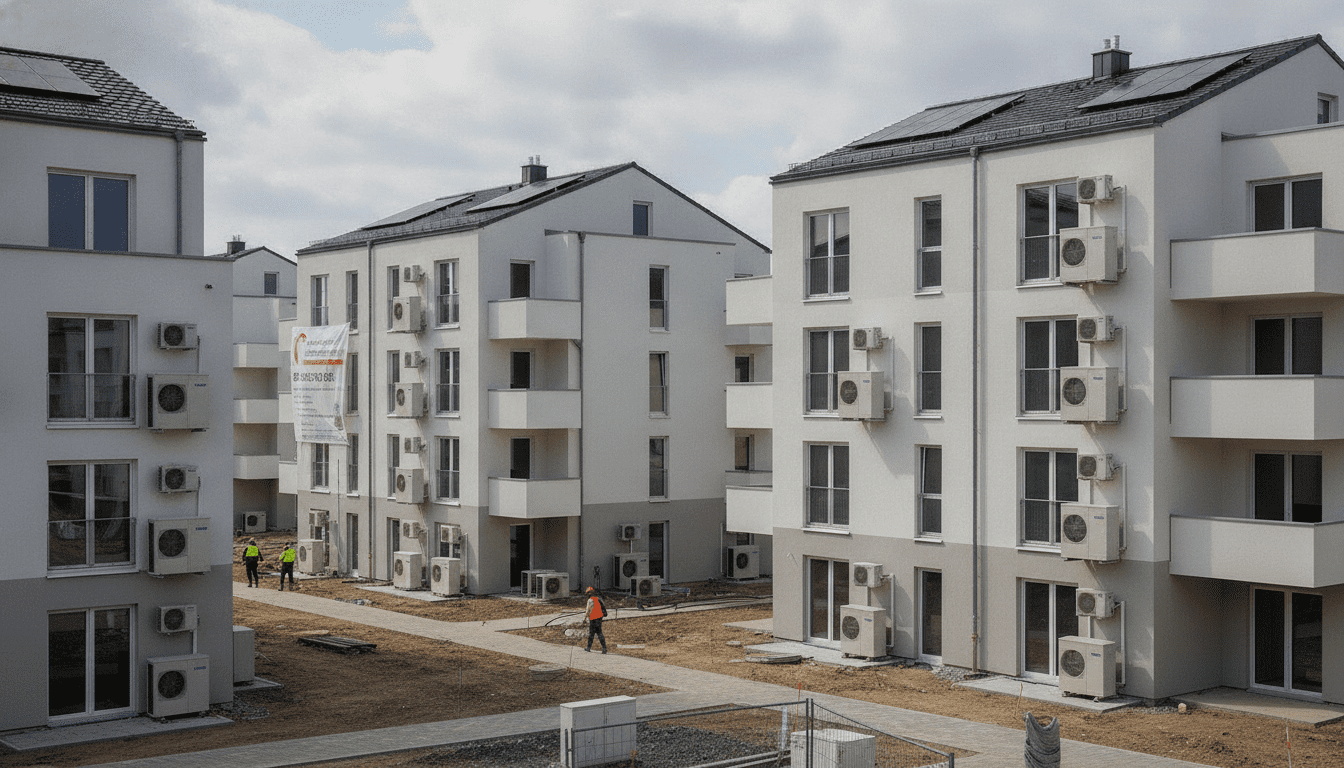
Heat pumps installed in 73.6% of new German homes in 2025, Destatis reports
Germany saw heat pumps installed in 73.6% of newly built homes in 2025, marking a sharp rise in renewable heating adoption across the housing sector.
Rapid rise in heat pump uptake in new construction
The Federal Statistical Office (Destatis) reports that heat pumps were fitted in 73.6% of the roughly 58,900 residential buildings completed in 2025. This represents an increase of almost five percentage points from the previous year and a near 30-point rise compared with five years earlier, when fewer than one in three new homes used heat pumps.
The growth is concentrated in newly built dwellings, where builders and buyers are increasingly choosing renewable-based systems at the point of construction. Analysts cite falling installation costs, rising consumer familiarity, and expanded supply chains as drivers of the shift toward electric heat pump technology.
Single- and two-family houses lead installation rates
The adoption rate is highest in single- and two-family homes, where nearly eight in ten new buildings installed heat pumps in 2025. By contrast, newly constructed buildings with three or more residential units registered a lower share, with heat pumps present in just over half of such projects.
Experts point to differences in technical feasibility, space requirements for external units, and tariff structures as factors explaining the gap between single-family houses and larger multi-family developments. Developers of apartment blocks sometimes favor centralized systems such as district heating, which can be more cost-effective at scale.
Renewable energy heats most new builds; gas use falls sharply
Overall, renewable energies were the primary heat source in 78.2% of new residential buildings completed in 2025, up from 38% in 2015. Besides heat pumps, a small share of new constructions—about five percent—used other renewable solutions such as wood heating, solar thermal systems, biogas, or biomethane.
Conventional gas heating accounted for only around 10% of new builds in 2025, a pronounced decline from nearly 40% five years earlier and from 51.5% in 2015. District heating supplied just over eight percent of the newly built stock, while oil-fired systems were nearly eliminated, appearing in only 0.3% of new constructions.
Existing building stock remains dominated by fossil fuels
The composition of heating systems in the overall building stock tells a different story: around 54% of existing residential buildings still rely primarily on gas, and roughly one quarter continue to use heating oil. Renewable-based heating systems remain a minority in the stock, with a share of just above ten percent.
Policy analysts warn that the rapid uptake of heat pumps in new construction will only slowly affect overall emissions unless retrofit rates accelerate. Because the majority of buildings that will stand in 2045 already exist today, decarbonizing the existing stock is essential to meet long-term climate targets.
Heating law relaxed in May 2026, altering regulatory incentives
In May 2026 the federal government implemented changes to the Heizungsgesetz that loosened prior requirements on the minimum share of renewable energy for new heating systems. The parliamentary agreement effectively removed the minimum quota that had pushed installations of heat pumps and other renewables in new buildings.
Supporters of the revision argued the change reduced regulatory burdens and reflected market realities, while critics warned that weakening the rules could slow the broader transition in building emissions. The law change is expected to have a limited immediate impact on new-build trends, given the already high market penetration of heat pumps in 2025.
Implications for retrofit programs and climate goals to 2045
Destatis figures underline a split picture: new construction is rapidly moving to renewables, but the standing building stock remains largely fossil-fuel dependent. Policymakers face a challenge in scaling renovation programs and financial incentives to bring existing homes up to modern efficiency and heating standards.
Meeting Germany’s target of climate neutrality by 2045 will rely heavily on accelerating energy-efficient retrofits, expanding installer capacity, and maintaining consistent incentives for low-carbon systems. Observers say that without an immediate intensification of retrofit efforts, the gains in new construction will be insufficient to achieve broader sectoral emissions reductions.
The 2025 statistics demonstrate a structural shift in how new homes are heated, with heat pumps now the standard choice in most new residential construction, but they also highlight the urgent need to tackle emissions from the much larger, older building stock.
