
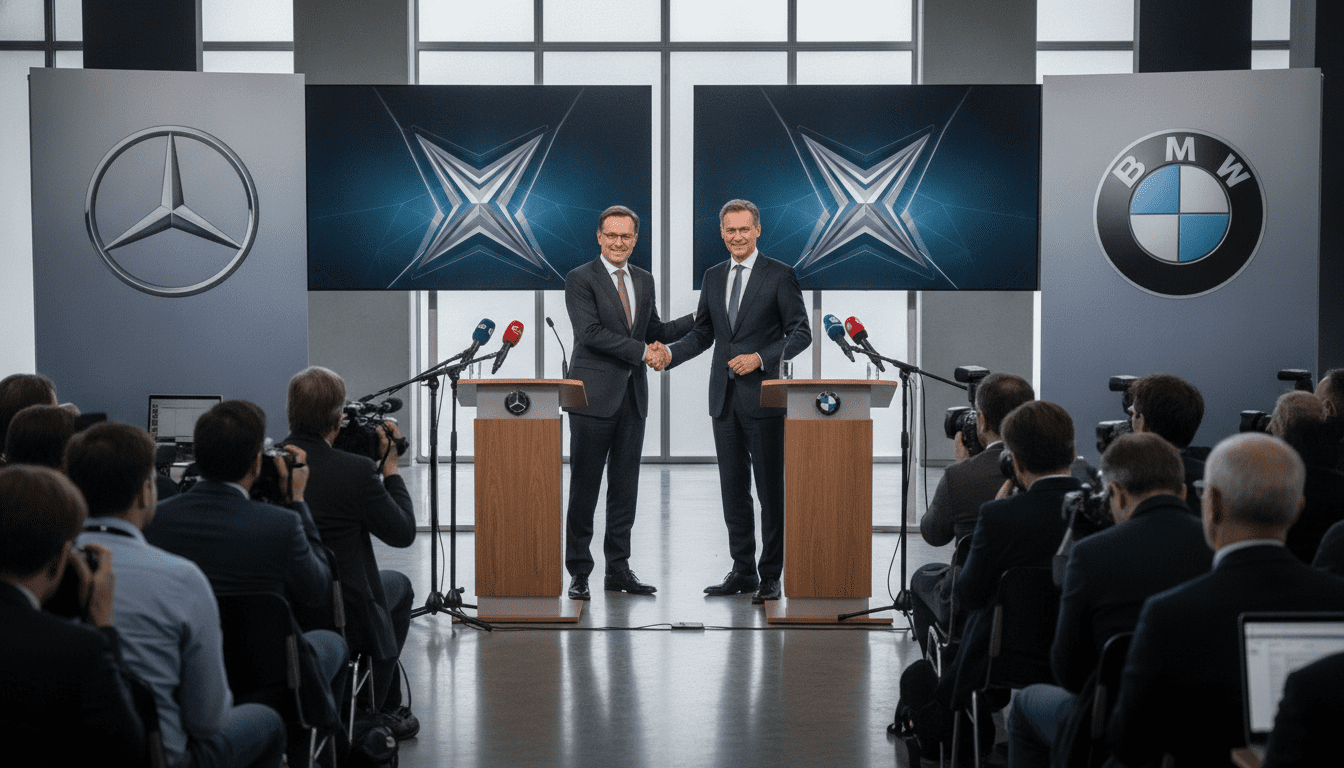
German premium automakers say they have closed the EV and battery technology gap
German premium automakers say they have closed the gap in EV and battery technology, with Mercedes and BMW executives promising a ‘new era’ of innovation and emotional appeal. (154 characters)
The chiefs of Germany’s luxury carmakers announced this week that their companies have effectively caught up in electric vehicle and battery technology, signaling a shift in the competitive landscape. Mercedes‑Benz CEO Ola Källenius described the development as “a new era,” while BMW’s newly appointed chief, Milan Nedeljkovic, framed it as setting “technologically and emotionally new standards.” The assertion marks a public push by German premium automakers to claim parity with international rivals on the technical and experiential fronts.
Mercedes and BMW frame the development as a ‘new era’
Mercedes‑Benz and BMW executives used decisive language to describe recent advances in electric drivetrains and battery systems. Their comments underline a strategic effort to reassure customers and investors that legacy premium brands will lead the next generation of mobility. The CEOs tied technological progress to brand values, stressing both performance metrics and user experience as measures of success.
Claims center on EV performance and battery competitiveness
Industry leaders say improvements cover charging speed, range, and battery integration, positioning German models as competitive with leading international offerings. Executives emphasized advances in thermal management, energy density and software integration as drivers of the change. They presented these technical gains not only as engineering milestones but as enablers of richer in‑car experiences and emotional appeal.
Market context and international rivalry
The statements come amid intense global competition as manufacturers in Asia and North America have made early headlines with rapid EV rollouts and battery innovations. German premium automakers have faced criticism over slower initial adoption of in‑house battery strategies and software capabilities. By publicly announcing a closing of the gap, corporate leadership aims to shift the narrative toward Germany’s traditional strengths in engineering and luxury craftsmanship.
Supply chain and supplier partnerships under renewed focus
Carmakers stressed that progress rests on retooled supply chains and deeper collaboration with battery and materials suppliers. Investments in cell chemistry, localized manufacturing and long‑term procurement contracts were cited as essential steps to secure technology parity. Executives acknowledged that scaling production while maintaining quality remains a primary operational challenge.
Regulatory environment and infrastructure considerations
Regulatory targets on emissions and national EV incentives continue to shape product planning and investment decisions across Europe and beyond. Executives noted that charging infrastructure and harmonized standards will determine how quickly consumers benefit from technical advances. They also highlighted that policy certainty and coordinated public‑private efforts remain critical to realizing large‑scale adoption.
Customer experience and brand positioning
Beyond technical specifications, both Mercedes and BMW framed the shift as an opportunity to redefine emotional engagement in electric vehicles. The companies intend to pair upgraded batteries and drivetrains with interior innovations and digital services intended to heighten brand affinity. Leadership argued that matching rivals on pure metrics is necessary but not sufficient; premium buyers will be persuaded by seamless integration of performance, luxury and software.
The announcement is likely to intensify competition in the premium EV segment as German marques seek to translate technical claims into market performance and sales. Observers will watch forthcoming model launches and technical disclosures for tangible evidence of the asserted parity.
These declarations mark a deliberate repositioning by German premium automakers as they confront an evolving industry landscape that prizes both engineering excellence and digital innovation. The coming months will test the extent to which the promised “new era” translates into consumer‑ready vehicles and measurable market gains.
