
Verfassungsschutz Warns of Rising Drone Threat to German Economy
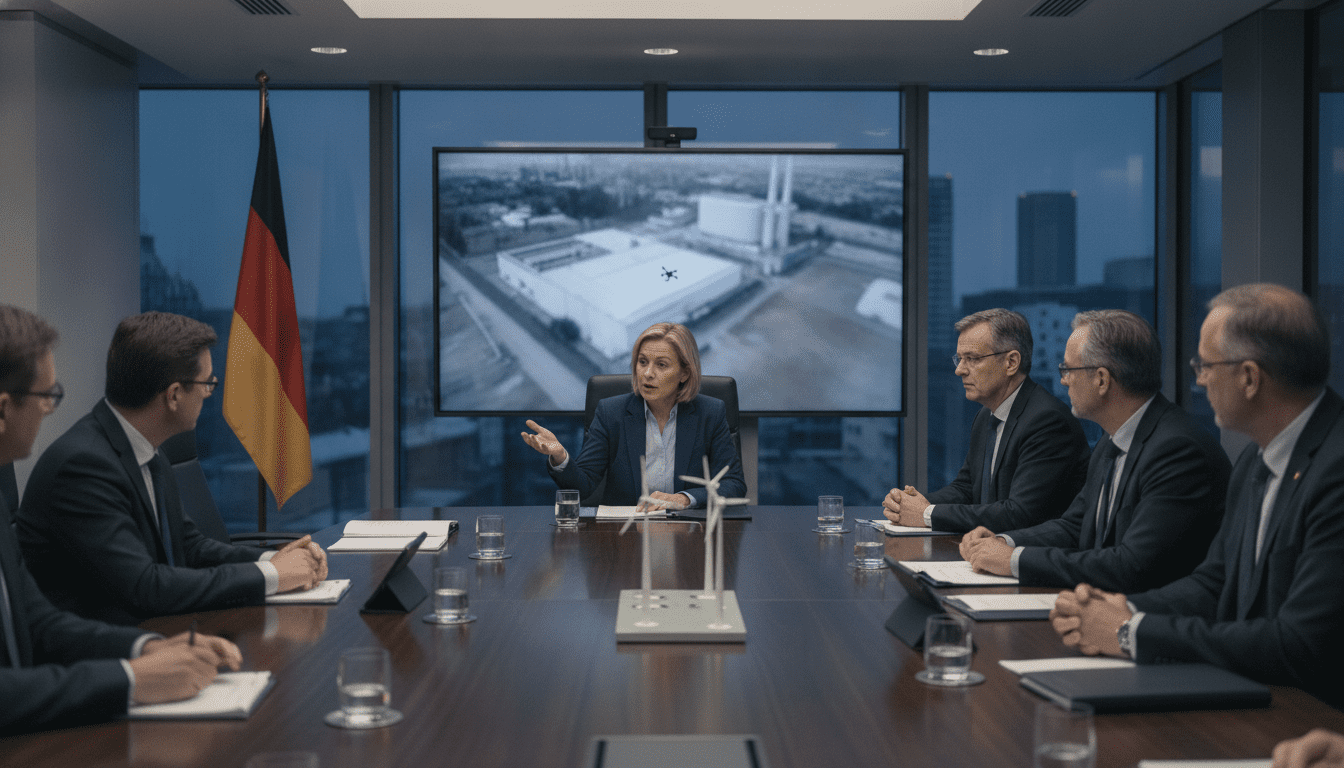
Bundesamt für Verfassungsschutz issues a visual red alert as Germany warns businesses of a rising drone threat to the German economy and critical infrastructure.
Verfassungsschutz Issues Red Alert Over Drone Threats
The Bundesamt für Verfassungsschutz has issued a stark warning aimed squarely at German industry about the increasing risks posed by drones. The agency framed the advisory as a clear signal that the “drone threat to the German economy” is no longer hypothetical but a growing operational concern. Officials stressed the need for businesses to reassess vulnerability and readiness amid technological advances.
Graphic Warning Depicts Red Drone Icons Over Germany
The alert was accompanied by striking imagery: bright red drone symbols superimposed on a map of Germany to emphasize areas of potential exposure. The visual was intended to convey both immediacy and scale, signaling that threats could affect multiple regions and sectors. Designers at the agency said the graphic was chosen to make the risk more tangible for private-sector decision-makers.
Agency Highlights Rapid Growth in Drone Availability and Capability
According to the agency, both the availability and the technical capabilities of unmanned aerial systems are expanding quickly. Small, commercially available platforms now carry improved cameras, sensors, and payload capacity that can be adapted for reconnaissance or disruptive acts. The office warned that lower costs and easier access reduce barriers for actors seeking to deploy drones for targeted missions.
Espionage and Sabotage Risks Identified as Key Concerns
The Verfassungsschutz specifically singled out targeted espionage and sabotage as emergent threats enabled by drone technologies. Drones can gather intelligence on facilities, observe security routines, and—in worst-case scenarios—deliver damaging payloads to critical equipment. The agency cautioned that such operations could be carried out by state-sponsored groups, organized crime, or opportunistic actors exploiting gaps in corporate defenses.
Critical Infrastructure and Industrial Targets at Elevated Risk
Industry analysts say key sectors could face heightened exposure, including energy, transportation, manufacturing, logistics and data centers. Facilities with outdoor assets, large compounds, or supply-chain chokepoints are particularly susceptible to surveillance and disruption. The advisory urged companies to inventory potential aerial vulnerabilities and to prioritize protections around high-value nodes.
Government and Companies Urged to Strengthen Countermeasures
The Verfassungsschutz urged a combination of technical, procedural and regulatory responses to reduce risk, recommending improved monitoring, hardened facilities and restricted airspace measures. Businesses were advised to adopt detection systems, coordinate with local authorities, and update incident response plans to include drone-related scenarios. The agency also called for clearer legal frameworks to enable timely counter-drone responses while safeguarding civil liberties.
Industry Reactions and Practical Steps for Companies
Several trade groups and security consultants have already begun advising clients on mitigation measures, including electronic detection systems, trained security patrols and physical shielding of critical assets. Firms are being encouraged to conduct tabletop exercises that simulate drone-enabled espionage and to enhance information-sharing with peers and public agencies. Insurers and risk managers are also reassessing coverage and liability in light of the evolving threat landscape.
The Verfassungsschutz warning underscores a broader shift: aerial technologies once limited to hobbyists are now tools that can meaningfully affect national security and economic stability. Companies and public authorities face a window to adapt policies, invest in countermeasures, and strengthen coordination before the “drone threat to the German economy” escalates into disruptive incidents.
