
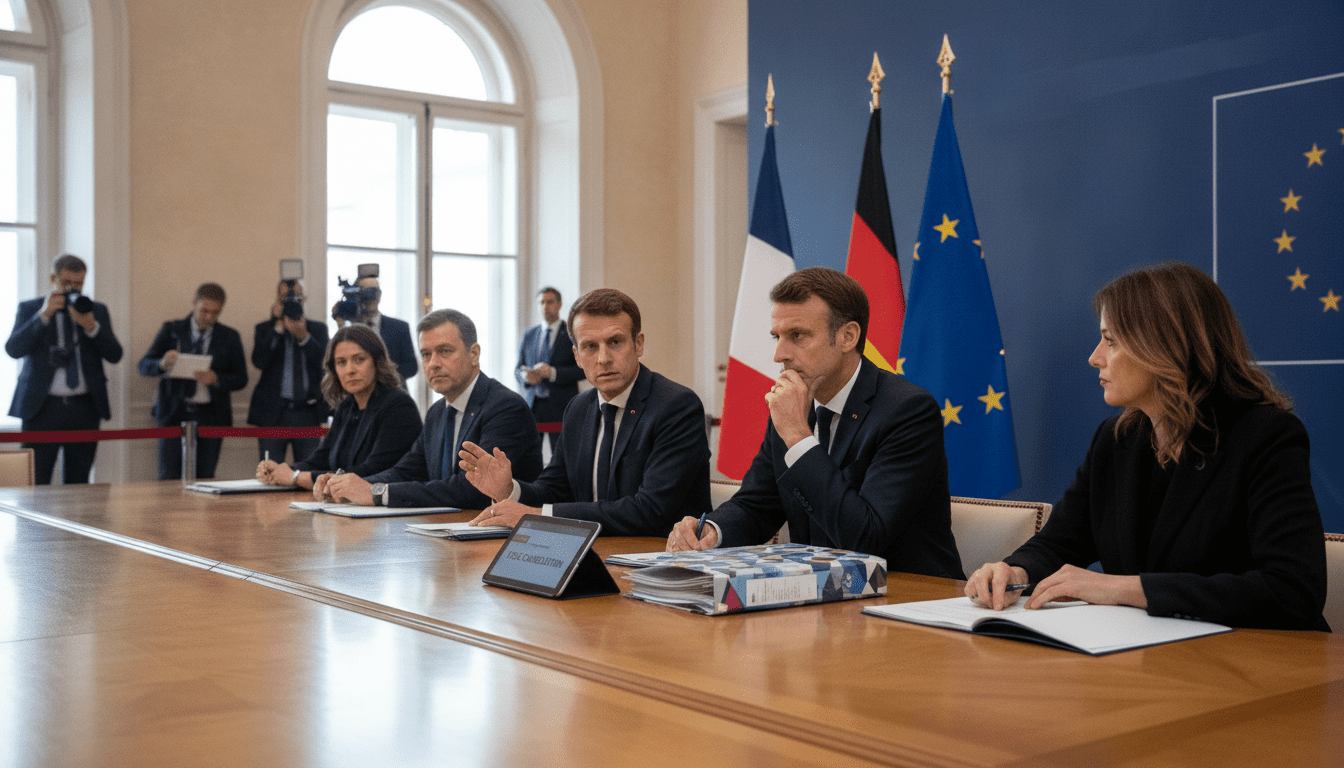
Cancellation of German-French fighter jet project forces strategic reset for European defence
Official cancellation of the German-French fighter jet project pushes Europe toward smaller industry coalitions, market-driven innovation and reuse of FCAS tech.
Berlin and Paris confirm end of joint fighter project
The official decision to halt the German-French fighter jet programme marks a decisive break in a long-running effort to build a shared combat aircraft. The German-French fighter jet, commonly known under the FCAS banner, will no longer proceed in its original form, prompting immediate calls for a more pragmatic approach to defence cooperation. Governments in both capitals framed the move as a course correction rather than a failure, emphasizing a shift to achievable, modular projects.
Officials said the cancellation cuts through protracted disputes over design, industrial roles and costs that bedevilled the programme for years. The announcement is likely to reorient procurement plans and force militaries to reconsider timelines for replacing ageing fleets. Analysts expect a surge in targeted collaborations that can deliver equipment and capabilities faster and with clearer governance.
Industry coalitions already forming across Europe
European defence companies have shown a preference for flexible, project-by-project alliances rather than monolithic, state-led programmes. Recent examples include multinational missile systems and satellite initiatives where firms from several countries pooled expertise to win contracts. These industry-driven coalitions demonstrate that cross-border cooperation does not require a single, all-encompassing programme to succeed.
Several defence contractors and new entrants are reportedly exploring partnerships for drones, ground systems and secure communications that could absorb technologies originally intended for the cancelled fighter. Such partnerships tend to move faster because they are less constrained by national political bargaining and can respond to market incentives. The result is a patchwork of collaboration that may deliver capability improvements more rapidly than a single, complex aircraft project.
Political limits hinder agile defence innovation
Political constraints have repeatedly slowed down large European defence initiatives, leaving industry innovation unable to translate quickly into operational capability. Decision-making across multiple governments introduces delays, shifts in priorities and disputes over industrial shares that can cripple programmes. The cancelled German-French fighter project became a high-profile case of institutional friction overtaking technical progress.
This political inertia contrasts with dynamic private-sector efforts elsewhere, where companies can pivot, seek different partners or chase emerging markets without waiting for intergovernmental accords. European policymakers now face pressure to create regulatory and funding environments that allow companies to act decisively while preserving strategic oversight. Striking that balance will determine whether the region can close capability gaps in the next decade.
Salvaging FCAS elements for drones and networks
Despite the aircraft’s cancellation, many stakeholders see value in saving components of the Future Combat Air System for other uses. Key areas under active consideration include unmanned systems, sensor fusion, secure datalinks and digital “battle cloud” architectures. Redirecting software, avionics and networking work into broader defence ecosystems could accelerate the deployment of next-generation capabilities.
Industry insiders argue that modularising investment—funding software and common standards rather than a single platform—would allow multiple projects to benefit from shared development. That approach can also support interoperability among NATO allies and partner nations. It preserves technical gains made under FCAS while avoiding the political frictions that sank the fighter itself.
Lessons from space and missile collaborations
Comparisons with European successes and setbacks in other high-tech sectors underline the importance of pragmatic partnerships. Programs such as multinational missile systems and satellite contracts show that targeted cooperation can compete with American systems without requiring uniform industrial control. Conversely, projects burdened by national vanity or rigid structures have struggled to keep pace with more market-driven rivals.
The contrast with commercial space ventures is instructive: private companies pushed reusable rocket technology ahead of incumbents because they faced different incentives. In defence, similar dynamism could emerge if states allow private actors more freedom to innovate and define exportable products. Policymakers are now weighing whether to loosen national constraints to foster faster capability development.
Timeline pressure for new aircraft initiatives
European air forces remain under pressure to replace ageing fighters, and time is a pressing factor for any new aircraft programme. Even with the door open to future multilateral projects, delays already incurred mean procurement planners must pursue interim solutions, upgrade existing fleets or accelerate alternative development pathways. Any realistic plan will require honest timelines and funding commitments from participating governments.
Defence ministers and industry leaders are expected to present new roadmaps that prioritise achievable milestones and split-risk approaches. That may include domestic development for some nations, cooperative midsize aircraft projects, and accelerated procurement of unmanned systems to fill capability gaps. The coming months will be crucial in determining whether Europe translates the FCAS cancellation into a more effective industrial strategy.
The cancellation of the German-French fighter jet closes one chapter but opens a window for European defence to reorient toward modular projects, industry-led alliances and pragmatic technology reuse that deliver capability on shorter timelines.
