
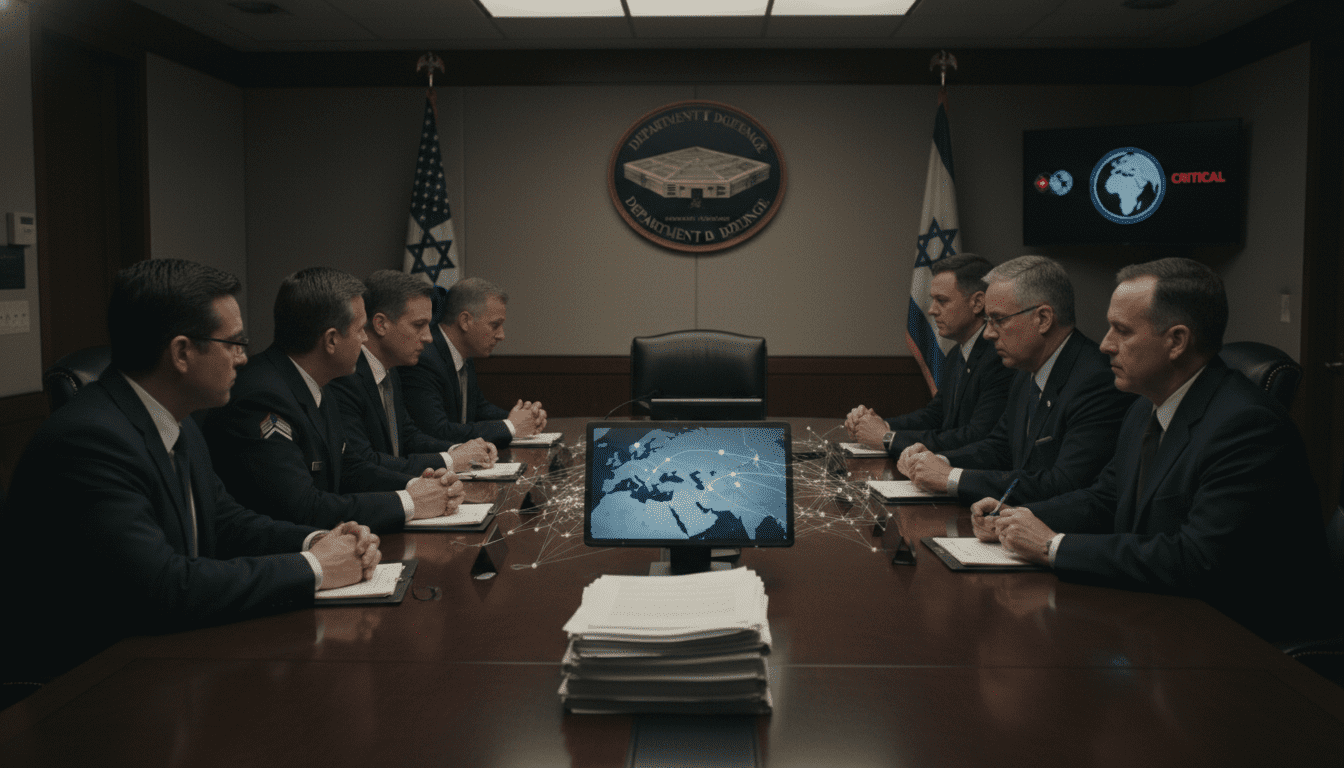
Pentagon Raises Israel Counterintelligence Threat to “Critical” Amid Alleged Spying on US Officials
DIA raises Israel’s counterintelligence threat to “critical”, citing alleged espionage against senior US officials and risks for deepening military cooperation.
The Pentagon’s Defense Intelligence Agency has elevated the Israel counterintelligence threat to its highest level, citing what US officials describe as intensified efforts by Israeli actors to collect intelligence on senior American officials. The assessment, reported by NBC News and The New York Times, labels Israel’s espionage activities as reaching a “critical” level and highlights concerns about both human and technical collection. This designation marks a rare and publicized moment of friction between Washington and one of its closest Middle East partners.
DIA Elevates Threat Assessment to “Critical”
The DIA circulated an internal assessment and chart that reportedly classifies Israel’s counterintelligence posture as “critical,” placing it above other US allies and on par with or higher than some adversarial states. US officials familiar with the document told reporters that the seven-page assessment details incidents and patterns that prompted the heightened warning. Officials say the step reflects alarm within Pentagon intelligence that Israeli collection has expanded beyond routine allied activity.
The decision to raise the formal threat level signals a recalibration inside the US defense community that could affect intelligence sharing and on-the-ground cooperation. The move represents an institutional acknowledgment that current practices pose a meaningful counterintelligence risk to sensitive US deliberations and operations.
Alleged Targets and Collection Methods
According to US officials cited in media reports, the focus of the alleged Israeli collection included senior figures in the Trump administration’s national security apparatus. Reported targets include special negotiator Steve Witkoff, Pentagon policy chief Elbridge A. Colby, and Colby’s deputy Michael P. DiMino IV. Sources told reporters that both human intelligence and technical eavesdropping were identified as methods of concern.
US officials described examples of targeted activity that exceeded typical information-gathering between partners, voicing worry about attempts to monitor internal deliberations on Middle East war planning. One senior official was quoted characterizing the collection as “unhinged,” language that conveys the depth of anxiety within parts of the US national security community.
Strain on Military Integration and Weapons Cooperation
The DIA assessment arrives as lawmakers consider provisions to more deeply integrate US and Israeli military research, production and technology. Proponents argue closer collaboration would strengthen interoperability and mutual defense capabilities, while critics warn that sensitive shared programs depend on trust and robust counterintelligence safeguards. Pentagon officials say the “critical” designation could complicate legislative efforts to formalize broader weapons cooperation.
Officials on both sides now face practical questions about who receives classified information during joint planning and exercises. If access for Israeli officers is restricted or more tightly vetted, proposed benefits to Israeli defense firms and technology partners could be diminished and congressional support could fragment.
Diplomatic Rift Over Iran War Planning
The heightened threat assessment comes amid wider tensions between Washington and Jerusalem over the approach to Iran and related regional conflicts. Since late February, the US and Israel have been at odds over the conduct and scope of military action, with Israel reportedly urging more aggressive bombing and the US pursuing diplomatic channels to de-escalate. The Pentagon’s warning compounds a diplomatic standoff by raising concerns that Israeli collection aimed at US decision-makers could influence or undermine coordination.
Recent reports say the Trump administration sought a ceasefire early in April and engaged in diplomacy with Tehran to halt hostilities that began on February 28. According to officials cited in the coverage, Prime Minister Benjamin Netanyahu has openly advocated restarting strikes, creating friction with US leaders who have urged restraint. The intersection of policy disagreements and counterintelligence concerns intensifies the challenge of maintaining a working strategic partnership.
Historical Precedent and Espionage Sensitivities
The current episode revives memories of high-profile espionage cases that have long shadowed US-Israel relations. In the 1980s, US Navy analyst Jonathan Pollard was convicted of passing classified materials to Israel and served decades in prison, a case that left enduring sensitivities in US intelligence circles. That history helps explain why American agencies react strongly when potential insider collection by an ally is alleged.
Officials say past incidents inform present counterintelligence thresholds and the decision to formalize threat ratings. National security managers contend that rigorous standards are necessary to protect classified sources, methods and policy deliberations regardless of the bilateral strategic relationship.
Congressional Implications and Next Steps
The emergence of the DIA’s “critical” assessment is likely to draw scrutiny from Capitol Hill as lawmakers weigh both defense cooperation and oversight. Committees with jurisdiction over intelligence and foreign policy may request briefings, redacted excerpts of the assessment, or testimony from senior Pentagon officials to better understand the scope of alleged Israeli collection. Legislative action on proposed integration measures could be delayed or conditioned on new safeguards.
Pentagon and intelligence officials will also need to determine operational responses, including enhanced vetting, compartmentalization of sensitive programs, or temporary limits on information sharing. How Washington confronts these issues will shape not only bilateral defense ties but also broader diplomatic efforts in the Middle East.
The DIA warning underscores the tension between deep strategic ties and the imperatives of protecting classified deliberations, leaving US policymakers to balance partnership benefits against emerging counterintelligence risks.
