
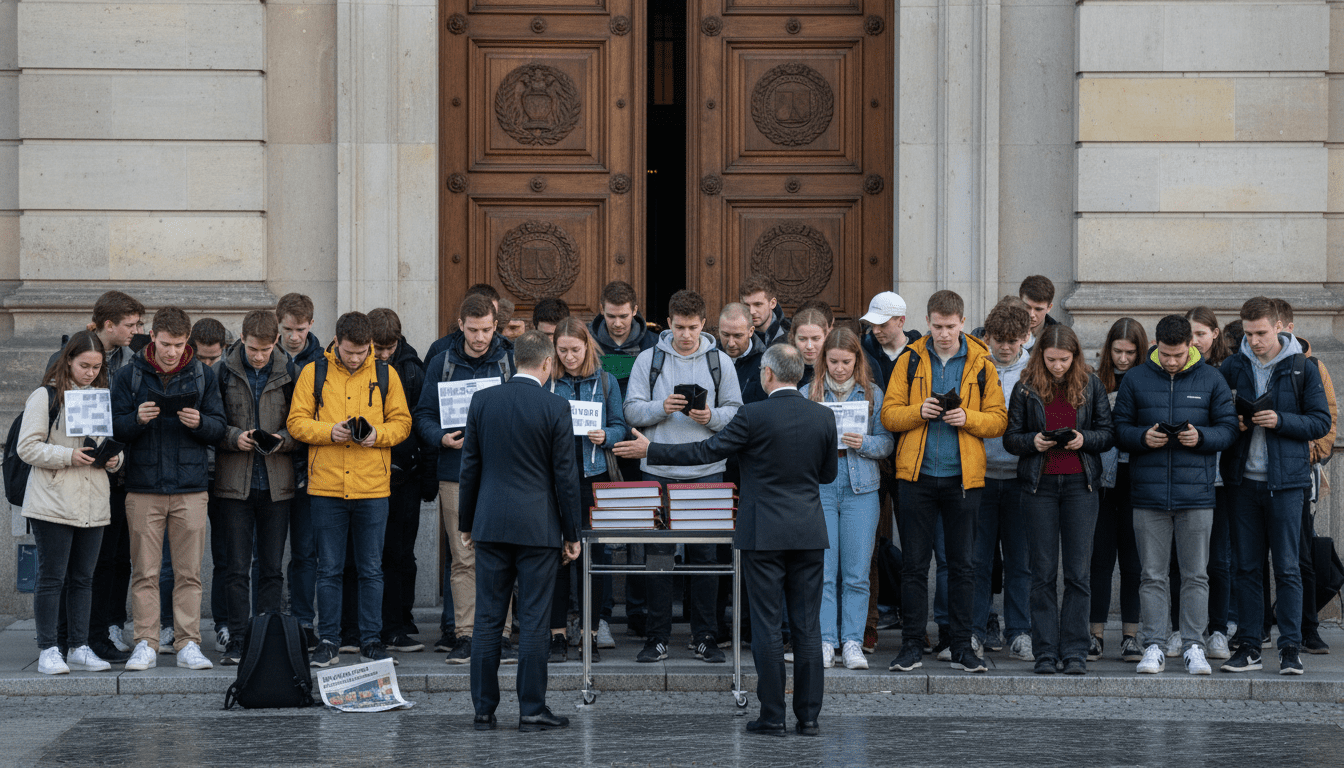
Bafög reform stalls as students working long hours warn of widening inequality
Bafög reform stalls as students working long hours, like Lina Schuurman, urge change; many cannot access aid because parental income limits exclude them.
Lina Schuurman’s account of juggling multiple low-paid jobs while completing an interior design degree has returned the stalled Bafög reform to the center of a national debate about who bears the cost of higher education. The proposed Bafög reform, which would raise the housing allowance and align support more closely with basic social benefits, faces resistance in government even as students report severe financial strain. Schuurman’s story — working up to 20 hours a week and living on a tight budget without grant support — encapsulates a wider tension between political rhetoric and students’ lived experience.
Student experience: Lina Schuurman’s daily reality
Schuurman, 28, described waking at 5 a.m. for bakers’ shifts, attending daytime lectures and finishing evenings with additional work in an architecture office. She says the cycle of work and study left little room for the extracurricular activities that often underpin scholarship applications or academic networking. Her rent consumes nearly half of her monthly budget and she limited food spending to discount-brand purchases to make ends meet.
The student’s path to higher education was non-linear: an earlier vocational apprenticeship, health-related career change and then the decision to return to university at 25. Schuurman applied for Bafög but was told her parents’ income disqualified her, forcing continued employment through her studies. She finished her bachelor’s degree on time but emphasizes the toll: “I have a high price to pay for my degree,” she says.
Government backlash and the stalled Bafög reform
Federal Research Minister Dorothee Bär has publicly defended the country’s tuition-free higher education model while signaling limits to expanded student aid, arguing broader social cutbacks constrain new spending. Bär told media that her ministry had lined up a Bafög reform but that parliamentary groups were no longer supporting the package in full. She framed additional student transfers as politically difficult when other social programs are also under fiscal pressure.
At the same time, senior politicians including Chancellor Friedrich Merz and others have revived longstanding critiques of student entitlement and work ethic, reinforcing a narrative that contrasts sharply with students’ testimony. That rhetoric has complicated consensus-building for targeted Bafög changes and left reform advocates scrambling to justify increases in support to skeptical colleagues.
How eligibility rules exclude many students
Current Bafög rules base eligibility largely on parental income, with thresholds that disqualify students whose parents earn above a fixed amount — roughly €78,000 gross per year in many cases. The system uses tax statements as the primary determinant, and it does not account for household debts, regional housing costs or parents’ willingness to contribute. As a result, some students who are financially independent in practice are judged ineligible because of family income on paper.
Only a minority of students receive Bafög, and critics argue the parental-income test creates arbitrary barriers. For students like Schuurman, being 25 and financially autonomous did not overcome the statutory cutoff, leaving them to rely on precarious employment rather than state support tailored to their living needs.
Work and study: prevalence and pressures across Germany
Many students work during their studies; recent figures cited by Eurostat show a significant share of 15–29-year-olds in training hold jobs, placing Germany above the EU average for student employment. Students report a mixture of low-wage roles — from hospitality at seasonal markets to part-time office work — often at or near minimum wage. Those hours provide income but also reduce time available for study, internships and extracurriculars that help secure scholarships or professional placements.
Research by labour-market institutes indicates financial strain contributes to dropout rates: roughly one in three students leaves university before completion, with about 10 percent of dropouts citing financial reasons. The effect is disproportionately felt by students from non-academic backgrounds, where financial barriers can double the likelihood of discontinuing study compared with peers from academically established families.
Consequences for social mobility and university outcomes
The interplay of strict parental income tests, rising living costs and limited grant coverage risks narrowing access to higher education for students without family wealth. Observers warn that unless policy adjusts to account for real living expenses and independence, higher education will become less accessible to those who must support themselves. Students working long hours gain practical experience but may trade off academic performance and mental health, outcomes that ultimately reduce workforce preparedness.
Universities and employers occasionally offer support — extended working relationships or part-time placements — but these are inconsistent and cannot substitute for a coherent financing model. Advocates for reform argue modest increases in Bafög or a revision of parental assessment rules would yield long-term social and economic benefits by broadening participation and reducing dropout-related costs.
Decisions ahead for students and policymakers
For graduates like Schuurman, immediate pressures shape career and education choices: she accepted a full-time offer at an architecture firm and must decide whether to begin a master’s program by August 2026. That deadline reflects the short-term trade-offs many graduates face when financial relief is absent or uncertain. Students report that even when qualified, pursuing advanced degrees without sufficient support often requires postponing study or relying on unstable income.
Policymakers weighing the Bafög reform will confront competing fiscal priorities and political narratives about merit and responsibility. The debate will hinge not only on budget lines but on whether the state recalibrates support to reflect contemporary living costs and diverse family situations. For many students, including those who already completed degrees while working, the outcome will determine whether higher education can fulfill its promise as a lever of social mobility.
Schuurman’s experience underlines a central question in the Bafög reform debate: can a system that often excludes self-supporting students be reformed in time to prevent further inequality, or will financial barriers continue to shape who can realistically pursue and complete higher education?
