
IAEA chief says US-Iran nuclear framework close to agreement amid regional tensions
IAEA Director Rafael Grossi says the US and Iran are nearing agreement on a nuclear framework as Israel’s regional war agenda significantly heightens instability.
IAEA chief signals progress toward US-Iran nuclear framework
The head of the International Atomic Energy Agency told diplomats the United States and Iran appear close to settling on a nuclear framework that would shape future technical and verification work. Rafael Grossi said the agency has remained in contact with both governments but is not a direct participant in the negotiations. He characterized the developing arrangement as a structural or organizational approach designed to buy time to address outstanding technical and compliance issues. The comments followed an emergency IAEA board meeting convened to discuss regional developments and safeguards concerns.
Details from the Vienna emergency board meeting
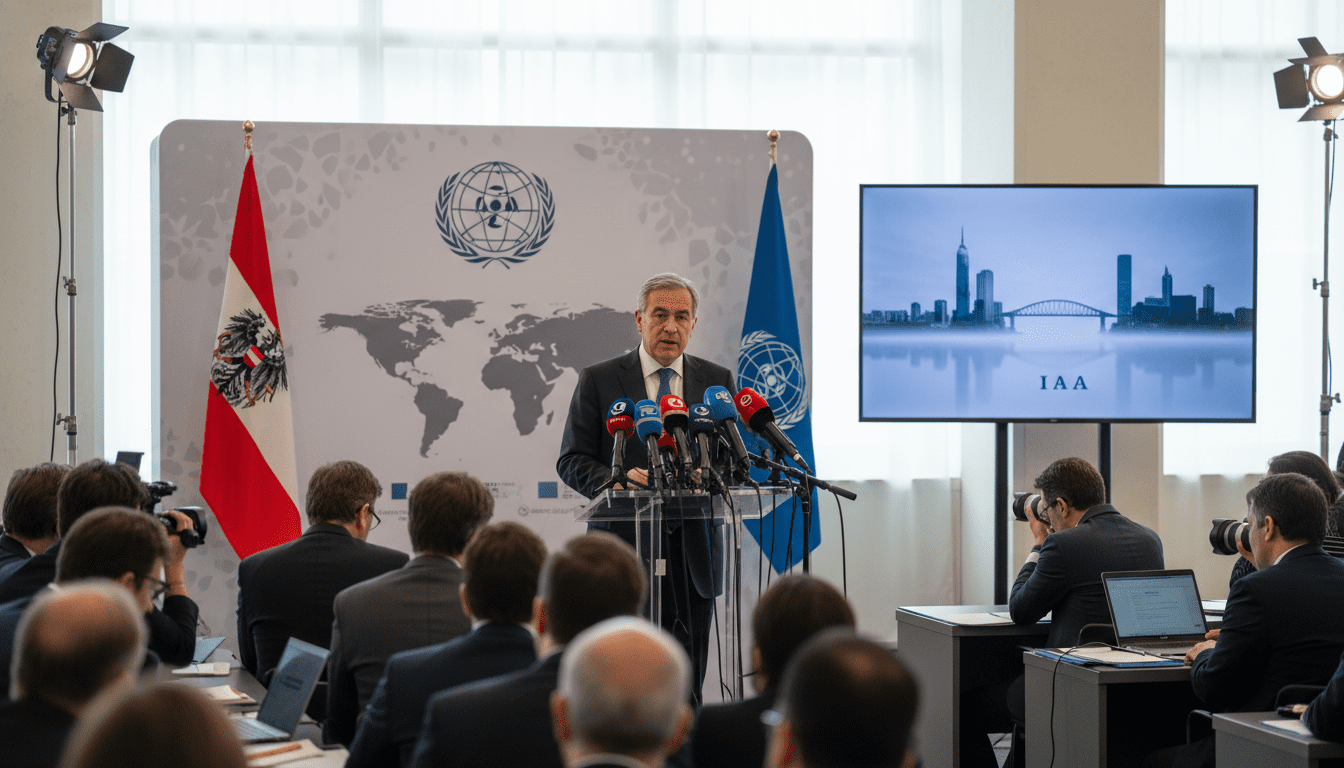
IAEA member states gathered in Vienna for an unscheduled board session to review recent escalations and the status of talks between Tehran and Washington. Delegates debated how best to preserve the agency’s monitoring capabilities while political negotiations proceed. Board participants discussed possible measures to protect safeguards operations and to maintain a chain of custody for monitoring equipment. The meeting underscored the IAEA’s dual role as a technical watchdog and a diplomatic interlocutor in a volatile regional environment.
Grossi describes framework as organizational and time‑buying
Grossi conveyed to the board that the emerging US-Iran nuclear framework is likely to emphasize an organizational structure rather than an immediate, comprehensive settlement. Such a structure would create mechanisms and timelines for technical teams to investigate compliance questions and to resolve outstanding disputes. According to the IAEA chief, the arrangement is intended to grant negotiators and inspectors time to address complex scientific and procedural problems without further degrading monitoring. Diplomats viewed that approach as a pragmatic way to avoid abrupt disruptions to safeguards while political talks continue.
IAEA maintains contact but not a negotiating role
The agency has framed its involvement as facilitative and technical, not as a party to the political negotiations between Tehran and Washington. Grossi stressed the IAEA’s mandate to verify nuclear materials and activities, noting that it would provide assessments and technical support if requested. The board discussed logistical challenges for inspectors operating amid heightened regional tensions, including access to sites and the security of personnel and equipment. Member states pressed the agency to clarify contingency plans to sustain monitoring even if local conditions deteriorate further.
Regional instability and Israel’s military agenda factor into talks
Diplomats and agency officials acknowledged that wider regional conflict, and particularly Israel’s military activities and stated objectives, have complicated the negotiating environment. That instability has added urgency to the need for a formalized process to manage nuclear issues without collapsing into crisis. Several board members argued that a stable institutional framework would help insulate technical verification from the political fallout of regional hostilities. Others warned that military escalations could still undermine inspection routines and erode confidence in the verification system.
What negotiators are said to be seeking in the framework
Sources in diplomatic circles described the draft framework as likely to include agreed procedures for information sharing, timelines for technical verification, and a governance structure to resolve disputes. The goal, as presented to the IAEA board, would be to establish a predictable process for addressing alleged breaches or ambiguous activities. Participants reportedly want provisions that allow for phased responses, giving inspectors defined authorities while ensuring that political disagreements do not immediately halt monitoring. Such features aim to balance the technical impartiality of safeguards with the political realities shaping the talks.
Timeline and potential implications for safeguards
While Grossi indicated talks are approaching a basic understanding, he and board members stopped short of outlining a firm timetable for finalizing any framework. The proposed organizational model could be implemented in stages, with immediate steps to protect monitoring equipment and later phases for deeper verification measures. If adopted, the framework may reduce the risk of a sudden breakdown in oversight and could pave the way for subsequent technical agreements on specific compliance questions. However, officials cautioned that any arrangement will require sustained political will from both Tehran and Washington to be effective.
The IAEA’s public positioning — facilitating but not negotiating — reflects a wider diplomatic effort to preserve technical verification amid geopolitical tension, while the proposed US-Iran nuclear framework seeks to create breathing room for inspectors and negotiators alike.
