
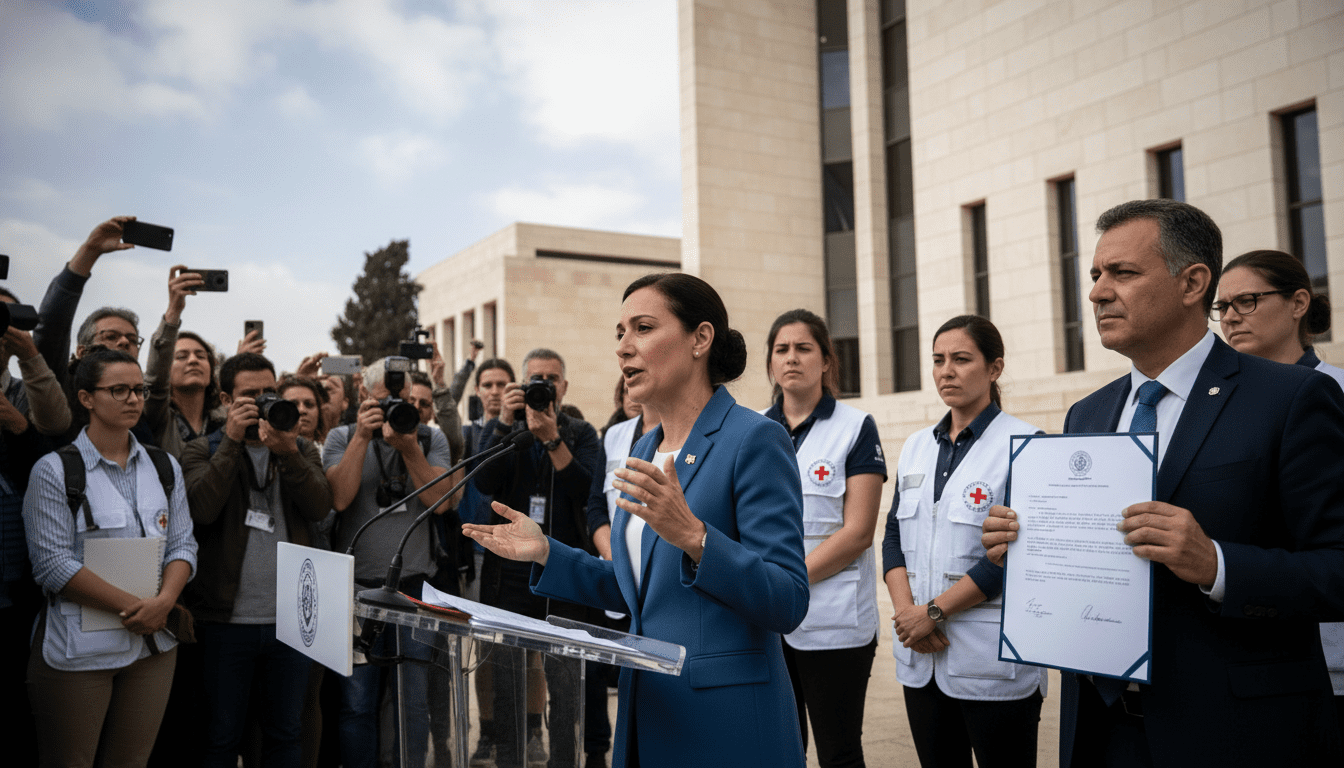
Israel Supreme Court rejects ban on Red Cross visits to Palestinian detainees
Israel’s Supreme Court ruled the government must restore Red Cross visits to Palestinian detainees, finding the ban violated Israeli and international law and ordering access to resume.
Supreme Court ruling and immediate effect
The Supreme Court issued a unanimous decision on Wednesday rejecting a government policy that barred the International Committee of the Red Cross (ICRC) from visiting Palestinian prisoners in Israeli facilities. The court found the blanket suspension had no sufficient legal basis and therefore contravened both Israeli statutory protections and obligations under international humanitarian law. The ruling requires authorities to lift the ban and re-establish private access for Red Cross delegates to detainees held in prisons and military detention centers.
The decision was welcomed by the petitioning rights groups and the ICRC, which said it was ready to resume visits while continuing dialogue with Israeli authorities. Judges emphasized that unfettered, confidential visits constitute a core safeguard against mistreatment and disappearance in detention settings.
Human rights groups and the legal challenge
The case was brought by a coalition of Israeli and international rights organisations, including the Association for Civil Rights in Israel (ACRI), Physicians for Human Rights, HaMoked, and Gisha. The petition was first filed in February 2024 and challenged the government’s post-October 2023 policy that annulled all Red Cross access to Palestinian detainees.
According to court documents, the state sought 27 procedural extensions before the matter was heard, with the High Court conducting oral arguments in late October 2025. Petitioners argued the ban represented the first time in half a century that Israel had prevented Red Cross visits and that the policy was never justified by a clear legal or security rationale.
Court’s findings on law and evidence
The justices concluded the government failed to present a legally grounded explanation for an indefinite suspension of visits, particularly given the long-standing practice of allowing neutral monitoring by the ICRC. The ruling stressed that access to detainees and the right to private communication with impartial monitors are protected both by Israeli regulations governing detention and by international law governing the treatment of prisoners in armed conflict.
The court criticized the absence of evidence showing that individual visits posed a demonstrable security threat that could not be mitigated by less disruptive measures. It ordered officials to provide prompt arrangements enabling Red Cross delegates to meet detainees privately, while permitting security procedures proportionate to lawful concerns.
ICRC response and what comes next
The ICRC issued a statement welcoming the ruling and indicating readiness to resume its detention visits as soon as practical arrangements are in place. The organization reiterated that confidential interviews and direct access to detainees are fundamental obligations under international humanitarian law and essential for monitoring detainee welfare.
Rights groups said visits could begin immediately, although they warned practical and logistical hurdles may delay full restoration of access. The court’s order obliges authorities to cooperate with the ICRC to set modalities for resuming visits and to report back on implementation.
Wider context: October 2023 attack and Gaza conflict
The suspension of Red Cross visits followed the Hamas-led assault on October 7, 2023, in which more than 1,100 people were killed and more than 240 were taken captive, according to widely reported figures. The attack triggered a prolonged and devastating military campaign in Gaza, where Gaza’s Health Ministry reports that more than 72,950 people have been killed and nearly 1.9 million displaced amid extensive destruction.
Human rights groups and an independent United Nations inquiry have raised grave concerns about civilian harm and characterized aspects of the conduct in Gaza as amounting to crimes under international law. Violence in the occupied West Bank also intensified after October 2023, and Israeli authorities say the security environment shaped many of their operational decisions, including the suspension of external monitoring of detention facilities.
Allegations of ill-treatment and international scrutiny
The court’s ruling arrives amid mounting international scrutiny over the treatment of Palestinian detainees. A United Nations report on conflict-related sexual violence published in 2025 documented verified incidents of torture, rape, forced nudity and intrusive searches linked to Israeli security forces, raising alarms about detention practices and interrogation methods. Rights groups have cited those findings in urging access for neutral monitors to prevent further abuse.
Legal advocates say renewed Red Cross visits will provide independent verification of detainee conditions, access to medical care, and confidential opportunities for prisoners to report abuses to an impartial body.
For Palestinian detainees and their families, the court’s decision represents a formal restoration of a protection mechanism that had been standard practice for decades. Implementation now depends on administrative cooperation and continued oversight to ensure visits are effective and secure.
