
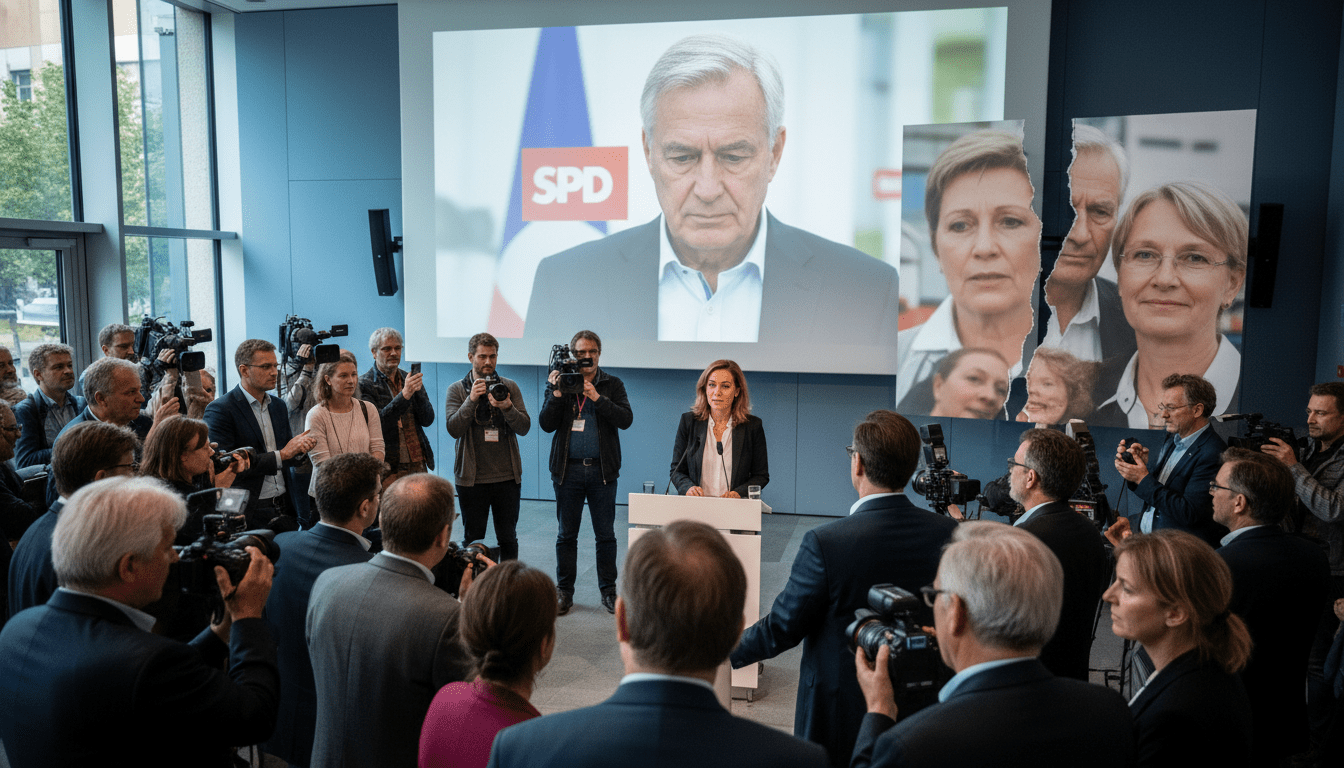
Indira Geisel documentary examines SPD family split after Thomas Geisel joins BSW
Indira Geisel documentary examines an SPD family split after former Düsseldorf mayor Thomas Geisel joined Sahra Wagenknecht’s BSW; now streaming in ZDF Mediathek.
Indira Geisel’s new documentary, Politik ist persönlich, chronicles an intergenerational rupture inside a prominent Social Democratic family after Thomas Geisel left the SPD and aligned with Sahra Wagenknecht’s BSW. The Indira Geisel documentary follows political arguments, private tensions and shifting loyalties as the filmmaker spends more than a year observing her father, his critics in the family, and the broader crisis of the SPD. The film uses a single family as a lens on wider questions about party identity, pragmatism and the future of social democracy in Germany.
Family rift centers on party switch
The documentary centers on the moment Thomas Geisel left the SPD after four decades and joined the BSW, a move that provoked sharp reactions from relatives steeped in Social Democratic tradition. Several family members accuse him of careerism and betrayal, while others seek to understand the political reasoning behind his decision. Geisel’s departure is portrayed not only as a political shift but as a catalyst that forces private disagreements into the open.
Grandfather accuses son of ‘an act of unseemliness’
Indira Geisel frames the dispute through the voice of her 94-year-old grandfather, Alfred Geisel, a six-decade SPD stalwart and former vice-president of the Baden-Württemberg state parliament. In the film he calls his son’s decision an “Akt der Unanständigkeit,” a phrase that crystallizes the moral judgment many older party members feel. That intergenerational rebuke highlights a clash of political norms: for the grandfather, party fidelity and exemplarity remain paramount, while his son emphasizes results and personal conviction.
A year and a half of intimate filming
Over 18 months of intermittent filming, Indira Geisel followed her father to campaign events, family discussions and moments of private reflection, seeking to capture both strategy and sentiment. The filmmaker says she wanted to know who was being drawn to the BSW and why, and to examine the SPD’s decline through a concrete human story. The extended access allows the film to move beyond headline politics and document how political decisions ripple through family life.
Younger generation questions party belonging
Scenes with younger relatives and activists provide contrast to the elders’ perspectives and underline the film’s wider theme about political belonging. Indira appears as the only one of her cousins who joined the SPD at age 20, a decision she made in reaction to the collapse of Martin Schulz’s candidacy and from a desire to act. Other younger family members support the Jusos’ campaigning in Thuringia without being party members, and their surprise at Indira’s membership underscores how fluid political identity has become for many young people.
Loyalty and political identity debated in the film
The question of loyalty runs through Politik ist persönlich as both a personal and political concept, with the phrase “Loyalitätsopfer” appearing as a framing device. Family members debate whether loyalty should be owed to a party, to its program, or to evolving individual beliefs, and those debates mirror broader tensions within the SPD. Indira uses these scenes to pose a larger inquiry: whether a mainstream party that once sought to transform society can still speak convincingly to a new generation facing different economic and social challenges.
Filmmaker stays in the party while demanding change
Despite the distance she portrays, Indira Geisel remains an SPD member and says she believes the party still owes society a programmatic answer to questions of justice and future policy. Her stance in the film is not uncritical loyalty but a conviction that the SPD should not be left solely to its current rank-and-file without renewal. That position provides a throughline in the documentary: documenting decline does not automatically become an argument for abandoning the institutional vehicle of social democracy.
Public availability and audience response
Politik ist persönlich has been released to viewers via the ZDF Mediathek, where it is positioned as both a personal portrait and a political case study. Early responses emphasize the film’s intimacy and its ability to make abstract party debates feel immediate and consequential. The documentary has provoked discussion about how parties manage dissent internally and how private relationships shape public politics.
The Indira Geisel documentary uses one family’s fracture to illuminate fault lines in contemporary German left-of-center politics. By refusing both simple condemnation and hagiography, the film invites viewers to consider what loyalty, representation and programmatic clarity mean in a changing political landscape.
