
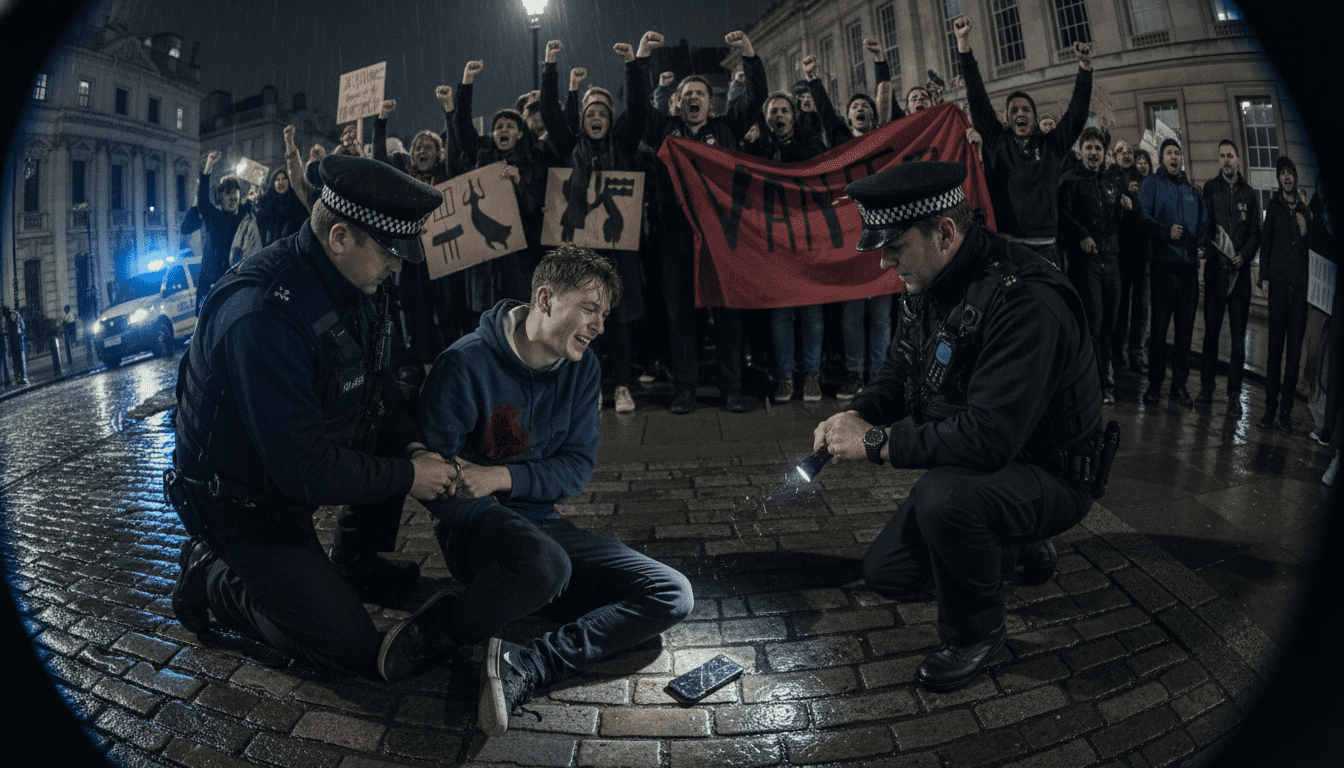
Bodycam Footage of Police Arrest of 18-year-old Henry Nowak Sparks Protests Across the UK
Newly released bodycam footage showing the police arrest of 18-year-old Henry Nowak while he lay dying after a stabbing has provoked heated protests across the United Kingdom, raising urgent questions about officers’ medical response and use of restraints.
The footage, published on 3 June 2026, appears to show officers placing handcuffs on Nowak despite bystanders’ repeated pleas for immediate medical attention after the teenager was stabbed multiple times. The video has become the focal point for demonstrations and demands for independent inquiries into the conduct of officers at the scene.
Video Shows Officers Handcuffing Stabbed Student
The body-worn camera footage records the moments after the stabbing, with emergency responders and police arriving at the scene while the injured student receives scant immediate aid. In the footage, officers are seen applying restraints to the 18-year-old before extended attempts at first aid are visible.
Bystanders and other emergency personnel in the recording repeatedly call for medics and ask officers to prioritise urgent care. The sequence has intensified public concern because it appears to capture a dying person being treated first as a suspect rather than a casualty in need of lifesaving intervention.
Family and Witnesses Demand Answers
Relatives of the deceased and witnesses who spoke after the footage emerged described the arrest as shocking and demanded a full accounting of the timeline of events. Family members have said they want clarity about why handcuffs were applied and how rapidly medical help was delivered following the stabbing.
Witness accounts have amplified calls for transparency, with several stating that they pleaded with officers to administer basic first aid and to allow paramedics quicker access to the victim. Those statements have helped galvanise supporters and critics into organised protests calling for rapid investigations.
Police Release Statement and Investigations Under Way
Police authorities have acknowledged the existence of the bodycam footage and confirmed that an investigation into the incident is under way. Officials say the footage will form part of an internal review and that any officer conduct found to be inappropriate will be examined through disciplinary channels.
Independent oversight bodies that review police conduct are reported to be monitoring developments, and public prosecutors may be asked to assess whether criminal charges are warranted. Authorities have pledged to make findings public when investigations permit, while refusing to comment on operational details during ongoing inquiries.
Protests Erupt in Multiple Cities
Following the footage’s release on 3 June 2026, demonstrations took place in several urban centres across the UK, with organisers citing the case as emblematic of systemic failures in police responses to people in medical crisis. Protesters carried placards demanding justice for the victim and greater accountability for officers involved.
Local councils and policing chiefs have urged for peaceful demonstration while warning that tensions remain high in neighbourhoods directly affected by the incident. Organisers said protests will continue until they receive transparent answers about the circumstances surrounding Nowak’s arrest and the timing of medical intervention.
Legal, Medical and Human Rights Questions Raised
Legal experts and human rights advocates point to established duties for law enforcement to render or facilitate urgent care when a person is seriously injured, arguing that the use of restraints on someone evidently in need of medical attention raises complex legal and ethical issues. Questions focus on whether handcuffing impeded care or was applied for safety before medical aid could begin.
Medical practitioners emphasise that rapid haemorrhage control and airway management are critical after major stabbings, and that any delay in such measures can be fatal. Civil liberties groups have called for an independent medical review alongside the police probe to determine whether care standards at the scene met statutory and professional thresholds.
Calls Grow for Policy Change and Greater Oversight
The incident has sharpened demands from campaigners, members of parliament and civil society for clearer protocols governing interactions between police and emergency medical services. Proposals include mandatory cross-agency training, stricter rules on the use of restraints in medical emergencies, and faster routes for bodycam footage to be reviewed by independent bodies.
Some lawmakers have also urged expedited consideration of legislative changes to strengthen oversight of policing practices and to ensure families receive timely explanations when deaths occur following police contact. Advocacy groups are preparing to push for formal inquiries if investigators do not provide a swift and thorough account of events.
In the immediate aftermath of the footage’s publication, the focus remains on the ongoing official inquiries and on community demands for accountability; demonstrators and Nowak’s family say they will continue to press for answers until a full and transparent investigation is completed.
