
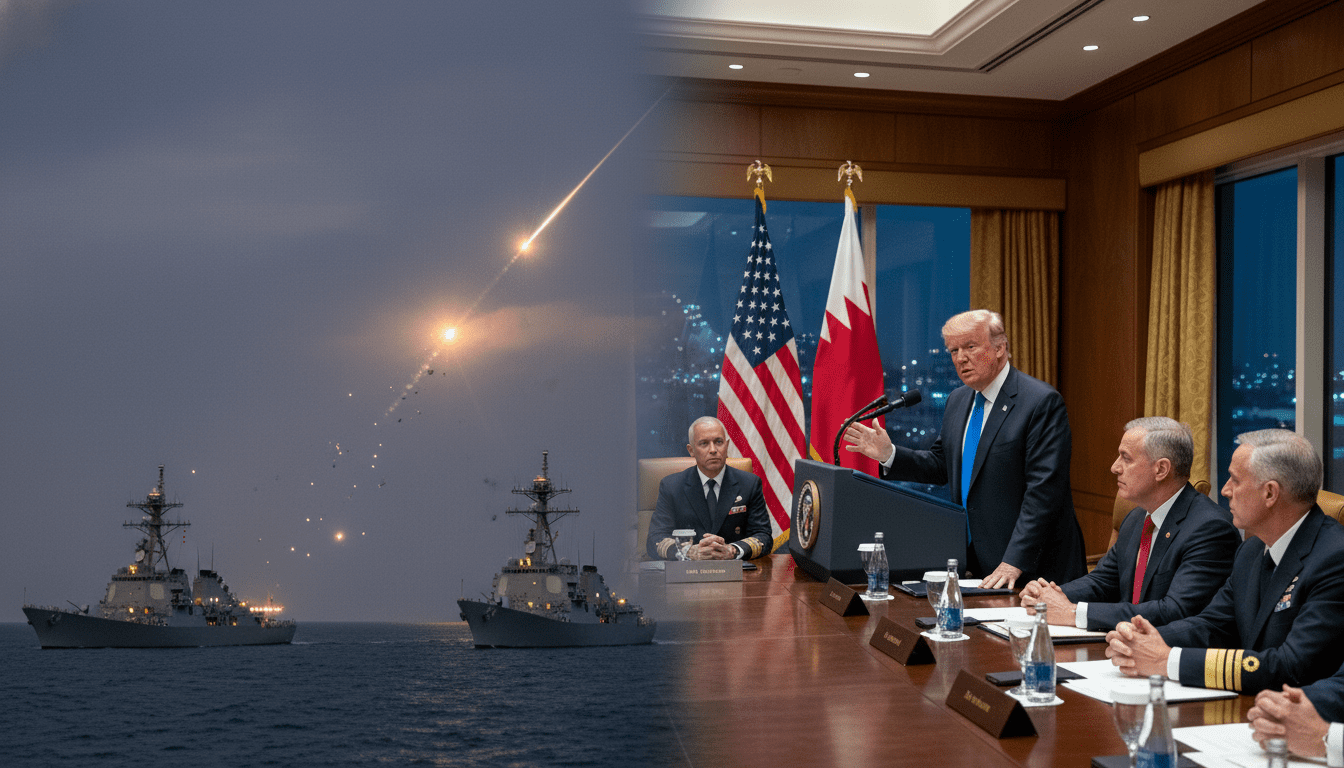
Iran missile attacks intercepted by US and Bahraini forces; two missiles fail near Kuwait
US Central Command said US and Bahraini forces intercepted Iran missile attacks aimed at Bahrain, while two ballistic missiles launched toward Kuwait fell short or broke apart, and attempted strikes on shipping missed their targets.
Intercepts over Bahrain
US Central Command (Centcom) reported that US and Bahraini forces intercepted missiles fired toward Bahrain, preventing strikes on the island nation’s territory and infrastructure. The statement described a coordinated air and missile defense response involving regional partners and US assets in the area.
Centcom also said the attempted barrage included sea-based elements, but that defensive systems were effective in neutralizing the immediate threat. Officials emphasized that no significant damage to Bahraini facilities had been confirmed at the time of the announcement.
Ballistic missiles toward Kuwait failed
According to Centcom, two Iranian ballistic missiles launched in the general direction of Kuwait either fell short of their intended targets or broke apart before reaching them. Local authorities in Kuwait reported debris and conducted precautionary measures, but there were no immediate reports of major damage or casualties.
Military assessments indicated the missiles did not complete their flight paths, limiting the scale of the incident and reducing the likelihood of a broader escalation. Analysts describe such malfunctions as possible but risky, given the potential for unpredictable damage from falling debris.
Maritime attacks did not succeed
Centcom further stated that Iran’s attempts to attack regional shipping were unsuccessful, with vessels in the area escaping damage. The command credited a combination of naval escorts, surveillance aircraft and allied coordination for deterring and disrupting potential assaults on commercial traffic.
The incident follows months of heightened tensions in regional sea lanes, where both commercial and naval vessels have faced interceptions, seizures and confrontations. Shipping companies and insurers are likely to reassess risk profiles for transits in the area as authorities continue to monitor threats.
White House and presidential response
President Donald Trump publicly denied reports that negotiations with Tehran had been suspended amid the crisis, posting on his social platform that diplomatic contacts have continued throughout. He described contrary reports as “fake news” and insisted talks were ongoing despite the recent military exchanges.
Officials in Washington reiterated that strategic communications were being maintained alongside defensive operations. The White House emphasized a dual-track approach combining military readiness with diplomatic outreach to prevent miscalculation.
US naval posture and regional presence
US naval vessels remain active in the region, and footage released earlier this year showed the USS Rafael Peralta enforcing a maritime blockade related to Iranian-flagged tanker movements. Centcom underscored that the US presence is intended to protect freedom of navigation and deter hostile actions by state and non-state actors.
Regional partners, including Bahrain, have continued to host coalition assets and participate in shared defense exercises designed to improve response times. Military planners say such partnerships are central to sustaining layered defenses against complex missile and maritime threats.
Risks for regional security and next steps
Security analysts warn that even failed missile launches and unsuccessful maritime attacks raise the risk of miscalculation and accidental escalation between states. Debris, near misses and ambiguous attribution can quickly inflame tensions, prompting calls for clearer communication channels and crisis-management mechanisms.
Diplomatic interlocutors are likely to press for renewed de-escalation talks while military commands maintain readiness. International actors have urged restraint and verification of facts on the ground to avoid further destabilizing the Gulf security environment.
The incident adds to an already volatile period in the region, where military encounters and diplomatic negotiations have proceeded in parallel. Continued monitoring and transparent reporting from military and civilian authorities will be essential to prevent further harm and to clarify the sequence of events for regional partners and the wider international community.
