
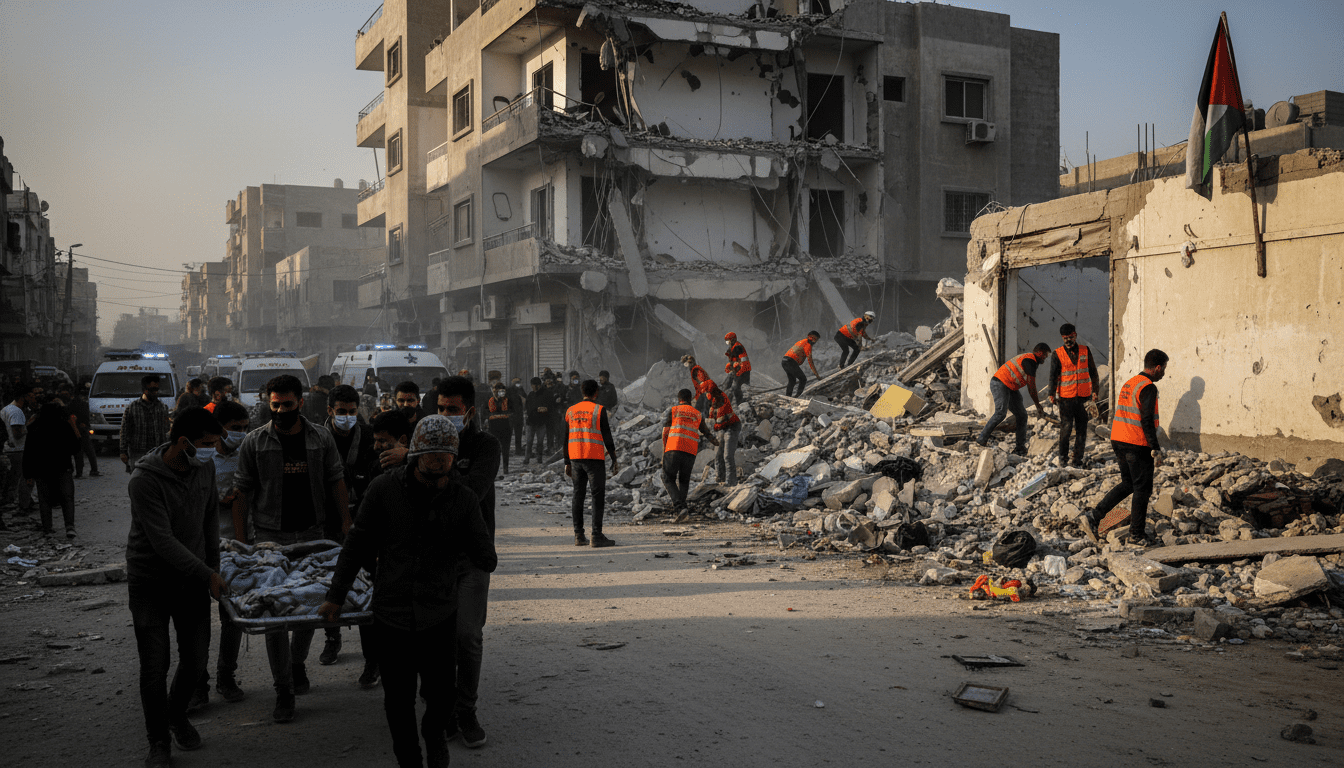
Israeli air strikes in Gaza on 2 June 2026 kill at least four Palestinians, officials say
Israeli air strikes in Gaza on 2 June 2026 killed at least four Palestinians in separate incidents across the enclave, Gaza health officials and medics said. The strikes and accompanying gunfire hit central and southern areas, leaving several wounded and widespread destruction. Authorities reported the deaths after operations in Deir al-Balah, Zawayda and Khan Younis, and emergency services were treating multiple casualties.
Deaths Reported Across Gaza
Gaza health officials said at least four people were killed on 2 June 2026 in separate incidents linked to Israeli military action. The fatalities were recorded in central and southern districts, where medics responded to strikes on vehicles, populated areas and a tent encampment. Officials cautioned that casualty numbers could change as rescue teams continue to search affected sites.
Vehicle Strike East of Deir al-Balah
Medics reported that an air strike struck a vehicle east of Deir al-Balah, central Gaza, killing one person and wounding four others. Witnesses described a scene of heavy damage to the vehicle and standing rescue crews clearing debris to reach survivors. Local hospitals received the wounded and confirmed that the initial blast had left the vehicle severely damaged.
Separate Blasts in Zawayda and Khan Younis
Earlier on 2 June an air strike in the nearby town of Zawayda killed one person and wounded another, according to medical sources. Later the same day, rescuers said a strike at a tent encampment in Khan Younis in the south of the Gaza Strip killed a further individual. In northwest Khan Younis, authorities reported that Israeli gunfire killed an additional man, bringing the immediate death toll to at least four for the day.
Medical Response and Casualty Treatment
Hospitals and emergency teams in Gaza said they worked through the night to treat the wounded and move the deceased to morgues amid sustained security constraints. Staff described overcrowding in casualty wards and limited resources as they carried out triage and emergency procedures. Medics appealed for access and supplies to manage the influx of patients from multiple strike sites.
Civilian Impact and Displacement
Residents said the strikes exacerbated already severe humanitarian pressures for displaced families living in temporary shelters and tent encampments. The incident at the tent site in Khan Younis underscored the vulnerability of people sheltering in makeshift conditions after repeated waves of violence. Humanitarian agencies and local authorities have previously warned that repeated strikes on populated areas increase civilian harm and complicate aid delivery.
Security Operations and Military Activity
Israeli forces characterized their operations in Gaza as targeted actions against militant threats, while local health and rescue sources described the day’s incidents as part of ongoing hostilities. Ground and air activity in and around populated districts has made access difficult for first responders and further strained medical facilities. The pattern of strikes and reported gunfire on 2 June reflects sustained military operations that have continued to produce civilian casualties.
Local hospitals reported the victims’ arrivals and the challenges of treating trauma in crowded conditions, while community leaders warned of mounting fear among civilians in affected neighborhoods.
International actors and rights organizations have repeatedly urged restraint when operations are conducted near civilian areas, citing the need to protect non-combatants and ensure humanitarian access. Observers continue to monitor developments closely as the situation evolves and additional reports emerge from the ground.
Humanitarian groups and local authorities are calling for safe corridors and unimpeded access for medical teams to reach injured civilians, and for accurate documentation of casualties to inform relief efforts.
The situation remains fluid as rescue teams carry out secondary searches, hospitals continue to treat the wounded, and authorities tally the full human cost of the strikes on 2 June 2026.
