
Autonomous Taxis in Munich: Uber and Autobrains Launch Robotaxi Program
Uber and Autobrains will deploy autonomous taxis in Munich using camera-based AI and Nvidia Level 4 systems, pending regulatory approvals later in 2026.
Munich will be the first city to host a commercial robotaxi program under a new partnership between Uber and the Israeli start-up Autobrains, the companies announced at Nvidia’s GTC conference in Taipei. The project, which pairs Autobrains’ camera-first driving intelligence with Nvidia’s Level 4 autonomy platform and Uber’s ride-hailing network, aims to begin operations later in 2026 pending local regulatory sign-off. A test vehicle from Autobrains is already operating in Munich, and regulators at the Kraftfahrt-Bundesamt have reportedly completed an initial approval process for that car. Early service will include a safety driver on board while the partners validate systems and operational procedures.
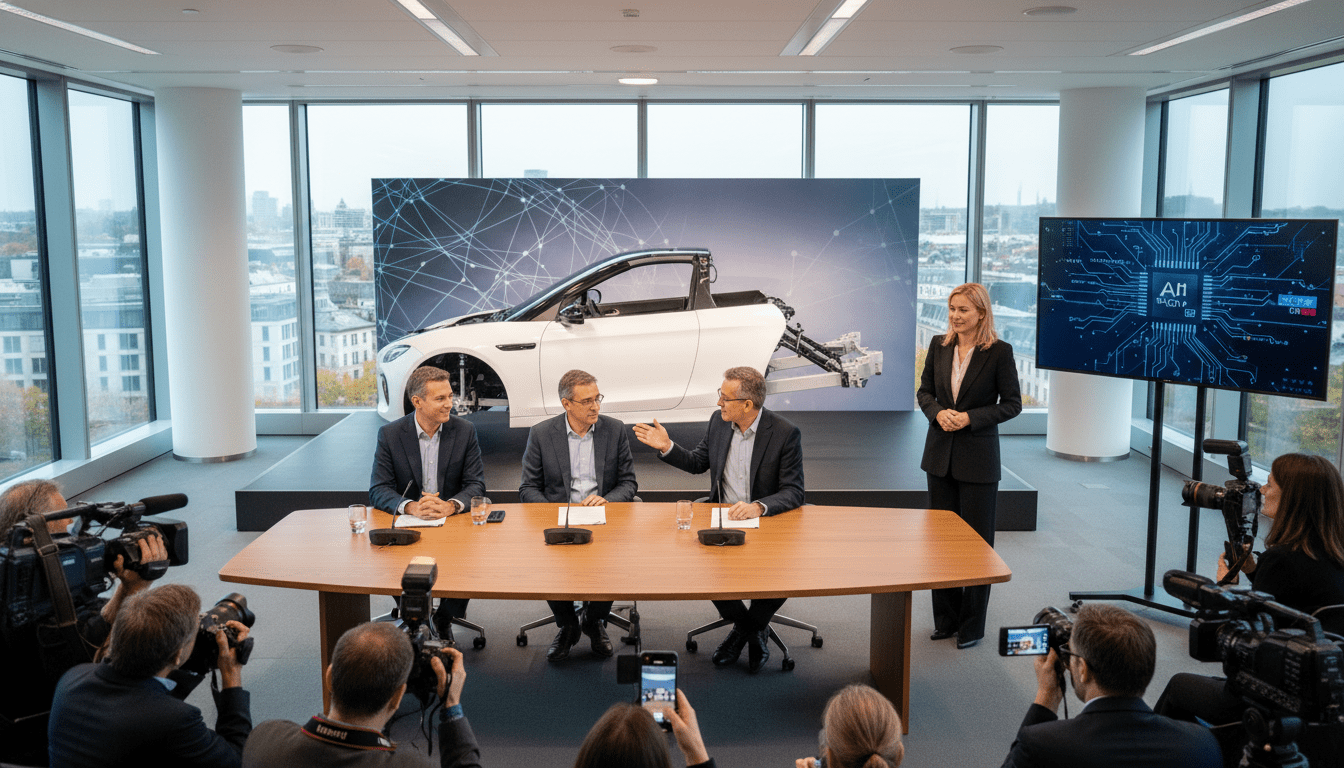
Uber and Autobrains Announce Robotaxi Program for Munich
The collaboration was unveiled jointly by Uber and Autobrains at Nvidia’s industry event, where the firms said they would integrate Autobrains’ driving stack with Nvidia’s compute platform to deliver fully autonomous ride-hailing (Level 4) in urban conditions. Munich was chosen as the launch city because partners consider it a major European automotive center with dense urban traffic, high-speed road links and a regulatory framework seen as conducive to scaled deployment. The companies have said the pilot will focus exclusively on robotaxi trips booked through the Uber app rather than pooled or shuttle-based services.
Regulatory Clearance and Local Testing Already Underway
Autobrains has been testing a vehicle in Munich for some time and company representatives said the vehicle’s authorization with the German federal motor transport authority proceeded smoothly. Initial operations will retain a human safety driver in the cabin to take control if necessary, while data-driven validation and targeted approvals will determine when a driverless mode can begin. The partners have emphasized that additional permissions from local and national authorities are required before any commercial driverless service is launched.
Camera-First Technology and Agentic AI Approach
Autobrains says its system uses six standard cameras, lightweight onboard compute, agentic artificial intelligence and aerial imagery rather than relying on costly Lidar sensor suites. The company argues this camera-led architecture, combined with a real-time decision layer and mapping from aerial views, enables faster understanding of new streets and more cost-effective scaling across vehicle types and cities. Autobrains founder and CEO Igal Raichelgauz has described the approach as deliberately designed to be “affordable and scalable,” with AI that weighs options and selects the safest next action in novel traffic scenarios.
Operational Model Focused on Single-Ride Bookings
According to the partners, the Munich pilot will not offer ridepooling; robotaxis will operate as on-demand rides through the Uber platform. That contrasts with large-shuttle ridepooling projects such as Volkswagen’s Moia service in Hamburg, where passengers heading in similar directions are grouped into shared trips. Details such as service areas, operating hours and pricing are expected to be released progressively as the program moves from testing to commercial phases.
Safety Record and Historical Incidents Shaping Strategy
Uber’s renewed push into autonomous services follows a decade of experimentation and a high-profile fatality in Arizona in 2018 involving one of its self-driving vehicles. The accident led to an industry-wide reassessment of autonomous testing practices and prompted Uber to pause its in-house program and ultimately divest that unit in 2020. Uber executives say the company now prioritizes partnerships with specialized autonomy developers and original equipment manufacturers to combine technical expertise with the operator’s global ride-hailing scale.
Commercial Ambitions and Global Partnerships
The Munich announcement is part of a broader strategy by Uber to build a network of autonomous partners and vehicle suppliers, rather than developing all hardware and software internally. Uber already collaborates with firms such as Waymo and automakers including Rivian and Lucid, and has announced plans to source thousands of vehicles for future autonomous fleets. Company officials emphasize that the commercial challenge is not only building reliable autonomous vehicles but also integrating them into a dependable, large-scale transport network that serves passengers consistently.
Autobrains and Uber say they will continue to publish operational details as testing progresses and permissions are secured, with technical validation, regulator sign-off and partner coordination guiding the transition to driverless operation.
