
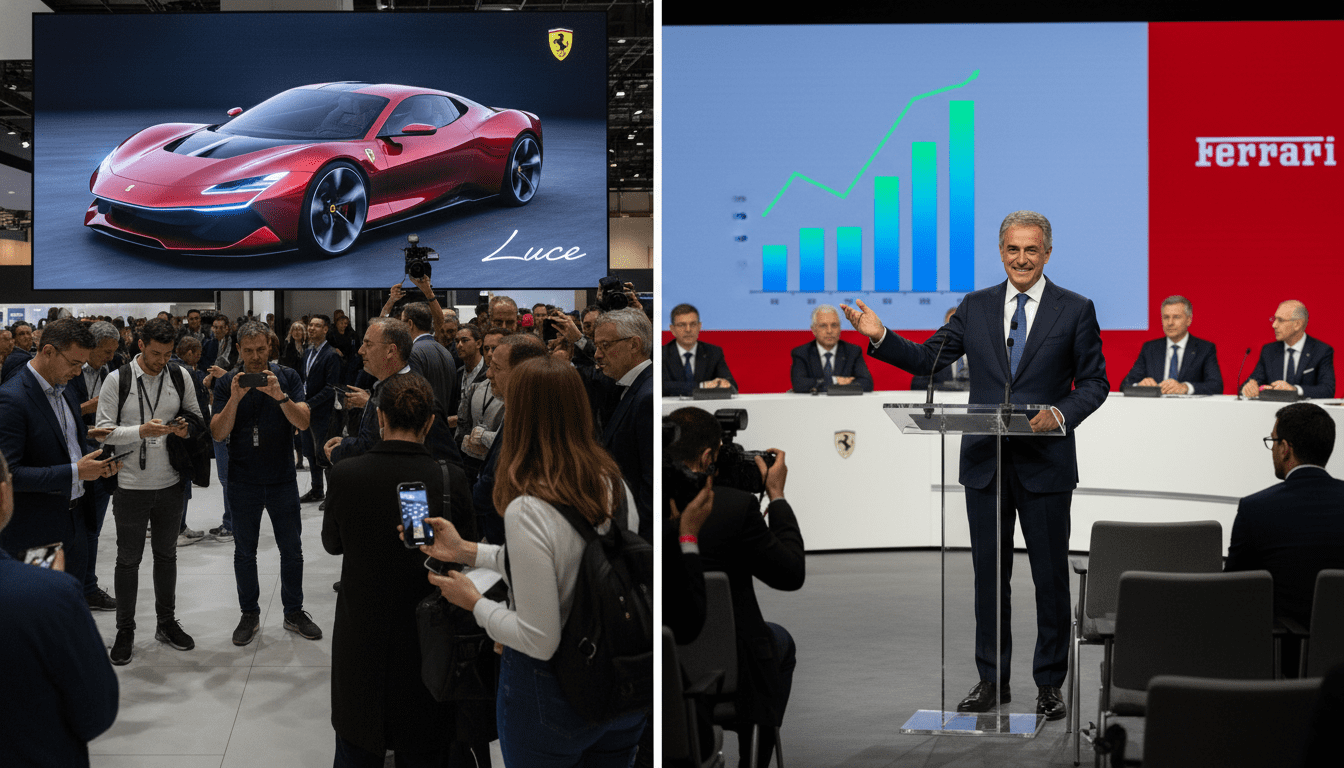
Ferrari Luce Draws Online Backlash as Mobility Sector Sees Regulatory and Deal Activity
Ferrari Luce provokes social media backlash and debate over Ferrari’s EV strategy, while AV registrations in Texas and a wave of funding and M&A reshape the mobility landscape.
The Ferrari Luce, the Italian automaker’s first all-electric model, has sparked sharp online criticism since images and details emerged of the five-seater designed by former Apple designer Jony Ive. Reactions ranged from ridicule to serious questions about whether the Luce, priced near $650,000, aligns with Ferrari’s traditional buyer base. At the same time, developments in autonomous vehicle registration rules in Texas and a busy week of funding and acquisitions signal broader shifts in the mobility sector.
Ferrari Luce Sparks Online Backlash
The Luce’s unveiling prompted an immediate flood of commentary from fans, designers and critics on social media platforms and industry forums. Memes and side-by-side comparisons with much cheaper models drove the narrative that Ferrari had departed from its design DNA. Industry observers noted that public reaction does not always predict commercial outcomes for luxury automakers.
Ferrari’s Target Customers and Demand
Ferrari executives insist there is clear demand for an electric model among both new and returning customers, and early-order claims have been publicized by company leadership. Historically, Ferrari buyers tend to be repeat customers; more than 80 percent of the roughly 14,000 people who purchased a Ferrari last year already owned one. That repeat-buyer dynamic gives Ferrari leeway to introduce polarizing products so long as they secure sufficient orders from their established clientele.
Texas Publishes Autonomous Vehicle Registrations
A recent change in Texas law has made autonomous vehicle registrations and related data public, giving a clearer view of which companies are testing and positioning fleets in the state. The registry discloses company-by-company vehicle counts and creates a new layer of transparency for regulators, industry analysts and the public. Observers say public records could shape local policy debates about AV testing and deployment.
Waymo Dominates Texas Fleet but Commercial Leads Vary
The registration data show Waymo operating the largest number of registered autonomous vehicles in Texas, followed by several other notable firms. Fleet size, however, is only one metric; many registrants have yet to launch full commercial services statewide. Notably, the public complaint feature in the registry has shown few or no filings against major providers so far, suggesting either effective incident management or limited exposure as testing programs scale.
Deal Flow: Funding and Strategic Acquisitions
The past week brought a string of transactions across electric vehicles, micromobility and drone delivery firms. Equip Capital’s single-asset fund took a majority stake in European e-scooter operator Ryde Technology with Goldman Sachs Alternatives leading the investment. Harley-Davidson’s electric unit LiveWire acquired off-road EV maker Dust Moto, and Matternet completed a reverse merger while raising $33 million to support its autonomous drone-delivery platform.
A separate wave of consolidation and fundraising included a planned merger of EV charging operator Revel with Voltera and discussions at German drone manufacturer Stark to raise at least €300 million in a round that could double its valuation. Venture and strategic investors are clearly positioning for scale in charging, drones and diversified EV portfolios.
Automakers, Robotaxis and Connectivity Moves
Automakers and mobility providers announced several operational milestones and regulatory developments this week. Rivian plans to begin deliveries of its R2 SUV on June 9, while facing a U.S. safety investigation into rear suspension servicing on earlier models. Slate Auto signaled that it will announce pricing and begin taking nonrefundable preorders for a low-cost EV on June 24, with deliveries slated later in the year.
Connectivity and robotaxi developments also featured prominently. American Airlines is slated to install SpaceX’s Starlink on more than 500 narrow-body Airbus aircraft beginning next year, a significant commercial win for satellite internet services. Meanwhile, Waymo has begun offering select riders in Los Angeles, Phoenix and San Francisco access to a new, lower-cost robotaxi built on a modified Zeekr minivan platform, designed to reduce operating costs and scale ride volume.
Readers of mobility-focused newsletters were also polled on speculative industry consolidation. In one recent audience survey about a hypothetical merger between SpaceX and Tesla, more than half of respondents selected a two-year horizon for a tie-up, with an additional share expecting a sooner deal. Those responses underscore lingering fascination with major corporate combinations in the tech-and-transportation space.
Subscriber engagement and public records are increasingly influential as companies test new vehicle types and business models. The Ferrari Luce debate illustrates how design and brand expectations can shape consumer reaction, while the Texas AV registry and a flurry of transactions show that regulators, investors and incumbents are actively repositioning for an electrified, automated future.
