
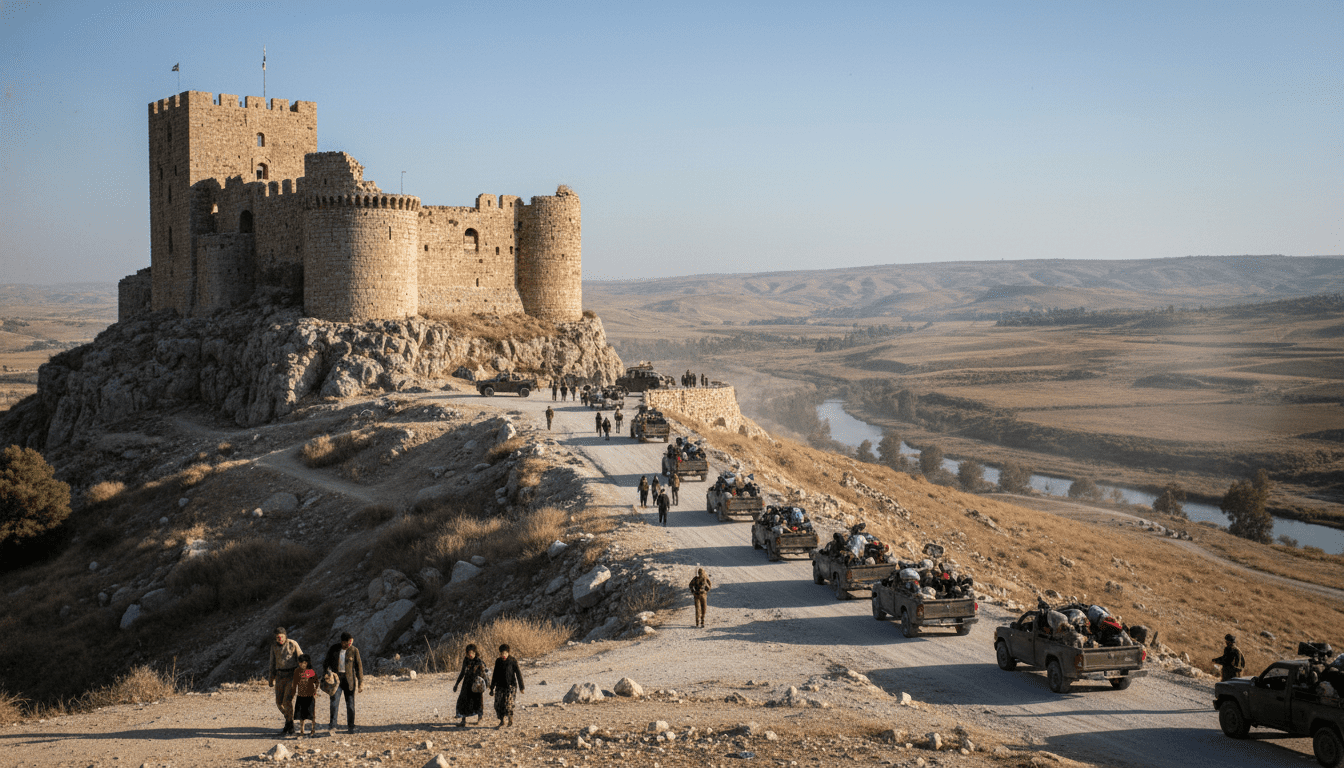
Israel seizes Beaufort Castle as displacement orders widen south of the Zahrani River
Israel seizes Beaufort Castle in southern Lebanon and orders forced displacement south of the Zahrani River, encircling Nabatieh amid Hezbollah attacks.
Beaufort Castle captured by Israeli forces
Israel seized Beaufort Castle, a fortified ridge above Nabatieh, in an advance the military described as a significant tactical gain. The 12th-century fortress, held by Israeli forces after 1982 and abandoned in 2000, sits on high ground that overlooks approaches to southern Lebanon and the Israeli border. Defence Minister Israel Katz called the capture a key step in protecting communities in the Galilee and safeguarding Israeli forces operating inside Lebanon. Military officials said the operation followed an expansion of operations after crossing the Litani River for the first time since 2006.
Displacement orders issued south of the Zahrani River
On Sunday, Israel ordered the forced displacement of residents living south of the Zahrani River, instructing civilians to move north of the river immediately or face life-threatening risk. The Israeli military’s Arabic spokesperson posted the warning on social media and authorities issued more than 10 displacement notices across southern Lebanon in the previous 24 hours. Local and international observers warned that the orders have uprooted families and compounded an already severe humanitarian situation in the region. Aid agencies have reported restricted access to the affected zone amid continued military activity and demolitions.
Encirclement of Nabatieh and strategic aims
Israeli forces are tightening positions around Nabatieh, Lebanon’s fifth largest city, which officials and residents say is both an economic hub and a symbol of resistance. Commanders described holding the Beaufort Ridge as crucial to oversight of the surrounding approaches and to limiting militia movement in the area. Analysts say control of the ridge offers tactical advantages including observation and artillery positioning that influence operations across southern Lebanon. For Nabatieh’s residents, the military developments have translated into rising fear of further clashes and loss of access to markets and services.
Hezbollah attacks and Israeli military casualties
Despite the ground gains, Hezbollah has continued to engage Israeli forces, including using drones and indirect fire against advancing units. Israeli authorities confirmed one soldier was killed in a Hezbollah drone attack on Saturday, raising the total Israeli military deaths in the current escalation to 25 since fighting intensified on March 2. Hezbollah, backed politically and materially by Iran, frames its actions as resistance to Israeli incursions, while Israel frames its campaign as necessary to degrade the group’s operational capabilities. Both sides have so far shown limited willingness to de-escalate, even as casualties mount on both sides.
Lebanese government protests and humanitarian concerns
Lebanese Prime Minister Nawaf Salam condemned the Israeli advance, saying it amounted to a “scorched-earth policy” and accusing Israel of imposing collective punishment on southern communities. Reports from southern cities, including Tyre, describe widespread displacement, demolished homes and businesses, and restricted movement for civilians inside designated zones. Humanitarian responders warn that the pattern of forced relocations and infrastructure damage is producing a localized crisis, with families unable to return home and critical services disrupted. International mediators and aid organizations have appealed for restraint and unobstructed humanitarian access to affected areas.
Diplomatic efforts and the state of ceasefire talks
Diplomatic engagement continues even as fighting persists, with U.S.-facilitated meetings held at the Pentagon to discuss implementation of a ceasefire agreement that came into effect in mid-April. Officials from Lebanon and Israel met to try to clarify the terms and mechanisms of the truce, but both sides have accused the other of violations in recent weeks. Negotiators expect further talks next week as Washington seeks to prevent the conflict from widening and to address the disarmament question that sits at the core of the dispute. Beirut has publicly stated it wants Hezbollah disarmed but acknowledges the political and practical obstacles to such a process.
The capture of Beaufort Castle and the widening of displacement orders mark a notable escalation in the campaign unfolding in southern Lebanon, with immediate consequences for civilians and persistent risks of further clashes. Both military gains and diplomatic efforts remain fluid, and humanitarian actors stress urgent need for corridors and protections for displaced families while talks continue.
