
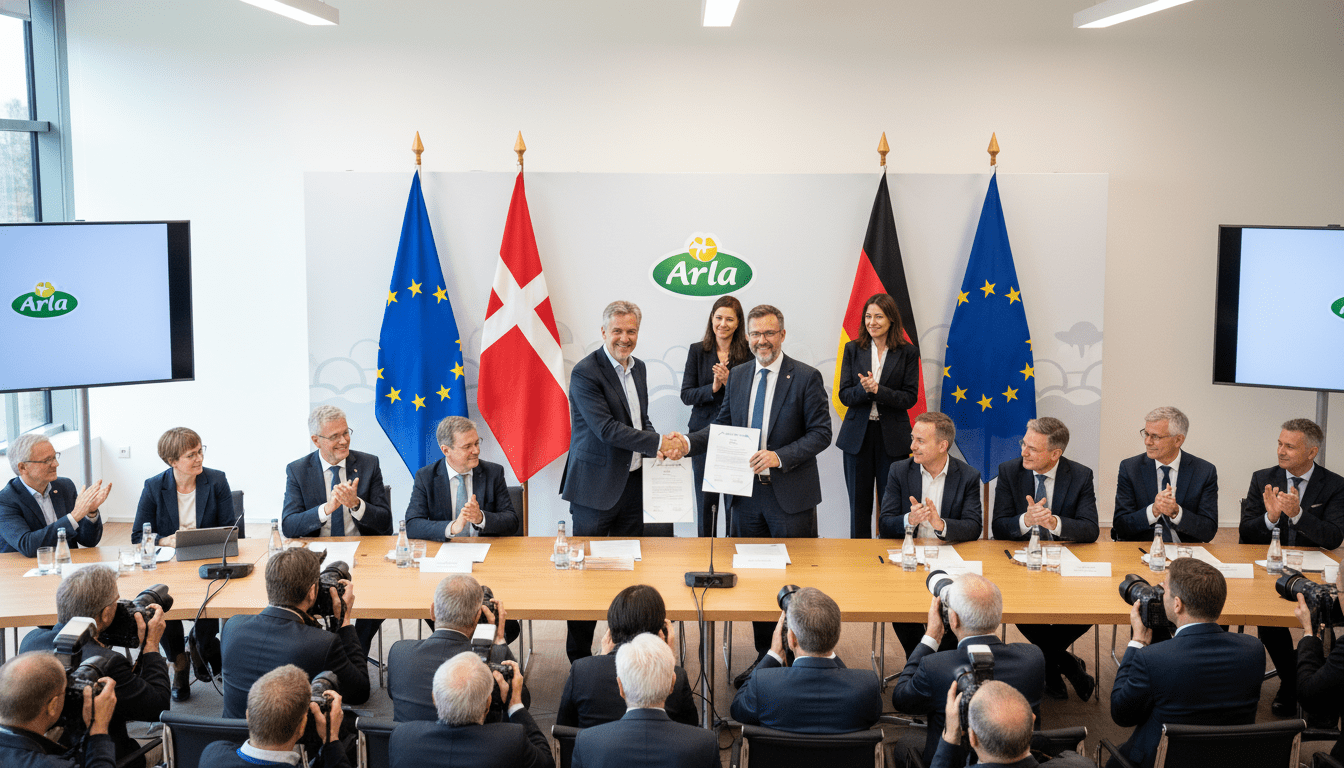
Arla DMK merger to form Europe’s largest dairy cooperative as EU clears deal
EU clears Arla DMK merger to form Europe’s largest dairy cooperative on June 1, 2026, uniting 12,000 farmers, creating a €20bn group and 28,700 employees.
The Arla DMK merger received unconditional approval from the European Commission and will take effect on June 1, 2026, creating what the companies say is Europe’s largest dairy cooperative. The transaction brings more than 12,000 milk producers into a single group and combines Arla’s international footprint with DMK’s strong position in the German retail market. Company statements and regulator findings say the consolidation was cleared without remedies, marking a significant shift in the continent’s dairy landscape.
EU approves merger without conditions
The European Commission concluded the review of the transaction and found no competition concerns significant enough to require remedies or divestments. Regulators noted that Arla and DMK compete for raw milk in several regions, particularly in northern Germany, but judged that the combined entity would not foreclose markets or materially harm farmers. The Commission’s clearance removes a major regulatory hurdle and clears the way for operational integration under the Arla name.
Combined scale, revenues and brand portfolios
Post-close the group will report an annual turnover of about €20 billion and employ roughly 28,700 people, according to company figures. Arla, historically a global cooperative with roughly €15 billion in sales, will incorporate DMK’s approximately €5 billion business while retaining well-known brands such as Milram, Oldenburger, Alete and Humana alongside Arla’s Buko and Kærgården. Management said DMK will initially operate as a subsidiary and be progressively integrated into Arla’s operations.
Protein products seen as main growth driver
Both companies signalled their strategic focus on protein-rich categories, identifying Skyr, cheese, cottage cheese and fortified drinks as key expansion areas. Executives cited rising consumer health awareness and shifting eating patterns as tailwinds for these products. Per-capita intake data presented by company leaders shows a long-term decline in liquid milk consumption, while cheese and cultured dairy formats have grown, prompting a pivot toward higher-margin protein offerings.
Decline in drinking milk and changing consumption habits
Company executives highlighted that the daily glass of drinking milk has fallen out of favor for many consumers, with long-term trends showing substantial declines in per-capita sales. Arla leadership pointed to changing lifestyles, more on-the-go consumption and a shift toward snacks and convenience foods as drivers of that decline. They argued the volume lost in liquid milk is being more than compensated by growth in cheese, yogurt and value-added protein products.
Structural change in agriculture and production efficiency
The merger comes amid pronounced structural consolidation in German agriculture: the number of dairy farms has fallen sharply over recent decades even as production per cow has risen. Reported figures indicate milking farms declined from about 138,000 in 2000 to roughly 48,000 by 2024, while cow numbers fell from around 4.6 million to 3.6 million over the same period. At the same time, average milk yield per cow increased from about 6,200 to 9,400 litres annually, with total national production rising accordingly.
Farmers’ concerns and cooperative obligations
A central question for suppliers has been the effect of the merger on the price and bargaining power of farmers. Regulators emphasised that Arla’s cooperative structure obliges it to purchase milk from members and to apply uniform pricing policies, a point the companies stressed in communications to suppliers. Industry representatives from the German Farmers’ Association voiced cautious optimism, noting that a broader product portfolio could open new outlets for farmers even as they warned of increased market concentration.
Opposition from smaller farming groups and local dairies
Not all agricultural organisations welcomed the consolidation. The Arbeitsgemeinschaft bäuerliche Landwirtschaft criticised the transaction, arguing that farmers’ interests were insufficiently considered and warning of growing dependence on a dominant processor. Regional leaders urged attention to capacity constraints at remaining local dairies, saying some could not absorb additional suppliers if switching became necessary. In response, Arla and DMK reiterated that farmers remain co-owners and that cooperative governance and member representation will continue to guide decisions.
The merger of Arla and DMK redraws market maps across Europe and raises immediate operational questions while underlining longer-term industry trends. For consumers, it may mean wider distribution of protein-focused products and more integrated brand offerings. For farmers, the deal promises scale and new market access but renews debates about local choice, price setting and the balance of power in the dairy supply chain.
