
German chemical industry sees short-term boost as Iran war triggers precautionary orders
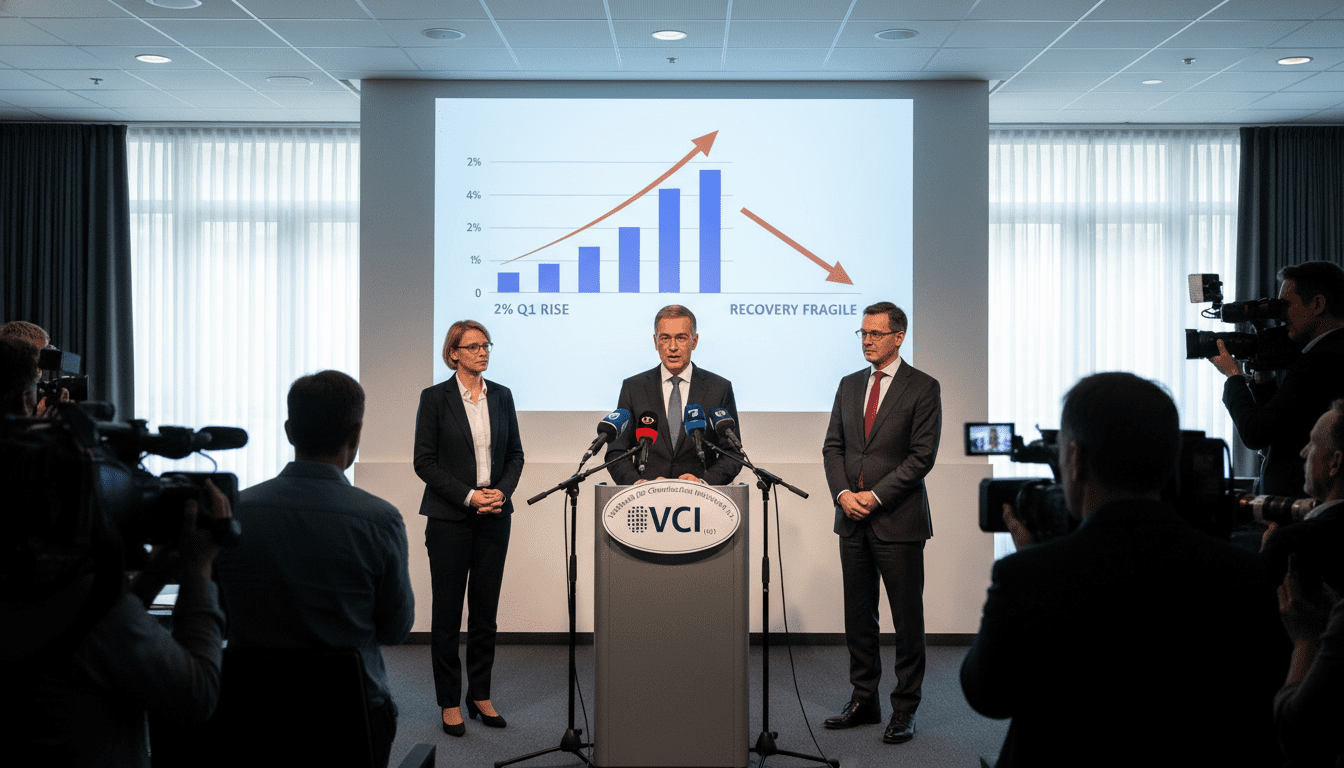
German chemical industry posts modest Q1 2026 lift as production and sales rise 2% q/q amid Iran war-driven stockpiling; VCI warns gains may be temporary.
The German chemical industry recorded a modest uptick in the first quarter of 2026, with production and sales both rising 2% compared with the final quarter of 2025, the industry association VCI reported. The association linked the increase to precautionary ordering by industrial customers responding to the war in Iran and disruptions in the Strait of Hormuz. Despite the quarter-on-quarter improvement, the VCI cautioned that the move reflects short-term stockpiling rather than a sustained recovery.
Quarterly figures show mixed picture
The 2% rise in production and turnover in Q1 2026 marked a reversal of the immediate prior quarter but contrasted sharply with year-on-year performance. Compared with the same quarter a year earlier, production in the chemical-pharmaceutical sector declined by about 6% and revenues fell roughly 5.4%, underscoring weak demand outside the recent geopolitical shock. Industry officials described the quarter as one of tactical restocking by clients rather than the start of a durable upswing.
Large firms and basic-chemicals producers have been the most visible beneficiaries of the recent demand bump. More than one in four companies surveyed by the VCI reported positive demand effects, particularly makers of commodity inputs used across industrial supply chains. Still, the association emphasized that these gains are concentrated in specific product lines and are not evenly spread across the sector.
Geopolitical tensions drive precautionary buying
Executives and buyers in downstream industries have increased orders to avoid potential disruptions after the conflict in Iran raised fears of constrained crude and feedstock flows through the Strait of Hormuz. Companies reported concerns that prolonged regional instability would interrupt supplies of petrochemical feedstocks, prompting a wave of precautionary purchases. The VCI characterized this pattern as “geopolitical hoarding,” saying the activity reflects risk management rather than renewed investment or demand growth.
This behavior has been visible in sectors that rely on steady delivery of intermediates, where importers and manufacturers have expanded inventories to guard against supply-chain interruptions. The temporary nature of these orders was highlighted by the VCI’s warning that once transportation and supply routes stabilize, competition and import pressure could quickly resume.
Winners and stress points within the sector
Several sub-sectors posted revenue gains in the quarter, including basic chemicals, specialty chemicals, petrochemicals and personal care ingredients. Major players such as BASF reported an ability to enforce recent price increases, and Evonik signaled expectations for a stronger second quarter based on current order books. These developments have provided some relief for headline figures at the group level.
At the same time, the industry continues to face acute stress from high energy costs, sluggish domestic demand and persistent overcapacity in certain segments. Suppliers of solvents and resins, in particular, have reported tightening availability, which could feed through to customers if shortages persist. Smaller and mid-sized firms remain vulnerable to cost volatility and margin pressure despite pockets of stronger sales among larger producers.
Competitive landscape and Asian imports
One factor moderating immediate import competition has been the asymmetric impact of the Iran conflict on global suppliers. Firms in China and other parts of Asia that rely more heavily on Middle Eastern feedstocks have been hit harder by supply constraints, reducing some of the import pressure that has weighed on European producers in recent years. That temporary easing has helped domestic producers capture incremental sales in the short term.
However, the VCI and industry analysts cautioned that any reduction in Asian import volumes is unlikely to last beyond the period of acute geopolitical disruption. Once feedstock flows normalize and logistics stabilize, competitive dynamics are expected to revert, potentially re-intensifying price pressure and margin erosion for European manufacturers.
Outlook: temporary relief, persistent structural challenges
Industry leaders and the VCI framed the Q1 gains as cyclical and situation-driven rather than structural recovery. The association’s senior executive stressed that the sector remains under long-term pressure from energy costs, regulatory burdens and global overcapacity. Policy responses, such as energy relief measures or targeted industrial support, would be needed to alter that longer-term trajectory.
Market watchers say the central question for the months ahead is whether elevated orders translate into sustained production increases or simply empty into inventories that will be drawn down when geopolitical tensions ease. The next quarterly reports and the evolution of shipping through the Strait of Hormuz will be closely watched for signs that the temporary boost is turning into genuine demand growth.
Looking forward, companies that can manage energy exposure, secure alternative feedstock routes and maintain flexible supply chains are most likely to weather the combination of short-term geopolitical shocks and enduring competitive pressures. The current uptick offers a breathing space, but industry officials caution it does not yet amount to a recovery.
