
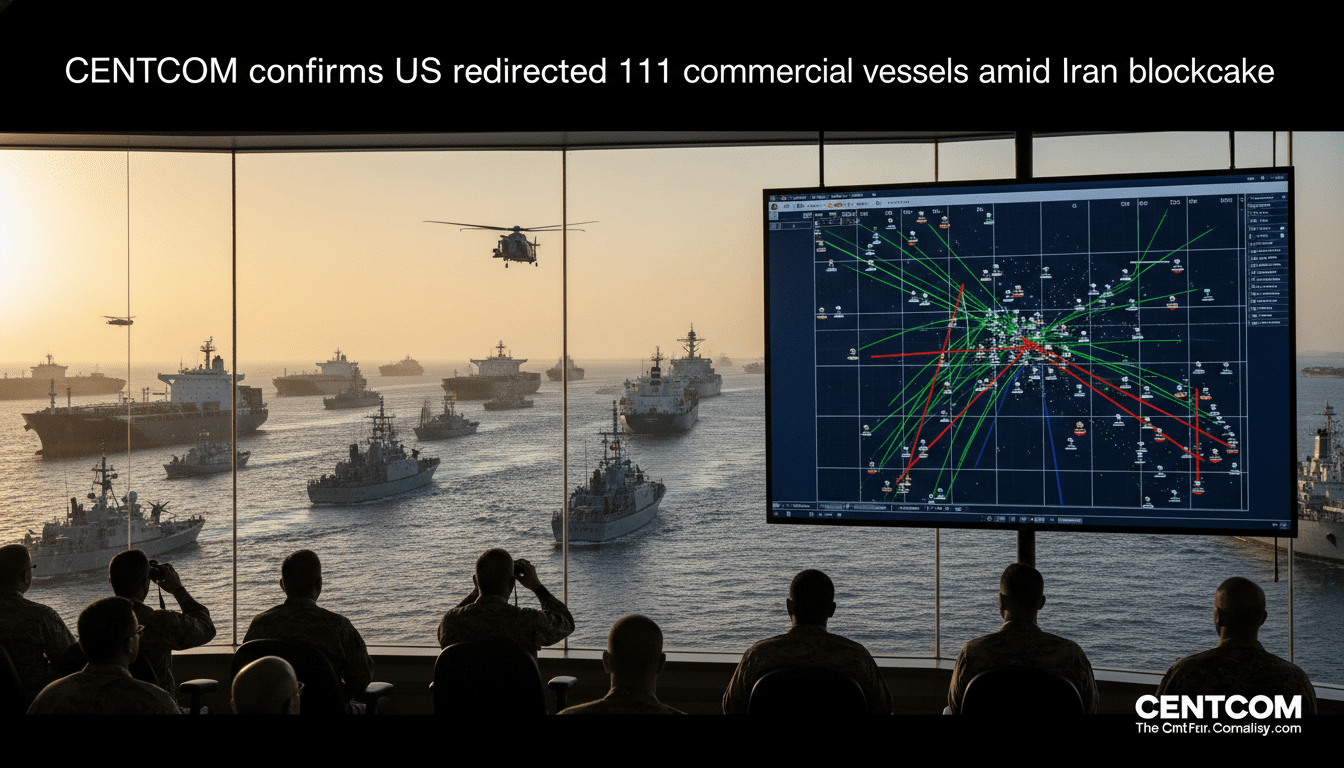
CENTCOM Says US Redirects 111 Commercial Vessels Under Iran Blockade
CENTCOM says US military redirected 111 commercial vessels under an Iran blockade; 17 were blocked in the past week, highlighting growing risks to Gulf shipping.
The US Central Command said the US military has redirected 111 commercial vessels as part of operations enforcing a blockade on Iranian ports, marking a significant escalation in maritime pressure in the region. CENTCOM’s update noted that 17 ships were blocked over the past week, including two reported since yesterday, underlining heightened activity around key Gulf sea lanes. The redirections come amid sustained tensions in and around the Persian Gulf and add fresh strain to commercial shipping routes and insurers.
CENTCOM reports 111 commercial vessels redirected
CENTCOM provided the tally in its routine operational updates, describing the action as redirections of commercial traffic tied to the blockade of Iranian ports. The military statement did not list the names of the vessels or their flags, but it emphasized control measures taken to stem maritime traffic to targeted Iranian facilities. Officials framed the movements as part of a broader campaign to monitor and restrict maritime access linked to Iran’s coastal infrastructure.
Direct confirmation from shipping companies or owners of the affected vessels has not been published alongside CENTCOM’s update. Naval operations that involve commercial traffic often rely on notices to mariners and communications through industry channels, which can delay or fragment public reporting. The lack of immediate third-party confirmation leaves commercial registries and insurers watching statements from military and government sources for operational clarity.
Seventeen additional ships blocked in the last week
CENTCOM said 17 ships were blocked in the previous seven days, a pace that military communicators characterized as an uptick in enforcement activity. The command added that two of those redirections occurred since yesterday, indicating continuing day‑to‑day operational tempo. That weekly figure suggests the blockade’s impact on merchant transits has been concentrated and sustained rather than sporadic.
Maritime analysts say short bursts of increased interdiction can ripple through scheduling and routing decisions, leading shipping lines to delay calls or seek alternative transits. Even temporary redirections can increase voyage times, fuel consumption and exposure to weather or pirate-prone areas, factors that raise costs for operators and cargo owners.
How the redirections are being implemented
US military redirections typically involve a mix of surveillance, advisory notices, and the physical presence of warships or aircraft to assert control over specific corridors. CENTCOM did not disclose operational tactics in its public update, citing routine security and operational considerations. In past incidents, such actions have included orders to alter course, inspections, and escorts, depending on legal authority and rules of engagement.
Naval commanders generally coordinate with merchant masters and flag states to implement redirections, using established maritime communication protocols. The effectiveness of such measures depends on vessel compliance, diplomatic clearances, and the ability to sustain presence over the necessary period, particularly when multiple commercial transits are affected across busy straits and chokepoints.
Reactions from shipping industry and allied partners
Industry participants and allied navies typically react to significant maritime enforcement by reassessing risk and insurance profiles for voyages through affected areas. While no named companies were cited in CENTCOM’s update, carriers and insurers often reroute, slow-steam, or temporarily suspend port calls when military actions alter transit certainty. These commercial responses can magnify the economic impact of a blockade well beyond the immediate operational area.
Allied naval units operating with or alongside US forces may also adjust patrol patterns to support merchant freedom of navigation and to provide safety assurances for commercial traffic. Such coordination aims to limit unintended escalations while managing commercial continuity, though it can be diplomatically sensitive when actions are perceived differently by regional states.
Iran’s response and regional diplomatic fallout
CENTCOM’s description frames the redirections as measures tied to a blockade on Iranian ports, a designation likely to draw formal protest from Tehran. Iran has historically denounced foreign interdictions in its maritime approaches, and public Iranian statements have at times promised reciprocal measures or legal challenges on international platforms. Those dynamics can harden regional postures and complicate diplomatic efforts to de‑escalate.
Regional governments and international shipping organizations may now face pressure to issue guidance to vessels and to pursue diplomatic channels for clarifying passage rights. The situation increases the likelihood of urgent consultations among governments, flag administrations and industry groups seeking to protect crews and cargoes while respecting safety directives.
Legal and commercial implications for global trade
A military blockade that affects commercial vessels raises complex questions under international law, including the rights of neutral shipping, obligations of flag states, and the legal basis for redirection. CENTCOM’s public update did not elaborate on legal justifications or the precise scope of the blockade, leaving policymakers and maritime lawyers to parse the implications. The legal uncertainty can itself be a driver of commercial disruption.
For global trade, sustained redirections of commercial traffic through high-volume corridors can translate into longer transit times, higher freight rates and elevated insurance premiums. Shippers of time-sensitive goods and energy commodities are especially vulnerable to cost increases, and supply chains already strained by other geopolitical pressures may see knock-on effects.
The coming days are likely to reveal whether the pace of redirections continues, and whether international bodies or neutral states seek to mediate or formally challenge the blockade’s scope. Stakeholders across government and industry will be watching CENTCOM updates closely for operational detail and any indication of a shift in posture.
