
Tyre evacuation ordered by Israeli army as strikes expand beyond buffer zone
Israeli forces order Tyre evacuation and nearby towns ahead of strikes on Hezbollah; mass displacement, air raids and drone incidents reported in southern Lebanon.
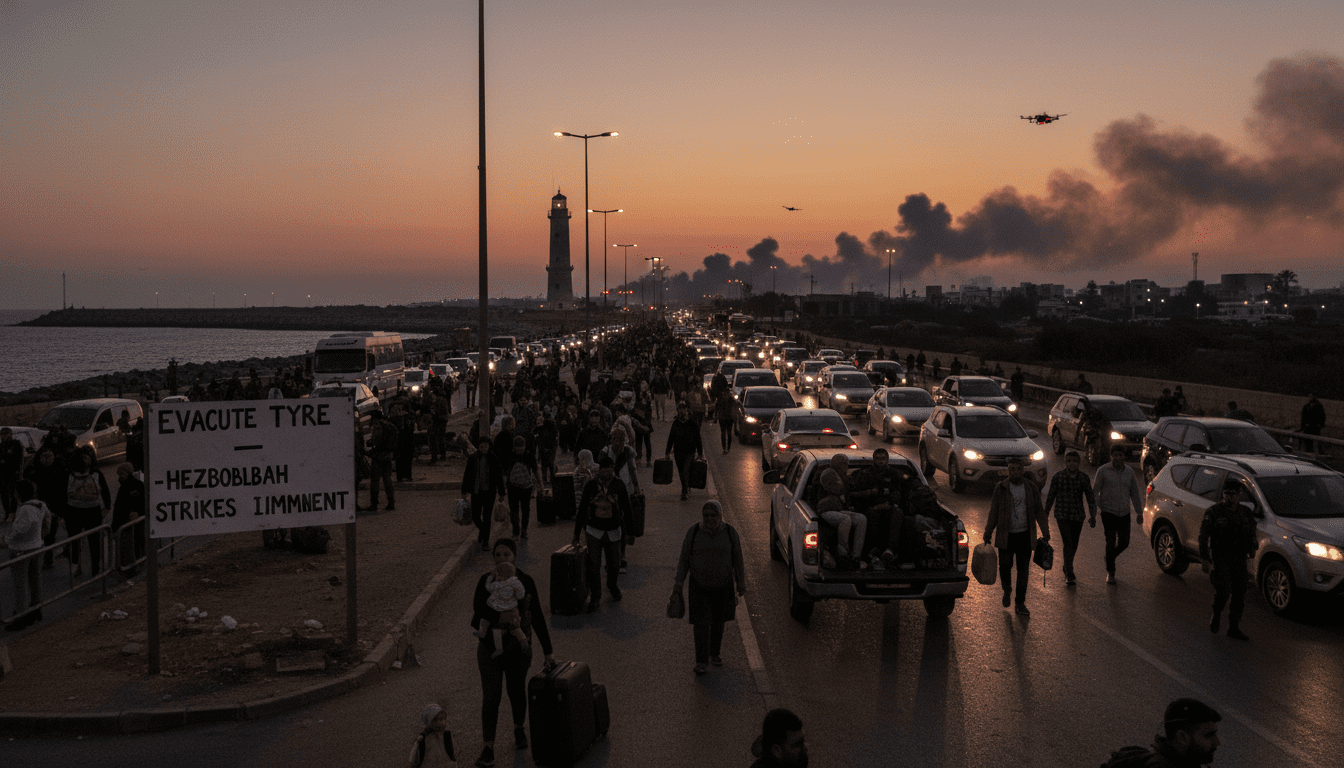
A sudden Tyre evacuation was ordered by the Israeli army on Wednesday, calling on nearly all residents of the coastal city and surrounding towns to flee north of the Sahrani River. The military cited imminent operations against the militant group Hezbollah as the reason for the order, posting the instruction on the social platform X. The move prompted widespread panic and a fast-moving exodus along coastal and inland routes.
Israeli army issues mass evacuation order
The Israeli military told residents to move north of the Sahrani River, which lies roughly 40 kilometres from the Israeli–Lebanese border, citing planned attacks against Hezbollah. The directive marked the first time since the truce was declared in mid‑April that such a broad evacuation call was issued for Tyre and nearby communities.
Local officials and security sources in Lebanon interpreted the order as evidence the Israeli army is prepared to widen its operations beyond the southern buffer area. The evacuation instruction followed earlier warnings issued for the city of Nabatieh and other towns in southern Lebanon.
Panic and displacement on the ground
Eyewitnesses told the dpa news agency that panic spread quickly in Tyre after the call to flee, with many residents gathering on the city’s beaches and hundreds of vehicles forming long northbound traffic jams. People carried what they could and sought refuge away from the coastal strip as the order circulated online and by loudspeaker.
Humanitarian and municipal services reported chaotic scenes at key junctions, with limited time for orderly evacuations and concerns about vulnerable populations left behind. Local sources said that temporary shelter and aid will be critical if the displacement continues or expands.
Operations extending beyond the ‘yellow line’
Israeli officials have signalled an intention to strike north of the so‑called “yellow line,” the army’s informal demarcation delineating a southern buffer roughly ten kilometres inside Lebanese territory. Tyre lies about twenty kilometres from the Israeli–Lebanese border, placing the city well beyond that buffer and raising alarms over a significant geographic expansion of operations.
The current ceasefire arrangement, in effect since mid‑April, permits Israel to take defensive action against imminent or ongoing attacks but prohibits offensive incursions into Lebanese territory. Both sides have accused each other of breaching the terms, and the evacuation order has intensified scrutiny of how the agreement will be interpreted.
Airstrikes and drone activity reported across Lebanon
On the same day as the evacuation call, Lebanese security sources reported renewed heavy Israeli airstrikes in southern and eastern Lebanon, including strikes around Nabatieh and multiple strikes near Baalbek. Authorities said at least seven strikes were recorded in areas near Baalbek, though there were no immediate official reports of casualties.
Israel’s military also reported explosive drone strikes originating from Lebanon into northern Israel, triggering warning sirens in several communities. The army said it had detected “suspicious aerial objects” near Israeli troops in southern Lebanon and that at least one such object had been intercepted.
Policy to occupy south Lebanon up to the Litani
The evacuation comes against the backdrop of an Israeli government decision announced at the end of March 2026 to seek a long‑term presence in southern Lebanon up to the Litani River after the conflict. Israeli officials have said displaced residents would not be allowed to return immediately to certain areas as part of those plans.
Lebanese officials and international observers have warned that a protracted occupation or expanded military campaign could produce sustained displacement and strain already limited humanitarian resources. The announced policy has sharpened regional tensions and complicated potential efforts at mediation.
Hezbollah’s role and regional implications
Hezbollah, viewed by Israel as an Iranian proxy force, has been the stated target of recent Israeli operations in the south of Lebanon. The militia and its allies have traded attacks and warnings with Israeli forces for months, and the escalation around Tyre risks drawing in wider regional dynamics.
Analysts cautioned that further strikes deep into Lebanese territory would heighten the risk of civilian harm and could spur retaliatory actions that spread instability across the border. International actors have repeatedly urged restraint, but the latest evacuation order signals a new and uncertain phase in the conflict.
The immediate situation in Tyre remains fluid, with many residents still on the move and humanitarian groups calling for safe corridors and assistance. Authorities on both sides say the priority is to protect civilians, but the scale of the evacuation and reports of air and drone activity underscore how quickly the situation can change.
