
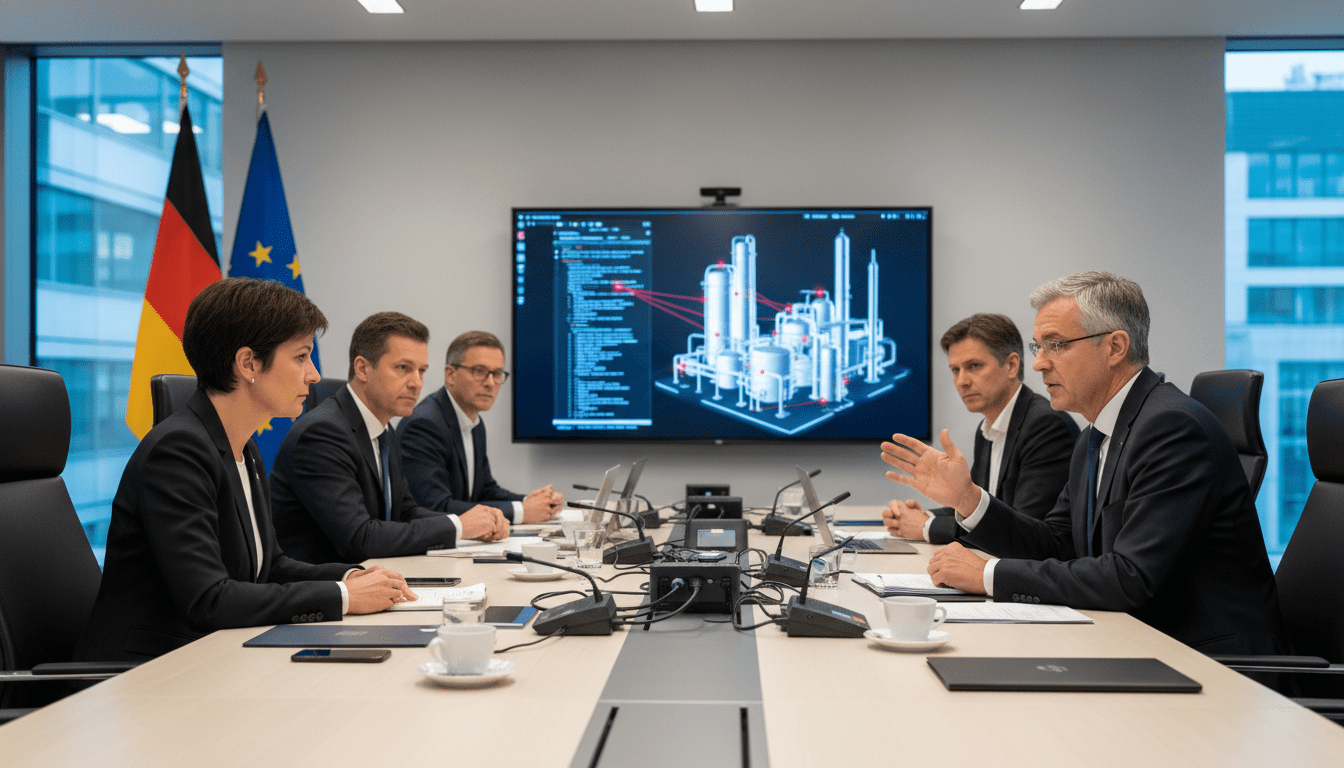
Chemical plant cyberattack scenario exposes gaps in German security planning
A hypothetical chemical plant cyberattack being discussed by German agencies highlights weaknesses in coordination, industrial controls and emergency response planning.
Scenario Circulating in Agencies
A scenario has been circulating within German security and emergency planning circles that imagines hackers breaching a major chemical manufacturer’s control systems. The hypothetical attack would target production processes to cause equipment failures and potentially trigger the release of hazardous substances.
Officials and analysts describe the exercise as a thought experiment intended to probe readiness rather than a response to a specific threat. The scenario has been used internally to map responsibilities and identify where the chain of command could become strained in a real incident.
Public Safety and Environmental Risks
A successful cyberattack on a chemical plant could have cascading public safety consequences, from local evacuations to regional contamination of air and water. Modern chemical facilities often handle toxic intermediates whose unintended release can be fatal or cause long-term environmental damage.
Emergency responders face twin challenges in such an event: containing physical hazards and managing information amid digital disruption. If safety sensors or automated shutdown sequences are compromised, manual intervention would be necessary under highly dangerous conditions.
Who Would Lead the Response
Responsibility for addressing a chemical plant cyberattack would likely fall across multiple authorities, with operators, municipal emergency services and federal agencies all involved. Plant operators retain primary duty for on-site containment and protective measures, while state police and fire services would coordinate rescue and evacuation.
Federal cyber agencies and law enforcement would be called in to investigate and mitigate the digital intrusion, and civil protection bodies would oversee broader crisis management. Experts stress that tight liaison between these actors is essential but not uniformly established across regions.
Industrial Control Systems and Technical Vulnerabilities
Industrial control systems (ICS) and operational technology (OT) underpin chemical manufacturing, and many such systems were not designed with cyber threats in mind. Legacy controllers, weak network segmentation and remote access tools create entry points that sophisticated attackers can exploit.
Ransomware and targeted intrusions have already disrupted critical infrastructure globally, demonstrating how quickly production and safety monitoring can be affected. Hardening OT environments requires both technical upgrades and operational changes that many companies have yet to fully implement.
Regulatory Framework and Reporting Gaps
Regulatory oversight of cyber risks in the chemical sector is evolving, but enforcement and reporting standards vary between jurisdictions and companies. EU-level rules such as critical infrastructure directives have pushed for tighter requirements, yet translation into consistent national practice remains uneven.
Industry representatives point to gaps in mandatory incident reporting and uncertainty about whether companies should disclose cyber-caused safety incidents publicly. That legal ambiguity can hinder rapid information sharing between private operators and public authorities during an unfolding emergency.
Preparedness Measures and Proposed Reforms
In response to the scenario, planners have suggested a range of measures including joint cyber-physical exercises, mandatory cyber risk assessments for hazardous facilities, and faster forensic support for affected operators. Strengthening IT/OT segregation, adopting intrusion detection tailored for industrial networks, and rolling out secure remote-access protocols are technical priorities.
Emergency playbooks that integrate cyber contingencies into standard hazard plans are also being recommended so first responders know when digital compromise might alter tactical choices. Several states and industry groups are reportedly considering pilot programs to test cross-agency command and information flows under simulated attacks.
A realistic rehearsal of a chemical plant cyberattack can identify practical gaps in communication and capacity before a real emergency occurs. Sources within the sector say that tabletop exercises have already surfaced weaknesses in how threat intelligence moves from federal cyber centers to municipal fire departments.
Industry Responsibility and Public Communication
Chemical operators emphasize that safety systems are layered and that physical safeguards still provide significant protection against accidental releases. Nevertheless, they acknowledge that cyber threats require additional investments and clearer standards for sharing breach information with authorities.
Transparent public communication protocols are critical, experts say, to prevent delay and confusion if an incident affects communities. Clear thresholds for when to issue evacuations or shelter-in-place orders must be set in advance and tested against cyber-contingency scenarios.
A hypothetical cyberattack on a chemical plant has become a focal point for German security planners precisely because it combines digital intrusion with immediate physical risk. The scenario has prompted a reassessment of responsibilities, technical defenses and legal obligations across industry and government.
As policymakers and private operators consider reforms, the central challenge remains ensuring that expanding cyber defenses translate into faster, coordinated action on the ground. Only through joint exercises, clearer reporting rules and targeted investments can authorities hope to reduce the chance that a breach of code becomes a release of toxins.
