
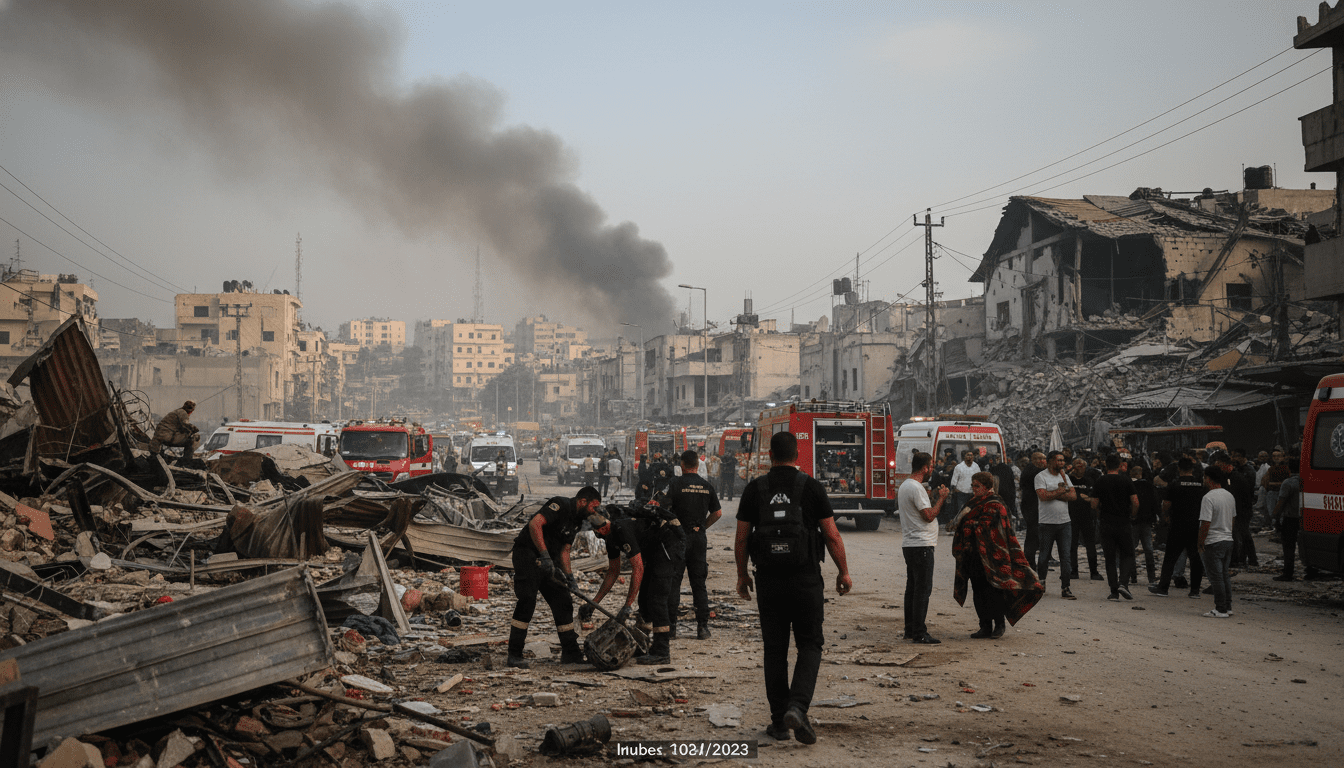
Israel Intensifies Strikes on Hezbollah in Southern Lebanon; At Least 31 Killed
At least 31 people have been killed in Israeli attacks across southern Lebanon as Israel says it is intensifying operations against Hezbollah, following a series of deadly drone strikes on Israeli forces in northern Israel on 27 May 2026.
Casualties and attack locations
At least 31 people were reported killed in multiple strikes across southern Lebanon, authorities said on Tuesday, with the impacts recorded in a number of towns and border areas. The death toll was described as provisional and local reports indicated damage to residential and rural zones.
It was not immediately clear how many of the dead were combatants and how many were civilians, and emergency responders were still working to account for the missing. Medical facilities in the affected areas were handling incoming casualties amid interrupted transport and communications.
Israeli military says it is stepping up operations
The Israeli military said it had intensified operations against Hezbollah, framing the actions as targeted efforts to degrade the group’s operational capabilities along the northern frontier. Israeli statements emphasized the strikes were in response to recent cross-border attacks and aimed at military nodes linked to Hezbollah.
Operations described by Israeli authorities appear to involve coordinated strikes across several locations in southern Lebanon, although detailed confirmation of specific targets was not immediately released. The military characterized the campaign as a calibrated escalation to prevent further attacks on Israeli forces.
Hezbollah’s drone attacks on northern Israel
Hezbollah launched a series of drone attacks on Israeli forces in northern Israel, which were described in initial reports as deadly and part of a broader campaign of cross-border strikes. The drone operations targeted military positions and are reported to have precipitated the Israeli response south of the border.
The group’s use of unmanned aerial systems marks a tactical escalation that has increased operational risks on both sides of the frontier. Military analysts caution that such exchanges can prompt swift counterstrikes and tactical shifts in an already volatile environment.
Humanitarian situation in southern Lebanon
The strikes and resulting damage have immediate humanitarian implications for communities in southern Lebanon, where infrastructure and public services face disruption. Access to medical care, shelter and basic supplies is likely to be constrained in areas directly affected by the fighting.
Humanitarian agencies and local relief networks typically face significant challenges operating amid cross-border hostilities, and the potential for further strikes raises concerns about civilian safety and displacement. Assessing the full scale of human need may take days as rescue and recovery operations proceed.
Regional diplomatic concerns
The intensification of military activity along the Israel-Lebanon border is likely to draw attention from regional actors and international diplomats monitoring escalation risks. Cross-border exchanges between Israel and Hezbollah historically provoke statements of concern and calls for restraint from capitals across the Middle East and beyond.
Diplomatic channels may be activated in the coming days as governments seek to reduce the likelihood of a wider confrontation and urge measures to protect civilians. Observers say rapid de-escalation would require clear communication and restraint from both sides, along with pressure from external stakeholders.
Military and political risks ahead
The current surge in strikes and counterstrikes underscores the precariousness of the border zone and the potential for localized clashes to spiral into broader hostilities. Both the operational tempo and the employment of drones increase the speed at which incidents can escalate and complicate efforts to contain violence.
Political leaders on either side will face pressure to balance military objectives with the risk of inflaming public sentiment and drawing in additional actors. The coming hours and days will be decisive in determining whether the exchanges remain localized or develop into a sustained confrontation.
The situation remains fluid, with reports continuing to emerge and casualty figures subject to revision as authorities on both sides update their assessments.
