
Private craftsmen in the GDR: new study shows wealth, workaround markets and post-1989 resilience
New research shows private craftsmen in the GDR amassed relative wealth, helped stabilize the planned economy and navigated the 1989 transition to the market.
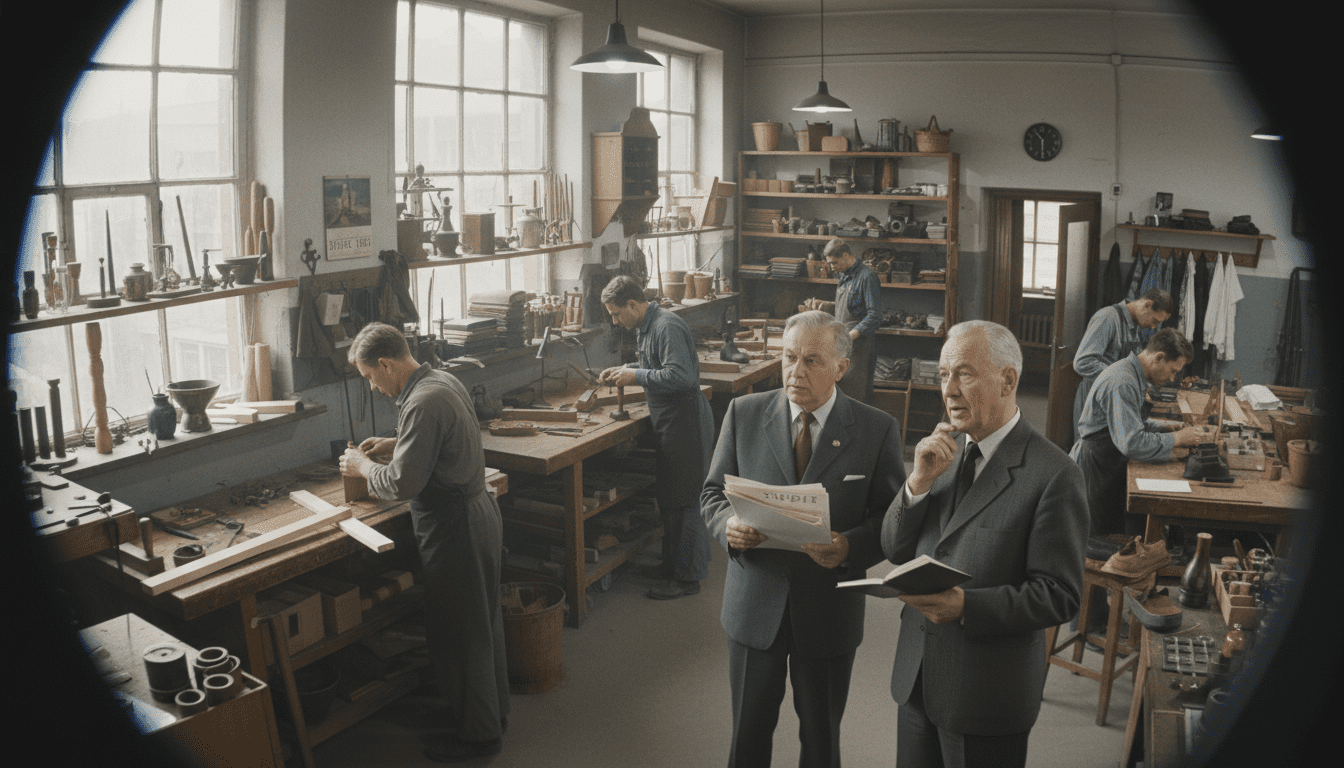
A new study combining economic history with interviews of contemporaries finds that private craftsmen in the GDR enjoyed above-average living standards and played an outsized role in softening the planned economy’s weaknesses. The research documents how a tolerated and later encouraged private sector of small workshops created informal markets, supplemental income streams in Western currency and social advantages that set craftsmen apart from most citizens. It also traces how state policy shifted in the 1970s and how those same craftsmen adapted to the upheaval of 1989 and the transition to a market economy.
Study highlights wealth and social advantage
The research identifies private craftsmen as one of the better-off social groups in the German Democratic Republic, despite the official socialist egalitarian narrative. Interviews and archival evidence show many craftsmen lived in single-family homes, owned garden plots and boats, and sometimes drove larger or Western-made cars. Those material markers were often funded by unrecorded supplementary income and access to scarce goods that ordinary state employees could not obtain.
These advantages were not simply the result of higher official wages; rather, craftsmen leveraged after-hours repairs, barter networks and payments in Western currency to achieve upward mobility. The study argues this combination of skills, networks and informal trade produced life-world advantages that set private craftsmen apart within a system that publicly denounced private ownership.
From ideological pariah to pragmatic partner
Initially, private craft enterprises were regarded as remnants of capitalism to be eliminated or absorbed into collective structures. The state’s 1972 nationalization wave removed many family firms and reshaped the small-business landscape. Surviving workshops were tightly constrained, limited to fewer than ten employees and subjected to heavy taxation and restrictive licensing.
By the mid-1970s, however, the SED leadership confronted a contradiction: the plan economy’s rigidities left gaps in services and repairs that state enterprises could not fill. In 1976 the government eased restrictions and introduced targeted support for private craft shops, recognizing their role in maintaining consumer goods and services. That policy reversal positioned small workshops as indispensable for everyday life across the GDR.
How craftsmen bridged supply gaps
Private workshops operated at the center of an informal economy that balanced official shortages and citizen demand. The study documents pervasive barter, hoarding and creative repairs as common strategies for securing materials and fulfilling orders. Craftsmen cultivated relationships with supply cooperatives, sometimes offering small gifts like Western coffee to ensure access to limited items.
A gray market of goods and services emerged around these networks, where barter and unrecorded transactions helped satisfy consumer needs. The practice produced both opportunity and risk: while many craftsmen profited, actions such as speculative hoarding or falsifying accounts could carry legal penalties, though prosecutions appear to have been relatively rare in comparison with the scope of informal activity.
Money, status and the ‘blue tiles’
Supplementary incomes often flowed in cash, and payments in Deutsche Marks from West Germany were especially prized. The study records that 100-DM notes earned a colloquial nickname — translated as “blue tiles” — and opened access to higher-end consumption. Craftsmen converted these earnings into durable assets such as houses, vacation plots and better vehicles, which visibly distinguished them from peers employed in state industry.
Official prices, heavy taxes and low recorded earnings meant the formal accounting did not reflect many craftsmen’s actual living standards. The resulting dual economy — one recorded by the state and another operating through informal exchanges — helped explain why private workshops could be simultaneously marginal in official terms and central to everyday life.
Role during and after the 1989 upheaval
Although private craftsmen were economically significant, the study finds they were largely politically disengaged and played little part in the peaceful 1989 revolution. The fall of the SED surprised many workshop owners and precipitated a period of deep uncertainty. New market rules, unclear property claims and a flood of Western offers created both opportunities and threats.
Despite such turbulence, many former private workshops had advantages that aided survival: highly specialized skills, small flexible structures and long-standing customer networks. Some businesses expanded and became pillars of the region’s reindustrialization, while most remained small but stable contributors to local economies. The study frames this outcome as an often-overlooked success story of adaptability amid systemic collapse.
Implications for East German economic memory
By documenting the economic and cultural role of private craftsmen in the GDR, the research challenges simplified narratives of uniform deprivation under socialism. It shows how informal markets, practical ingenuity and selective state tolerance created a distinct social layer with tangible material advantages. The study’s findings contribute to debates about inequality, informal economies and the social foundations that shaped East Germany’s transition in the 1990s.
Understanding this history sheds light on how small-scale private enterprise can operate within and around centralized systems, and why such actors matter for both everyday resilience and broader economic transformation.
The study’s combined use of archival material and eyewitness interviews underscores the complexity of daily life under state socialism and the nuanced ways citizens navigated shortages, rules and opportunities.
