
Ferrari Luce Signals Maranello’s Leap into Fully Electric Supercars
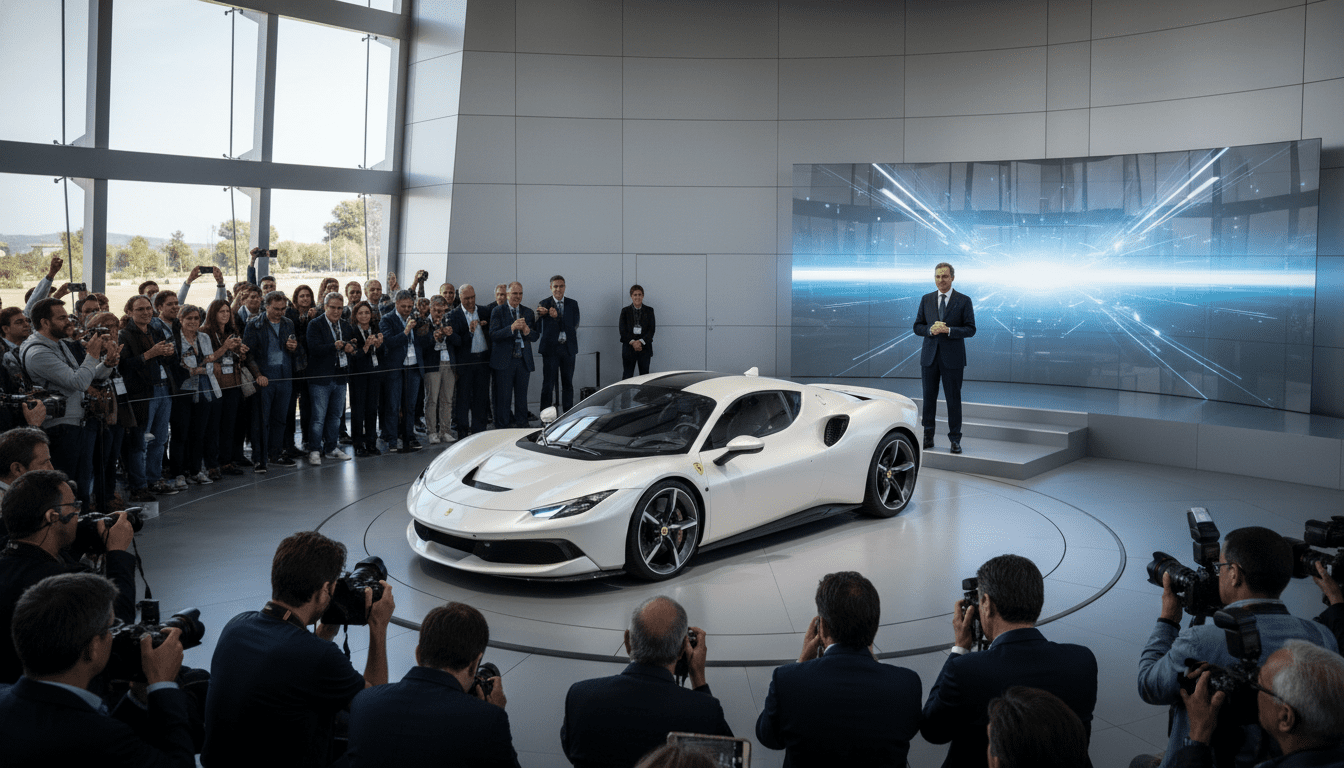
Ferrari Luce unveiled in Rome marks the company’s first fully electric model, blending traditional design cues with ambitious new electric architecture.
Ferrari on Monday presented the Luce, the marque’s inaugural all-electric production car, framing it as a continuation of the brand’s performance and design heritage. CEO Benedetto Vigna described the Luce as “a rearing horse — not an elephant,” setting a tone that Ferrari intends the vehicle to be agile despite its battery weight. The company says the model represents years of development and dozens of new technologies that it expects will extend the brand’s appeal in an electrifying market.
Ferrari unveils Luce as brand’s first fully electric model
Ferrari positioned the Luce as a deliberate step in a multi-year shift toward electrification that began with studies in 2019 and accelerated with leadership changes in 2021. The announcement in Rome underscores the company’s message that electrification can be reconciled with Ferrari’s legacy of sporty, driver-focused cars.
Benedetto Vigna rejected the idea that Ferrari was abandoning its roots, arguing instead that the Luce continues the marque’s tradition of technological leadership. He framed the car as an addition to the lineup rather than a replacement, aimed at attracting buyers who have not previously been on Ferrari’s customer list.
Engineering: twelve motors and more than 60 patents
Under the Luce’s bodywork sits an unconventional propulsion architecture: Ferrari says the car uses twelve independent electric motors, with multiple units assigned to each wheel to manage torque vectoring and suspension inputs. The company also disclosed that the vehicle incorporates more than 60 new patents tied to its powertrain and control systems.
Ferrari’s engineers say the multi-motor layout enables precise control of wheel torque, steering inputs and damping, which they argue restores a sense of agility despite the car’s mass. The approach reflects a clear investment in bespoke electric systems rather than simple adaptation of existing EV platforms.
Performance figures and battery trade-offs
Ferrari lists the Luce’s empty weight at approximately 2.2 tonnes, noting the battery alone contributes around 600 kilograms and occupies much of the space between the axles and under the cabin. Despite that weight, the company reports acceleration from 0–100 km/h in 2.5 seconds, 0–200 km/h in 6.8 seconds, a peak power rating above 1,000 metric horsepower and a top speed near 310 km/h.
Range is cited at about 530 kilometers in mixed driving, though Ferrari cautions that high-speed operation will materially reduce that figure. The numbers highlight a trade-off common to high-performance EVs: significant battery mass to achieve both power and meaningful range, balanced against tactics—like torque vectoring—to preserve handling.
Design collaboration reaches beyond Maranello
Ferrari said the Luce’s exterior and interior benefitted from broader creative input than past models, with design work that included contributions from a San Francisco-based studio associated with prominent industrial designers. Visual cues include a streamlined silhouette and interior details that reference contemporary consumer electronics in their finishes and interfaces.
The company also emphasized partnerships with technology firms and startups, describing an open approach to sourcing expertise from different industries. Executives framed that cooperation as a strength that helped deliver both comfort and the distinctive Ferrari aesthetic in an electric architecture.
Driver engagement: sound, paddles and active control
Addressing nostalgic concerns about the loss of internal-combustion sound, Ferrari developed an onboard system that synthesizes an “authentic” acoustic character derived from the vehicle’s mechanical dynamics. The system uses vibration and acceleration inputs to generate tonal feedback the company says informs the driver about the car’s state; it is active only in certain drive modes and can be switched off.
Ferrari retained tactile driver controls intended to preserve an active driving experience, including steering-wheel paddles that adjust power delivery across five performance levels. The automaker argues those elements allow for an engaged, hands-on driving style even without a traditional gearbox.
Market positioning, pricing and production outlook
Ferrari priced the Luce in Germany at roughly €550,000 for the base configuration and opened orders immediately, signaling a targeted launch to high-net-worth clients rather than mass-market buyers. The company expects first deliveries to customers in Germany toward the end of the year and has avoided forecasting broad demand by region or demographic.
Executives acknowledged the Luce is unlikely to be a volume seller at its price point but said Ferrari anticipates interest from wealthy existing customers and new buyers attracted to electric performance. The stock market response in recent weeks has been mixed; company officials emphasize that clearer technical details have helped investors reassess the program.
The Luce presents Ferrari’s response to a rapidly evolving luxury-automotive landscape: it combines innovative electric engineering and outside collaboration while attempting to retain the tactile, emotional qualities that define the brand. Whether the Luce will win over traditionalists and reshape Ferrari’s commercial outlook remains the central question as orders begin and deliveries approach.
