
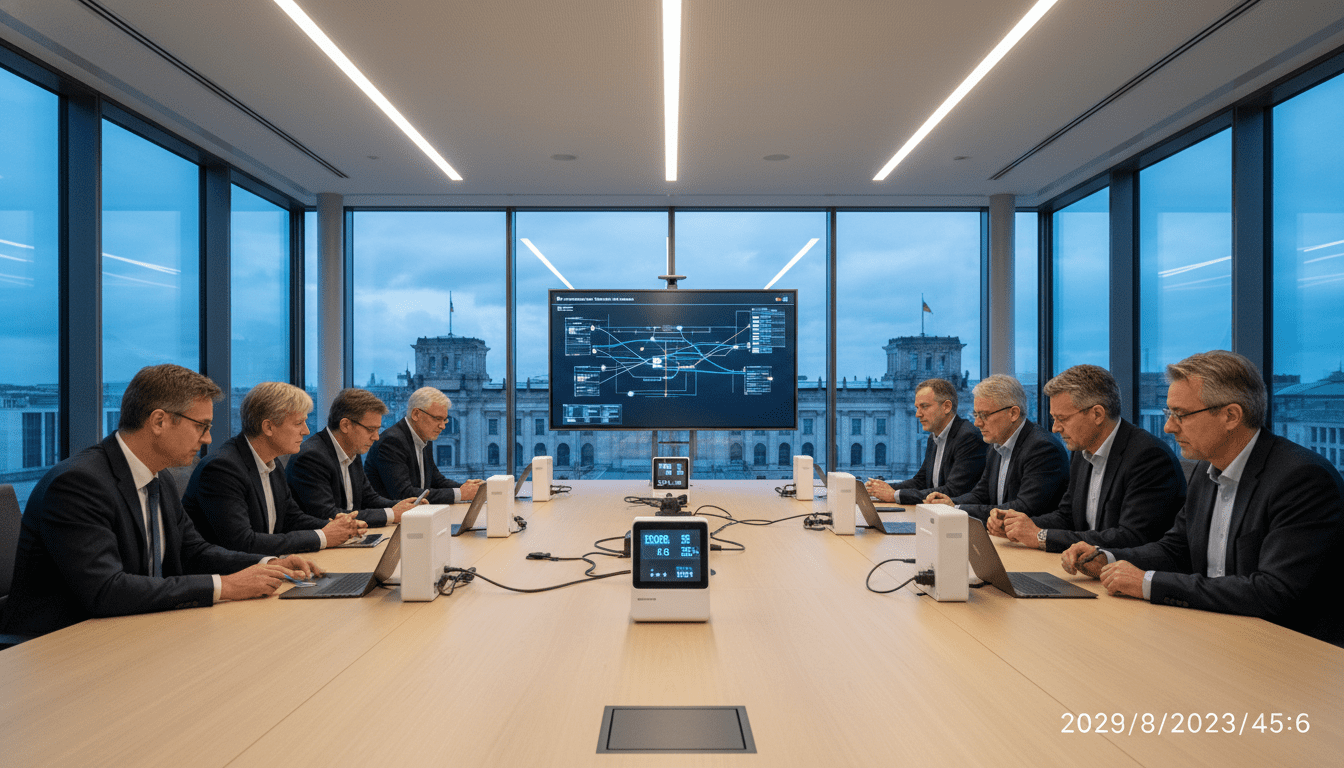
Smart meters and flexible tariffs could cut Germany’s electricity costs, experts say
ZEIT podcast guests say smart meters and flexible tariffs can better match supply and demand, easing grid strain and cutting German household electricity bills.
Germany faces growing strain on its electricity system as output from wind and solar rises while grids and market rules lag behind technological change. In a new episode of the ZEIT Wirtschaftspodcast “Ist das eine Blase?”, hosts and a guest argued that smart meters and flexible tariffs are central to synchronizing generation and consumption and lowering consumer prices. The discussion brought a sharp critique of the nation’s current network model and raised questions about policy, market design, and who ultimately pays for the energy transition.
Grid stress from variable renewable generation
Renewable sources are supplying a larger share of Germany’s power, but their variability has exposed weaknesses in the distribution system. Operators increasingly face situations where generation and demand occur in different places or at different times, putting pressure on local networks and raising balancing costs. Those additional costs—alongside taxes and levies—are passed through to end users, contributing to higher retail prices.
Podcast participants noted that the problem is not a shortage of electricity in aggregate, but a mismatch between when and where power is produced and consumed. That misalignment drives curtailment of renewables and expensive redispatch measures, both of which add to system costs. Addressing timing and location mismatches is therefore pivotal to making the Energiewende more affordable.
CEO Philipp Schröder criticizes current network structure
Philipp Schröder, founder and CEO of energy supplier 1komma5°, delivered one of the episode’s most direct assessments of Germany’s system, calling the existing distribution network model outdated and inefficient. He argued that costs stemming from that model are ultimately socialized across all customers and that a digital upgrade is overdue. Schröder further challenged prevailing assumptions about retail prices, saying the underlying cost of electricity generation is far lower than what consumers pay once charges and taxes are included.
His critique framed the debate around structural change rather than incremental fixes, pressing regulators and policymakers to consider how market rules and network design could better accommodate a decentralized, renewables-dominant system. That line of argument has implications for both large utilities and newer, digitally native suppliers.
Smart meters and flexible tariffs as synchronization tools
A core proposal from the podcast was wider rollout of smart meters coupled with flexible tariffs that can shift consumption toward times of abundant renewable output. Smart meters provide near-real-time consumption data, enabling dynamic pricing and automated responses from devices such as heat pumps, electric vehicles, and battery storage. Flexible tariffs, in turn, reward consumers or aggregators who shift demand to match renewable generation patterns.
Speakers argued that synchronizing demand with supply would reduce curtailment and network stress, shrinking the need for costly grid reinforcements and balancing actions. They suggested that if consumption and production were better aligned, the effective cost of the energy transition could fall significantly for households and businesses.
Policy clashes over feed‑in tariffs and platform openness
The episode also examined contentious policy areas, including the future of Germany’s feed‑in remuneration schemes and the role of private platforms in the energy market. Schröder endorsed phasing out certain feed‑in payments even though some of his customers benefit from them, arguing that market design must evolve to reflect the low marginal cost of renewables. His stance drew scrutiny and questions about potential conflicts of interest, especially after he said his company’s digital platform would be made available to other suppliers without licensing fees.
Critics on and off the podcast warned that removing legacy supports without a clear transition plan could create winners and losers among prosumers and installers. Proponents countered that more transparent, market-based signals—delivered through smart meters and flexible tariffs—would better integrate distributed generation into system operations.
Digital rollout lagging behind international peers
Several participants contrasted Germany’s slow digitalization of metering infrastructure with faster rollouts elsewhere in Europe. While other countries have accelerated smart meter deployments and retail market innovations, Germany still relies in many places on annual manual readings and limited demand-side flexibility. That delay, panelists said, increases the cost of the Energiewende and weakens consumer opportunities to reduce bills.
The discussion pointed to regulatory hurdles, investment shortfalls, and political reluctance as barriers to faster change. To catch up, stakeholders urged clearer timelines, targeted investment incentives, and regulatory rules that enable aggregators and new suppliers to participate in demand-side markets.
ZEIT’s hosts—Zacharias Zacharakis and Jens Tönnesmann—moderated the conversation alongside editor Marc Widmann, probing both technical solutions and political trade-offs. The exchange exemplified a growing consensus among some industry voices that digitization and dynamic pricing are not optional extras but essential tools for cost-effective decarbonization.
The podcast debate underscores an urgent policy choice: continue trying to accommodate rising renewables within a legacy distribution framework, or accelerate a digital and market redesign to align consumption with cheap, variable generation. Smart meters and flexible tariffs were presented as practical levers to cut costs, but their success depends on regulatory clarity, equitable transition measures, and rapid deployment.
